Sermon by Pastor Paul Wrightman (July 5, 2026)
The Spirituality of the Twelve Steps:
Step 4 – Taking Stock
John 5:1-8; Matthew 7:3-5; Psalm 51:1-4, 6, 9-12, 17
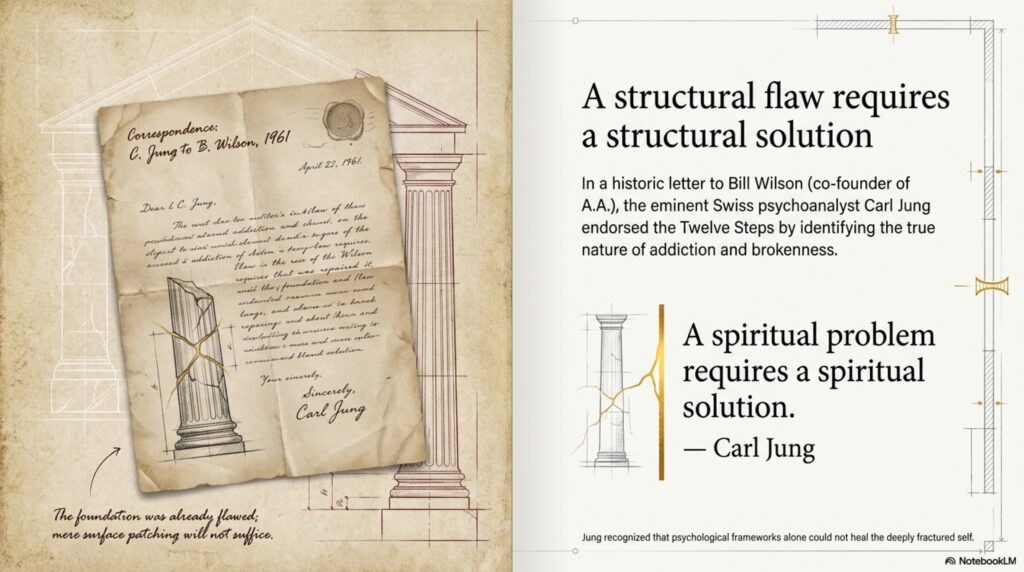
In a letter which has now become famous, the eminent Swiss psychoanalyst Carl Jung wrote to Bill Wilson, co-founder of Alcoholics Anonymous, about the spiritual nature of addiction. In that letter, in which he heartily endorsed the spiritual nature of the Twelve Steps, Jung told Wilson: “A spiritual problem requires a spiritual solution.”
This reminds me of a story in the book The Spirituality of Imperfection:
Some years ago a student of Twelve-Step spirituality offered a presentation at the newly established renewal center at Hazelden, one of the oldest and most renowned centers for the treatment of alcoholism and other chemical dependencies.
(And in the context of Hazelden, I can’t help but share that our own Karyn Hierl has just started a master’s degree in addiction counseling offered by this very place.)
[At the renewal center, as the speaker was laboring to make his point] about the pervasive nature of spirituality, one of the participants asked for an image to help her “picture” his words. “What is spirituality like?” she asked, her expression earnest and intense. “I think I know what you mean, but can you give me a picture?”
Momentarily stumped, the presenter sat for several frustrating minutes staring across the conference-lounge at the massive stone fireplace. It was carefully fashioned out of rock deposited in this locality during Minnesota’s glacial era. Late afternoon sun streamed into the room, warming the stones with light. Suddenly the stones themselves came into focus — perhaps he could use them for an image! The deep reddish rocks, flecked with golden specks; the green-hued pieces, regularly marbled in white; the many-shaded blue slabs, their shallow niches sparkling as if with silver. Which of these stones could best represent “the spiritual?”
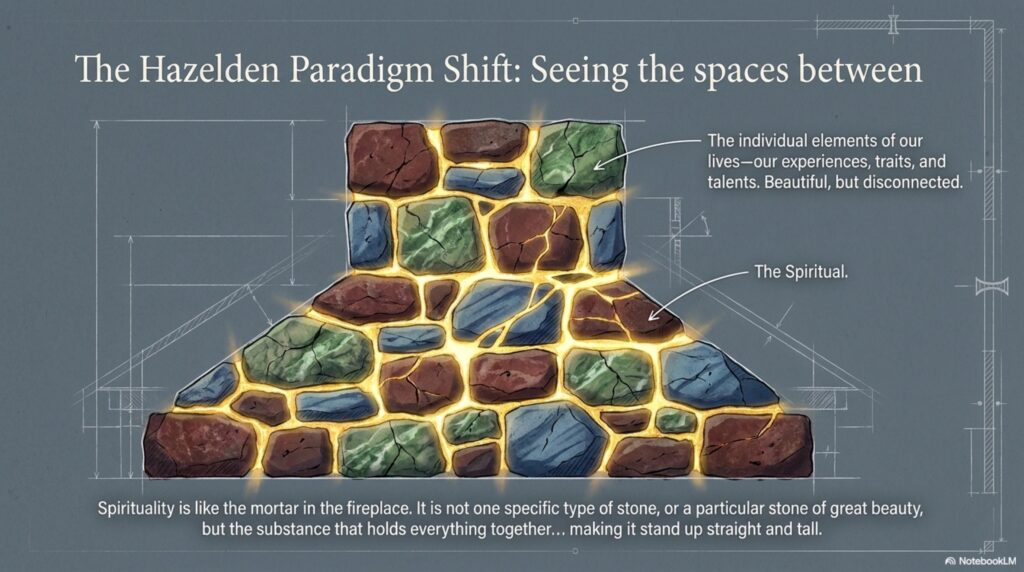
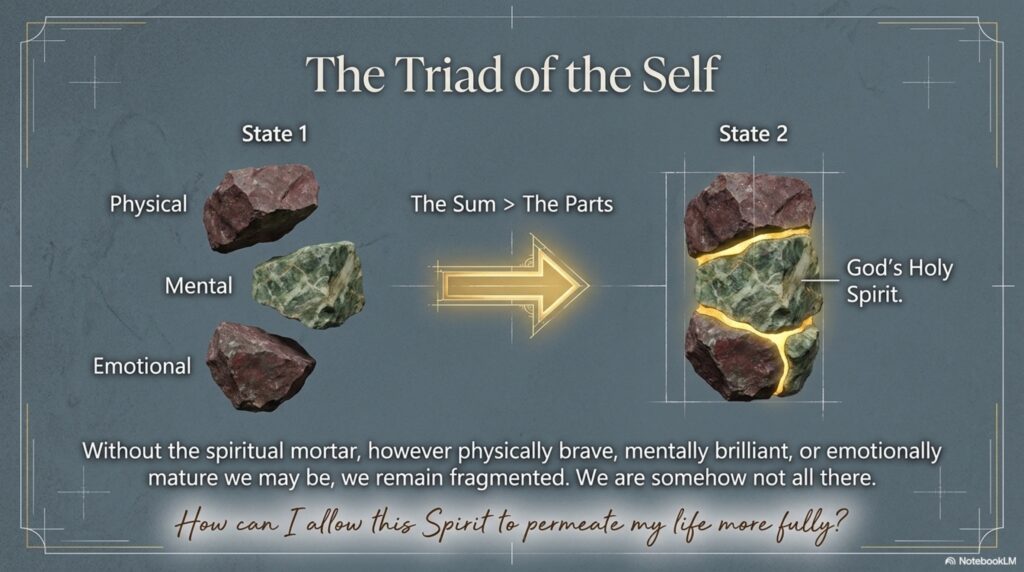
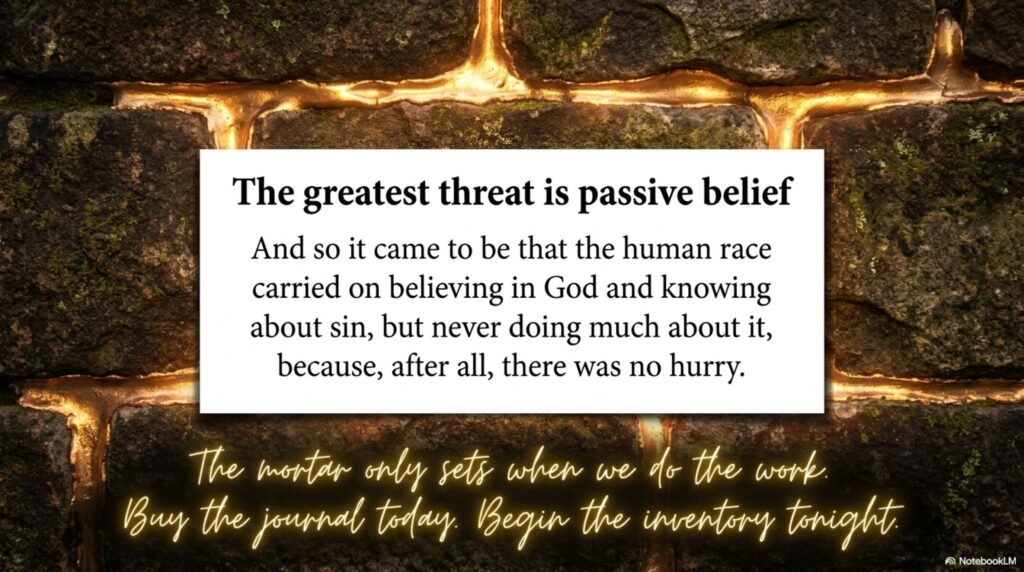
…The workshop participants, ever polite and patient, shifted quietly in the rare silence. Then, suddenly, the image came! Looking at the stones, wondering at their beauty, the presenter’s vision underwent a paradigm shift. He saw not the individual stones but the chimney itself. The mortar — the bland, grayish, pebbly “stuff” that held all those stones together — that was “the spiritual”! Immediately he understood that the spiritual is not some separate category, one specific type of stone, or a particular stone of great beauty, but the substance that holds everything together.
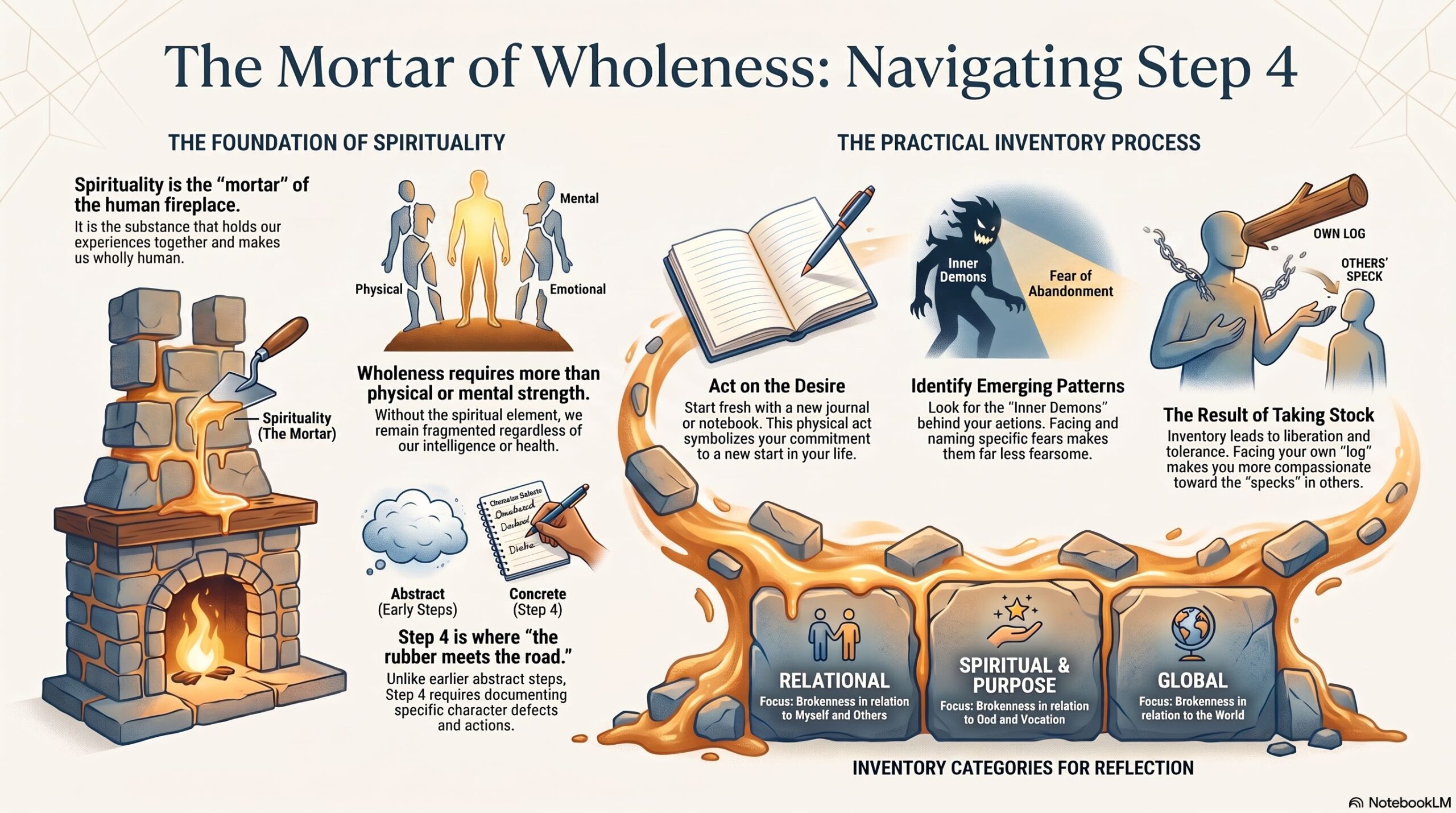
“Spirituality is like the mortar in the fireplace,” he offered pensively, finally breaking the long silence. “Just as the mortar makes the chimney a chimney, allowing it to stand up straight and tall, beautiful in its wholeness, ‘the spiritual’ is what makes us wholly human. It holds our experiences together, shapes them into a whole, gives them meaning, allows them — and us — to be whole. Without the spiritual, however physically brave or healthy or strong we may be, however mentally smart or clever or brilliant we may be, however emotionally integrated or mature we may be, we are somehow not all there.”
I really like this description of the spiritual, bringing together as it does the three major elements of the human personality — the physical, the mental, and the emotional — and implying that the whole of a human being is greater than the sum of its parts. I like this image of Spirit — I would say God’s Holy Spirit — as what holds us together. If we can entertain this image, the question then becomes “How can I allow God’s Spirit to permeate my life more fully?”
The spirituality of the Twelve Steps has been recognized by significant contemporary thinkers as one of the most concrete and comprehensive spiritual paths ever conceived in terms of encouraging God’s Spirit to become a more pervasive reality in our lives. I find it fascinating that there are a large number of books from both the Christian and the Buddhist traditions which suggest that one of the best templates for actually living out the teachings of Jesus or the Buddha is through practicing the Twelve Steps.
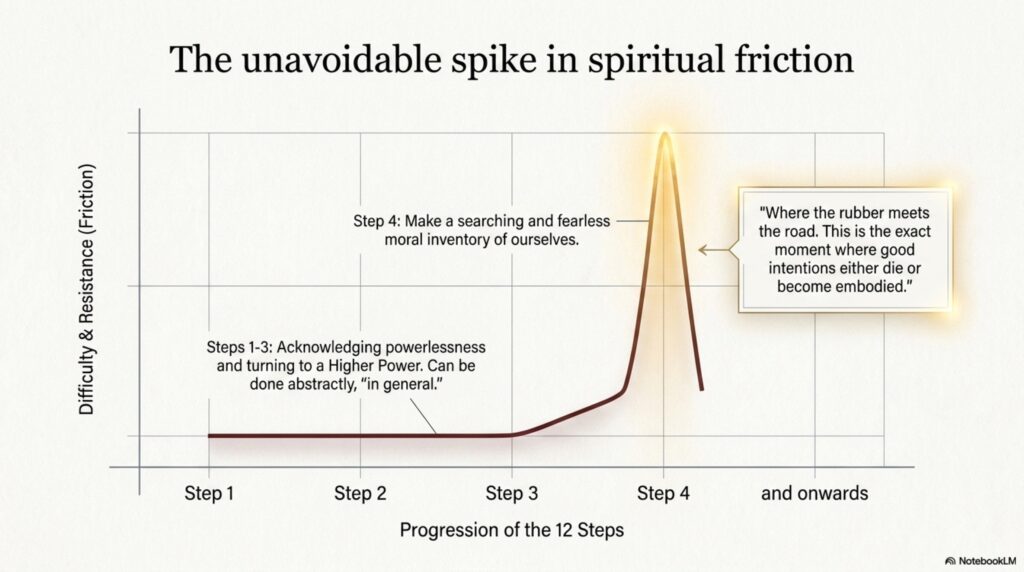
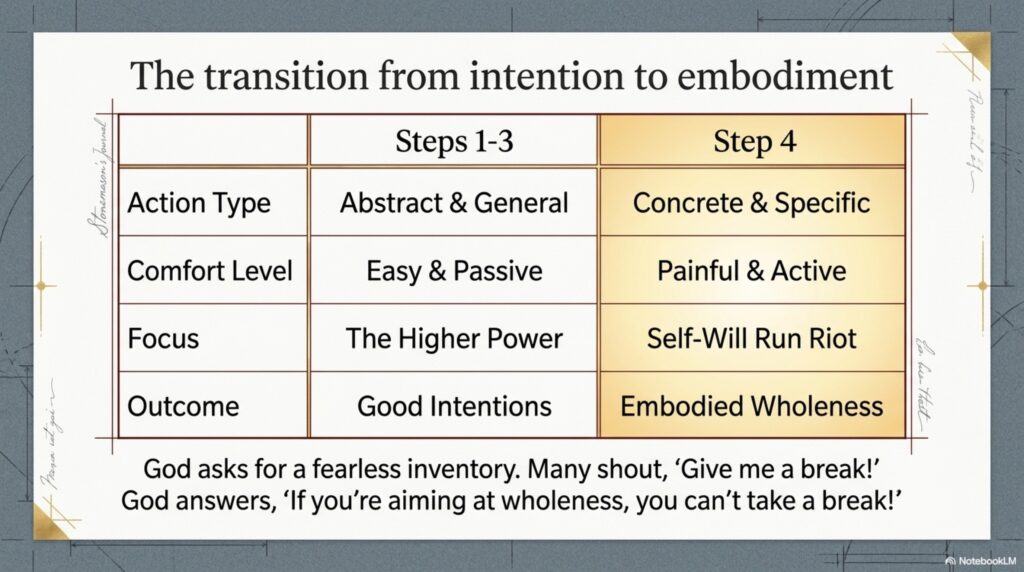
This is not to say that practicing the Twelve Steps is easy. As if it weren’t hard enough to make a decision to turn our will and our lives over to the care of God (Step 3), the very first thing that God asks of us is to make a searching and fearless moral inventory of ourselves. Hearing this, many of us feel like shouting at God: “Give me a break!” And God seems to shout right back: “If you’re aiming at wholeness, you can’t take a break!”
Of all the steps, this is the most difficult to do. It’s one thing to acknowledge one’s powerlessness, Step 1, then come to believe in a power greater than oneself, Step 2, and even turn one’s life over to this Higher Power, Step 3. The first three steps can all be done rather abstractly, done “in general,” so to speak. It’s another thing entirely to actually face one’s particular character defects and document specific examples of one’s “self-will run riot.” This is where the rubber meets the road, where our good intentions either die or become embodied.
King David, in his heartfelt admission of wrongdoing after his affair with Bathsheba, Psalm 51, was, in effect, practicing Step Four some three thousand years before it was written.
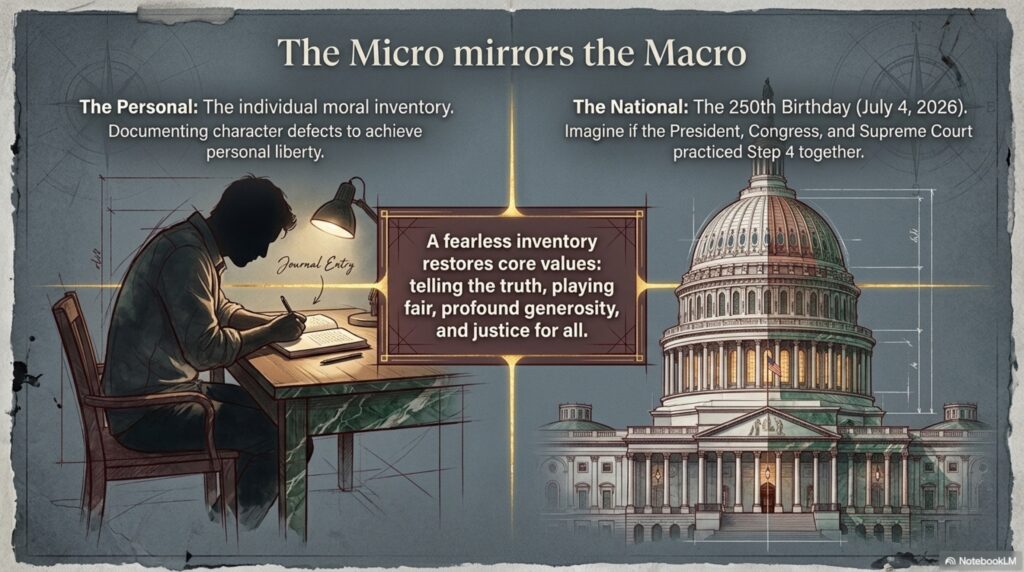
And on this Fourth of July weekend celebrating the 250th birthday of our great nation, think of what it would mean if our President, both branches of Congress, and our Supreme Court all proclaimed together that the greatest birthday gift they could give our country would be in leading us as a nation to practice Step 4 of America’s magnificent gift of spirituality to the rest of the world, the Twelve Steps.
Think of the transformation that would take place if the United States as a whole were to take on making a searching and fearless moral inventory of itself! We would be magnificently reminded of the good old “conservative” values of telling the truth, not cheating, playing fair, being generous, and advocating for — as our Pledge of Allegiance states — liberty and justice for all.
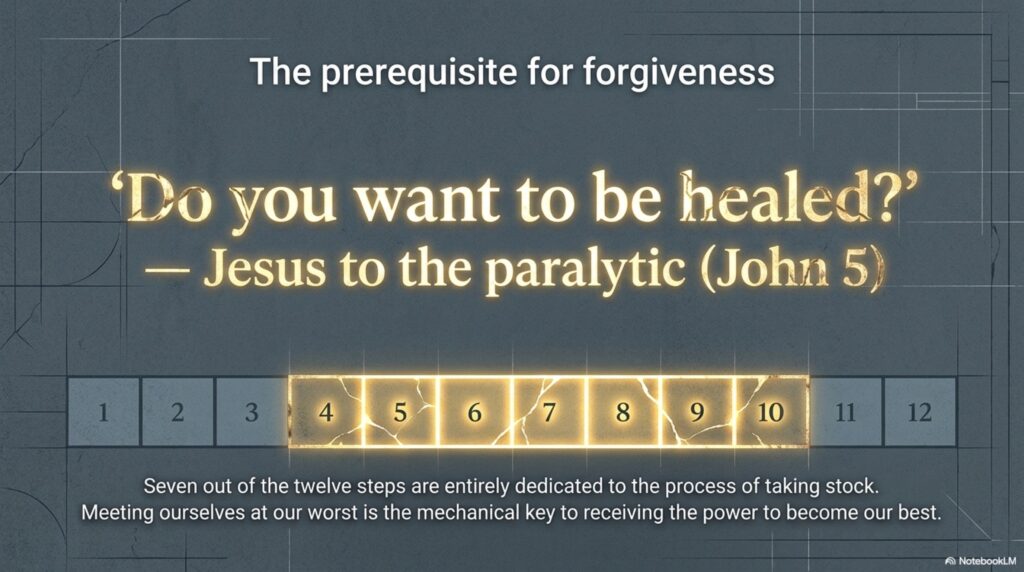
So important is this process of taking stock that seven out of the twelve steps are dedicated to its full realization: Steps 4, 5, 6, 7, 8, 9, and 10. Whew! Each of these seven steps hammers in the point that meeting ourselves at our worst is the key to receiving the power to gradually become our best.
The Twelve Step emphasis on taking stock reflects the major influence that the teachings of Jesus had on the formation of the steps themselves. I believe that taking stock is God’s way of asking us today, as Jesus asked the paralytic in today’s reading from the Gospel of John, “Do you want to be healed?”
“Taking stock” is the first step on the road to our becoming open to receiving forgiveness, and a strong case can be made that receiving and giving forgiveness is at the very heart of Jesus’ ministry of bringing the Kingdom of God into being.
It’s time to get practical. How can one actually ease into the fourth step? Based on personal experience, I would recommend the following:
Go out and get yourself a fresh journal or notebook. Doing this acts out your desire for a new start. Don’t get hung up on terminology. If the wording “moral inventory” in the fourth step doesn’t work for you, come up with your own wording. Whatever you choose to call them, you already know those areas of your life which are broken, areas in your life where you yearn for release and wholeness.
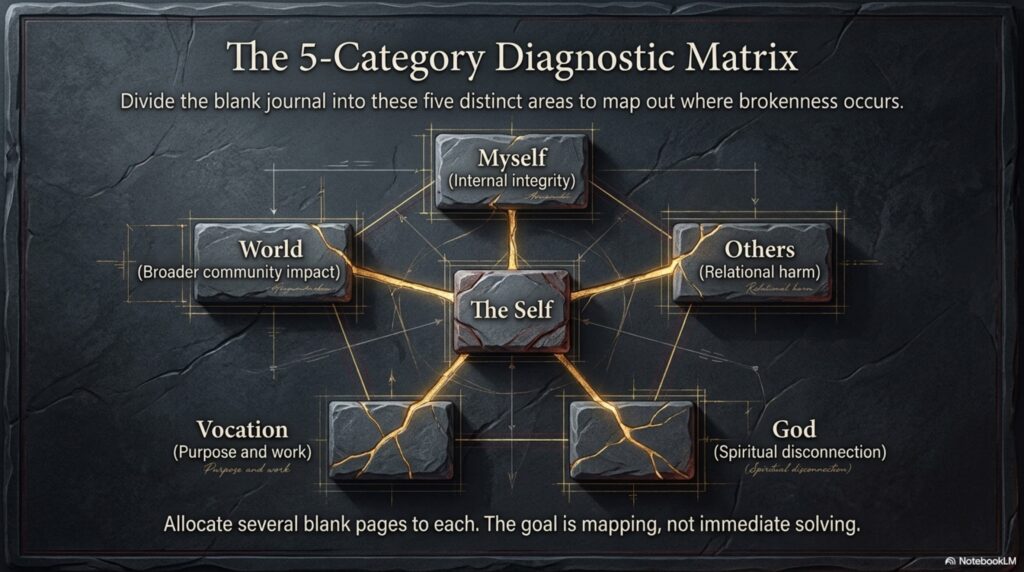
What finally worked for me was to divide my Step Four journal into five distinct categories. I came up with five distinct areas of brokenness in my life — brokenness in relation to:
- Myself.
- Others.
- God.
- Vocation.
- World.
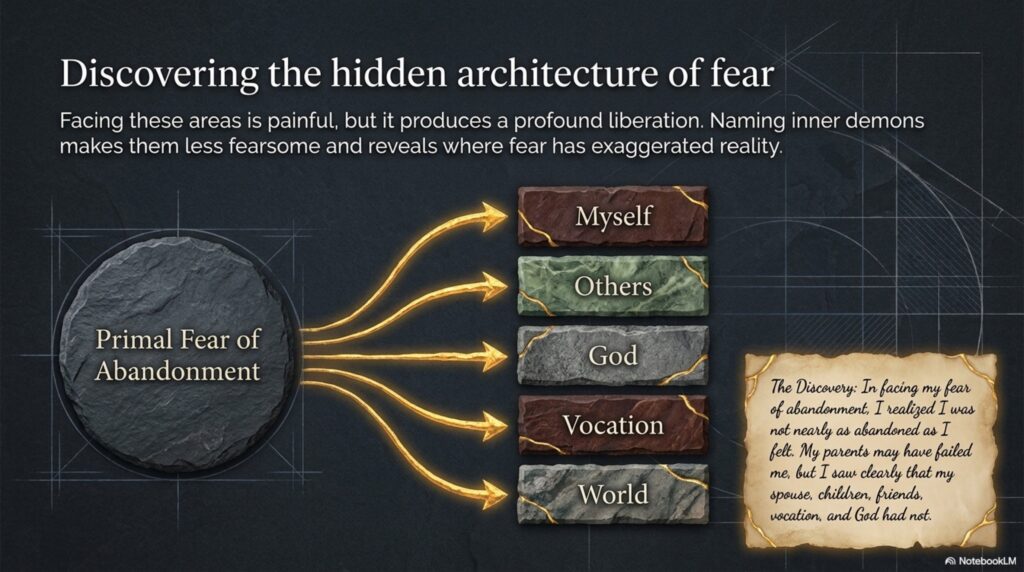
I allocated several blank pages to each area and pushed myself to begin, to actually start writing. What soon became fascinating to me was the patterns which began to emerge. For example, I was able to see how my primal fear of abandonment played itself out in terms of specific acts of dishonesty in relation to myself, others, God, vocation, and world.
I have to admit that it was quite painful to face these areas of brokenness in myself. But as I faced them I also experienced a profound sense of liberation. Facing and naming my inner demons made them less fearsome. Facing and naming my inner demons also helped me to see that in some cases my fear had exaggerated my brokenness.
For example, in finally facing my fear of abandonment and acknowledging how that fear had played out in my life, I came to realize that, in reality, I was not nearly as abandoned as I felt I was. My parents may have abandoned me in various ways, but I came to see that my spouse, my children, my friends, my vocation, and my God had not.
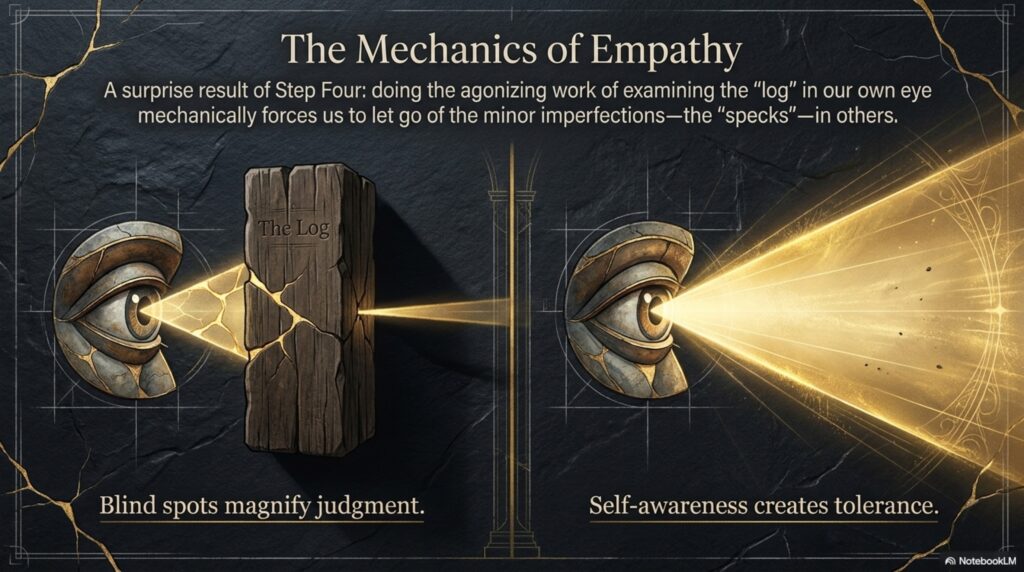
Another surprise that I experienced as a result of actually doing Step Four is that I became much less judgmental, and much more tolerant of others. Echoing our reading from Jesus’ Sermon on the Mount, actually doing Step Four enabled me to see the “log” in my own eye, as it were, and to let go of seeing the “specks,” the minor imperfections, in others.
But all of us will be tempted to keep on putting off, or indefinitely postponing, actually making a searching and fearless moral inventory of ourselves. As usual, a traditional story has something to say about the addictive habit of procrastination.
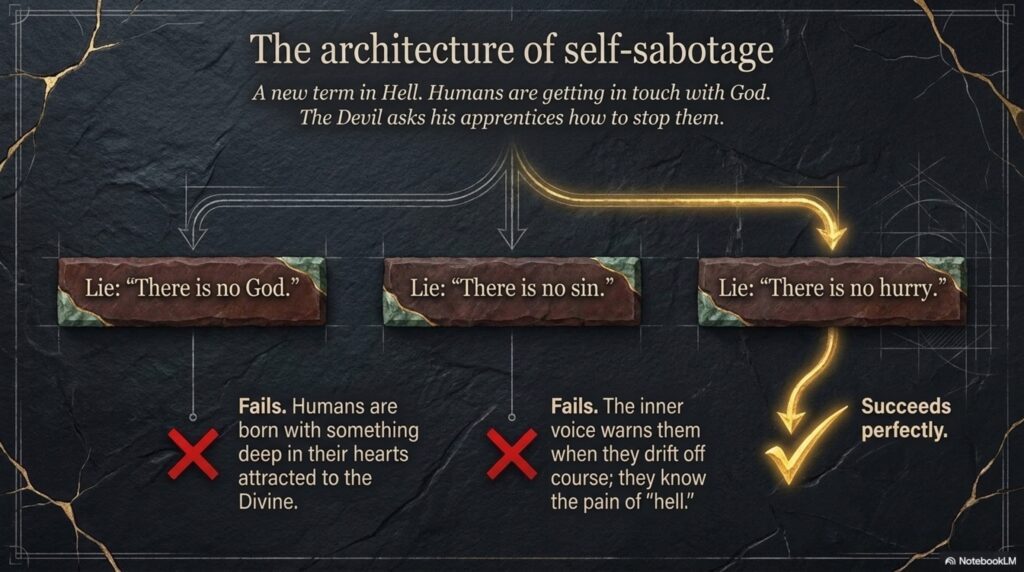
It was the start of a new term in Hell, and the Devil was giving an induction course to the latest batch of apprentices.
“There’s no room for complacency,” he warned them. “You wouldn’t believe the half of what is going on on Earth. People are getting more and more in touch with God. They are starting to see God in creation, and even in each other’s hearts. They are noticing God’s action in the stories of their own lives. And worse than that, they are starting to realize how important it is to work for justice and for peace. If things carry on like this, God’s kingdom will come, and we’ll all be out of a job.”
There was a long silence, as the seriousness of the Devil’s message sank in. The apprentices waited to hear what wisdom the Devil would give them for dealing with this perilous situation on Earth. But he could read the questions in their minds, and he turned the whole problem over to them. “So what are you going to do about it?” he asked them. “Any bright ideas?”
They scratched their heads and furrowed their brows. “Come on,” urged the Devil. “I’m waiting. We don’t have forever, you know!”
Very tentatively, the first apprentice raised his arm. “Sir,” he ventured, “why don’t we go there and tell them there’s no God?”
“Sorry to disappoint you,” the Devil said. “But that wouldn’t wash at all. They seem to be born with something deep in their hearts that attracts them to God. They often can’t name it, or even admit that it’s there, but sooner or later, they all have a moment when they know that God exists. You’ll have to come up with a better idea than that.”
Crestfallen, the first apprentice sat down, and the second apprentice raised his arm. “Sir,” he suggested, “could we perhaps go to them and tell them that there’s no such thing as sin, and so they have nothing to fear. Hell is just a myth.”
“A good try,” said the Devil, “but unfortunately the same bit of God that is deep in their hearts also tells them when they’re going off course. They know — if they stop to listen to that inner voice — that it is all too possible to sin, and they know that, when they do, they can feel terrible afterwards, until they have put things right again. Deep in their hearts, they know what sin is, and how ‘Hell’ feels. Think again. What about you?” he said, turning to the third apprentice. “What have you got to say for yourself?”
“Well,” replied the third apprentice, slowly. “I’ve been giving it a lot of thought. You say that it’s no good us telling them that there is no God. And it’s no use our telling them that there is no sin. How would it be if we told them that there is no hurry?”
The Devil was delighted. “Brilliant!” he squealed. “That’s exactly what we’ll do. You’ll go far, young demon. Well done!”
And so it came to be that the human race carried on believing in God and knowing about sin, but never doing much about it, because, after all, there was no hurry.
Amen.
Ai generated infographic, based on the Sermon

Paul Wrightman pastors at the Community Church of the Monterey Peninsula, California:
-
Pastor Paul: Step 1 – The Power Of Powerlessness
Sermon June 14, 2026 “The Spirituality Of The Twelve Steps”
-
Pastor Paul: Step 2 – Came to Believe
Sermon June 21, 2026 “The Spirituality Of The Twelve Steps”
-
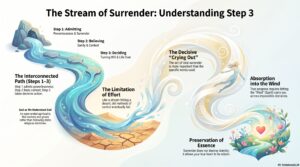
Pastor Paul: Step 3 – Choosing God
Sermon June 28, 2026 “The Spirituality Of The Twelve Steps”
-
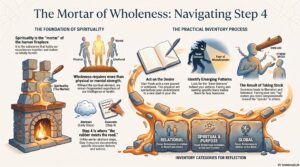
Pastor Paul: Step 4 – Taking Stock
Sermon July 5, 2026 “The Spirituality Of The Twelve Steps”
-
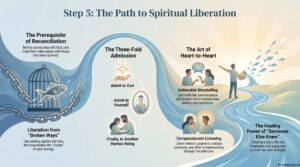
Pastor Paul: Step 5 – Heart-To-Heart
Sermon July 12, 2026 “The Spirituality Of The Twelve Steps”
-
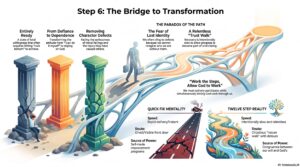
Pastor Paul: Step 6 – Becoming Ready
Sermon July 26, 2026 “The Spirituality Of The Twelve Steps”
-
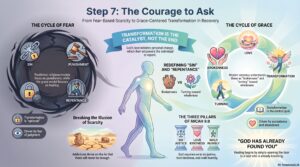
Pastor Paul: Step 7 – The Courage to Ask
Sermon August 2, 2026 “The Spirituality Of The Twelve Steps”
-
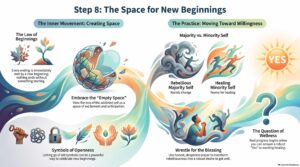
Pastor Paul: Step 8 — Making a List
Sermon August 9, 2026 “The Spirituality Of The Twelve Steps”
-
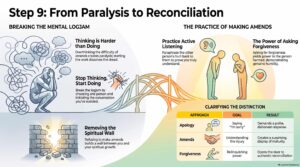
Pastor Paul: Step 9 – Embodied Reconciliation
Sermon August 16, 2026 “The Spirituality Of The Twelve Steps”
-
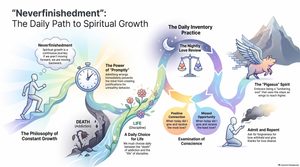
Pastor Paul: Step 10 – Neverfinishedment
Sermon August 23, 2026 “The Spirituality Of The Twelve Steps”
-
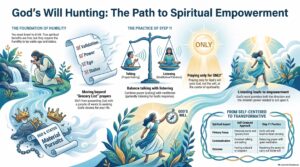
Pastor Paul: Step 11 – God’s Will Hunting
Sermon August 30, 2026 “The Spirituality Of The Twelve Steps”
-
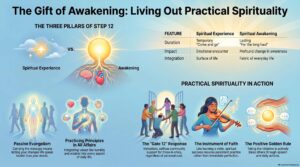
Pastor Paul: Step 12 – The Gift of Awakening
Sermon September 6, 2026 “The Spirituality Of The Twelve Steps”
-
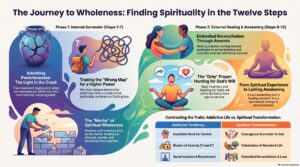
Ai’s take on Pastor Paul’s 12 Step Sermons
Sermon September 6, 2026 “The Spirituality Of The Twelve Steps”
Leave a Reply