Sermon by Pastor Paul Wrightman (June 14, 2026)
The Spirituality of the Twelve Steps:
Step 1 – The Power Of Powerlessness
Matthew 5:3; Romans 7:15, 19, 24; Mark 4:35-39
Welcome to our new sermon series on the Spirituality of the Twelve Steps.
The reason for this particular series is twofold:
First: Quite a few persons in our congregation have asked for sermons that offer concrete and practical ways of applying the wisdom of Scripture to the challenges of daily living.
Second: Many of you have asked for sermons that offer a comprehensive way or methodology for growing closer to God — for experiencing the presence and power of God on a regular, day-by-day basis.
One of the mottos of our church is: “Wherever you are on your faith journey, you are welcome here!”
We usually interpret this in the sense that all types of different people on all sorts of different faith journeys are welcome here, and this is certainly true. But there is another way to interpret this motto — a more personal way — which emphasizes the phrase “faith journey,” and asks the implied question: “Where am I on my own journey of faith?”
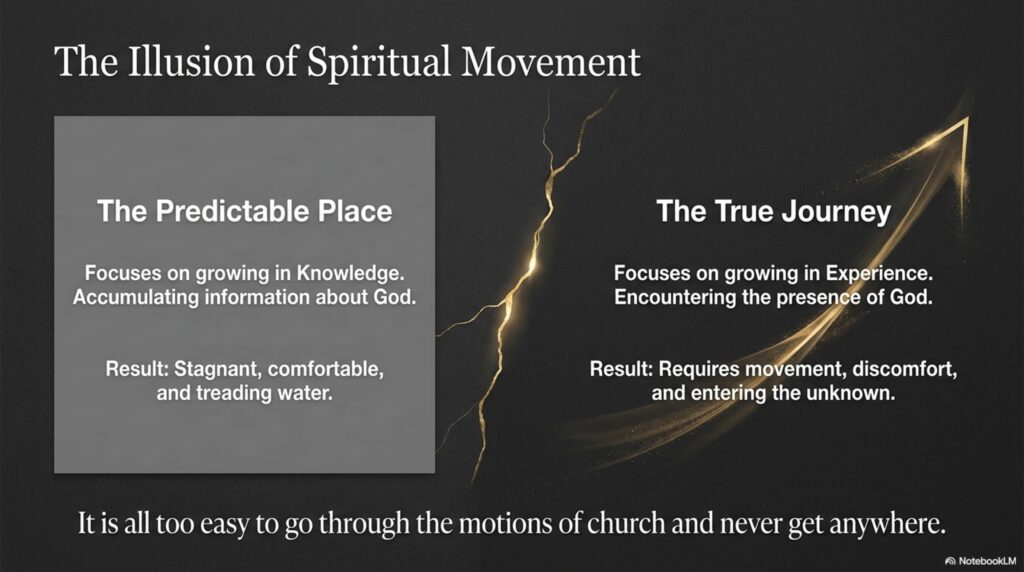
Am I merely treading water, so to speak, or am I actually moving — going somewhere, namely, moving closer to God? It’s all too easy to go through the motions of church and God and never get anywhere, to find oneself at exactly the same place on one’s faith journey where one was five, ten, fifteen, even twenty years ago.
I very much include myself here. My own particular temptation is to grow in terms of my understanding, or knowledge of God, while remaining stuck in the same old, comfortable, predictable place in terms of my relationship, or experience, of God.
A real journey, after all, entails movement. If there is no real movement, there is no real journey.
Many of our best contemporary writers on the topic of spirituality have come to the conclusion that working the Twelve Steps of Alcoholics Anonymous is the single most effective way to encourage movement and growth in one’s faith journey.
An initial objection on the part of many is, “But I’m not an alcoholic!” The response to this objection is: “You don’t have to be an alcoholic to benefit from working the Steps.”
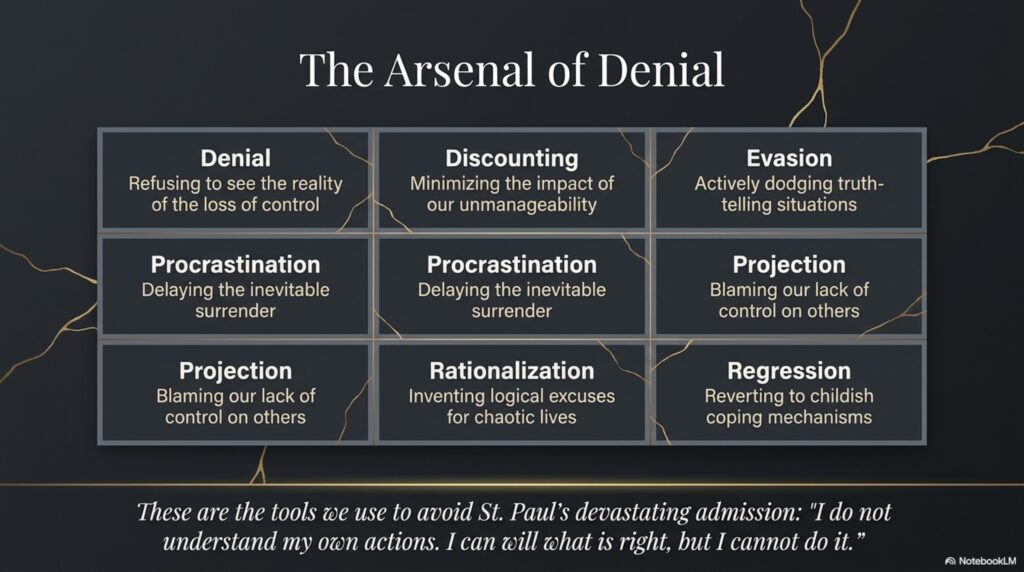
I daresay all of us can relate personally to St. Paul’s words in his letter to the Romans: “I do not understand my own actions. For I do not do what I want, but I do the very thing I hate. I can will what is right, but I cannot do it.”
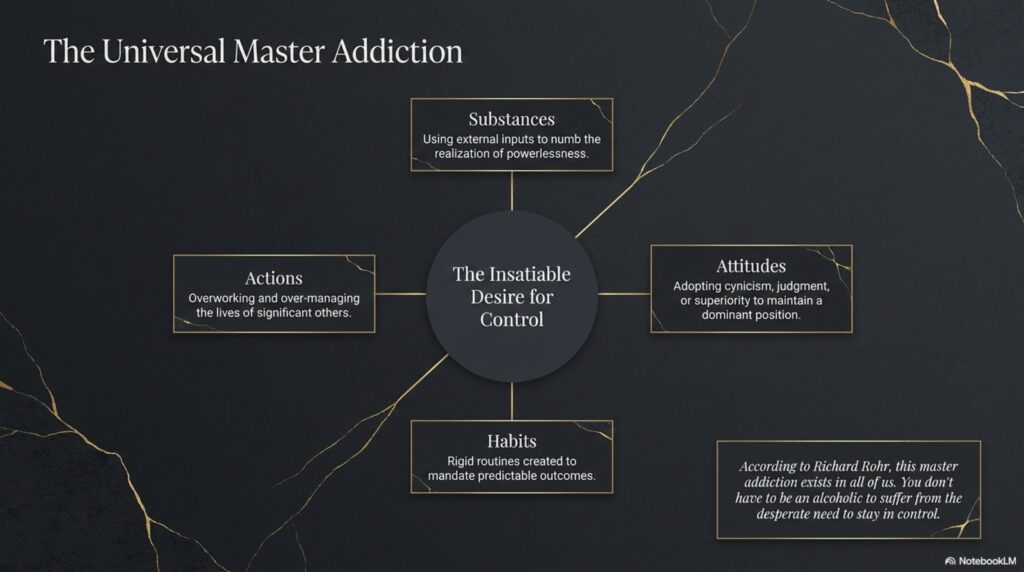
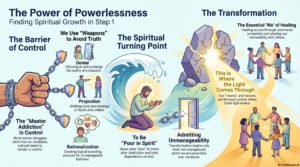
Richard Rohr, a major writer on spirituality, posits an underlying dynamic — an addiction, or addictive tendency — which he claims all of us are subject to: namely, our insatiable desire to be in control. This underlying master addiction leads to the many different substances, attitudes, habits, and actions we use to try to stay in control.
Since this is a church and not an official Twelve Step group, the method I have chosen to bring out the practical spirituality of the Twelve Steps is to connect each step with one of the key teachings of Jesus, plus other key teachings in the Bible. My hope is that in placing key teachings from the Bible in close proximity with each of the steps, the teachings from the Bible and the wisdom of the steps will shed light on each other, leading to a revitalized faith journey for anyone who wants a closer relationship with God.
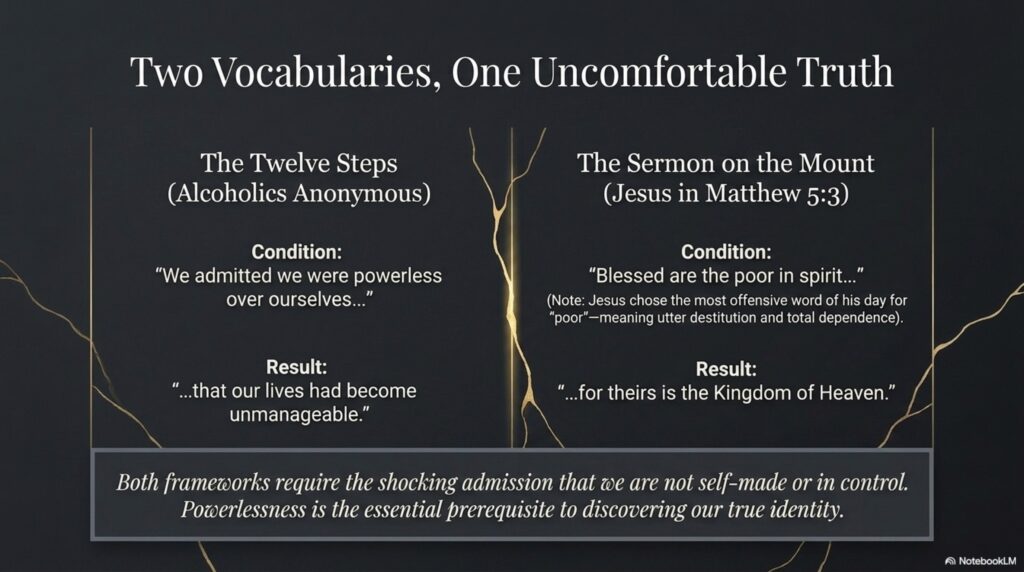
The first of the Twelve Steps, which I’m going to reword as “We admitted we were powerless over ourselves, that our lives had become unmanageable,” involves a huge and very unpleasant element of truth-telling. Because power, independence, and being in control are the primary values of our culture, to admit that one is powerless, dependent, and not in control takes an act of courage on our part that many simply are not willing to make.
For many of us, it takes a major accident, a diagnosis of serious illness, losing one’s job, the death of a spouse, or another traumatic event to remind us of the truth that, in reality, we are not powerful, not independent, and not in control.
This is precisely the reality that Jesus is getting at in the startling Beatitude with which he begins his Sermon on the Mount:
“Blessed are the poor in spirit, for theirs is the Kingdom of Heaven.”
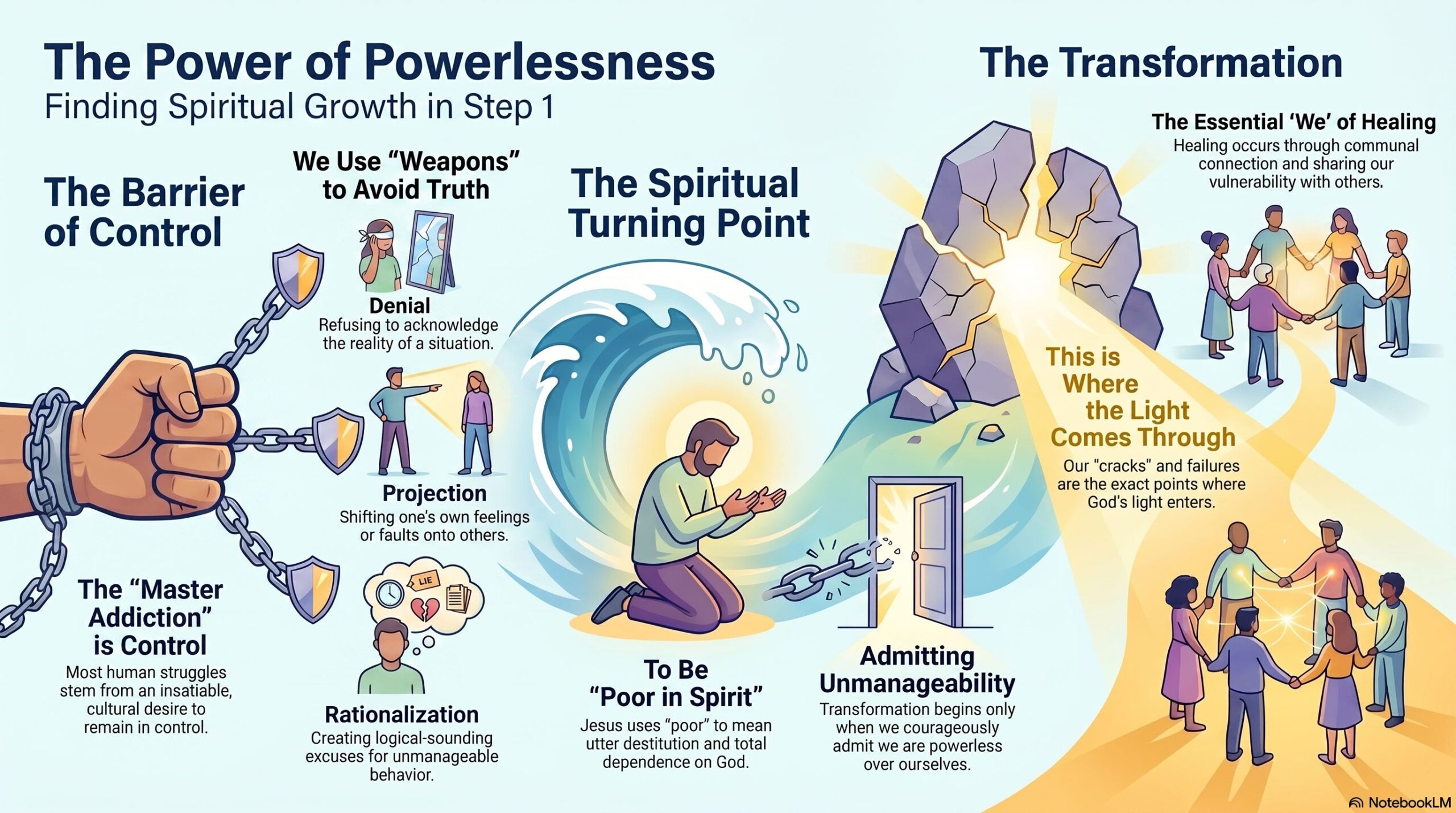
Jesus pointedly chooses the most offensive word that was available in his day to describe the reality of our human situation: poor. There were several words for “poor” in the language of Jesus’ day, and Jesus picks the one that communicates the sense of not just scraping by, or being mildly in need, but the word that speaks of utter destitution and total dependence.
Jesus then calls the persons living in this state of utter destitution and total dependence “blessed,” and states that the Kingdom of Heaven is theirs.
Jesus was, in effect, making the same shocking statement in his day that Alcoholics Anonymous is making in our day: that we are not self-made, powerful, independent, in-control people, but that we are poor, out of control, and very dependent.
According to both Jesus and the Twelve Steps, the admission of our powerlessness and need is the all-important first step to discovering our true identity.
As a lead-in to the first step — “We admitted we were powerless over ourselves, that our lives had become unmanageable” — I would like to offer the following illustration of powerlessness from Rachel Naomi Remen, M.D.
She writes:
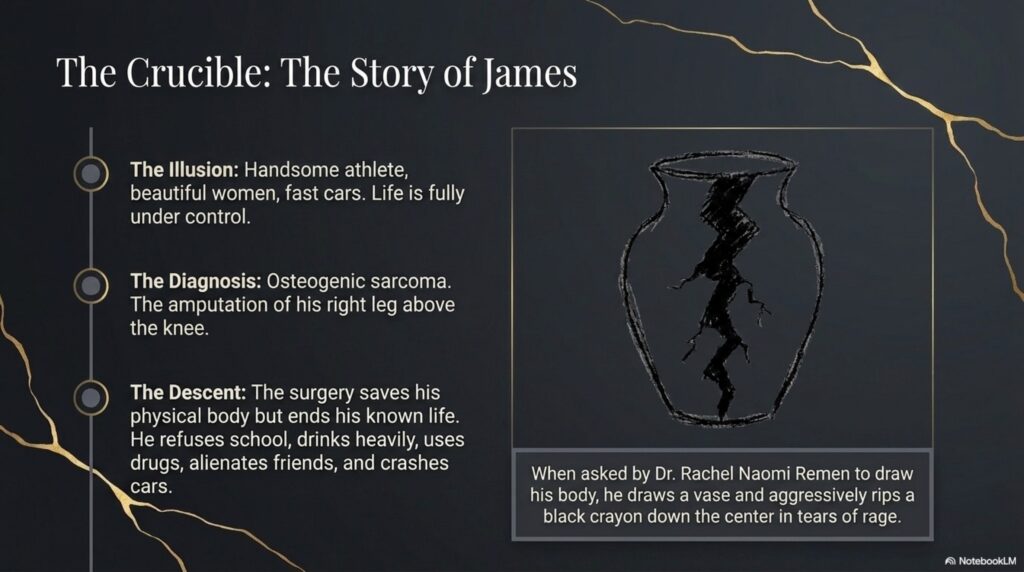
“One of the angriest people I ever worked with was a young man with osteogenic sarcoma of the right leg. He had been a high school and college athlete and until the time of his diagnosis his life had been good. Beautiful women, fast cars, personal recognition. Two weeks after his diagnosis, they had removed his right leg above the knee. This surgery, which saved his life, also ended his life. Playing ball was a thing of the past.
These days there are many sorts of self-destructive behavior open to an angry young man like this. He refused to return to school. He began to drink heavily, to use drugs, to alienate his former admirers and friends, and to have one automobile accident after the other. After the second of these, his former coach called and referred him to me.”
Dr. Remen continues:
“He was a powerfully built and handsome young man, profoundly self-oriented and isolated. He was consumed with rage. Filled with a sense of injustice and self-pity, he hated all the well people. In our second meeting, hoping to encourage him to show his feelings about himself, I gave him a drawing pad and asked him to draw a picture of his body. He drew a crude sketch of a vase, just an outline. Running through the center of it he drew a deep crack. He went over and over the crack with a black crayon, gritting his teeth and ripping the paper. He had tears in his eyes. They were tears of rage.”
At this point I’m going to press the “pause” button on this illustration and take a break to examine what this story so far can teach us about the realities of powerlessness and unmanageability.
Let’s name the guy in Dr. Remen’s story “James.”
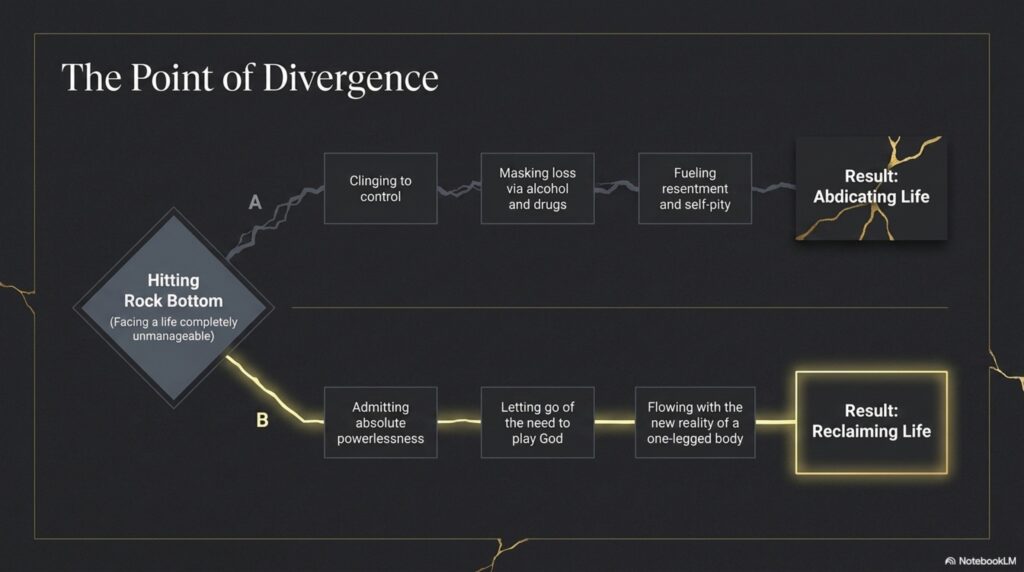
James appeared to have it all together and to be independent and well in control of his life, when a diagnosis of cancer changed all that. After losing his leg, he entered a period of denial. He created for himself the illusion that he was still in control by masking his loss through the use of alcohol and drugs.
“James” eventually came face-to-face with a critical choice. Either he could choose to slide into the unmanageable life of an alcoholic and drug addict, or he could choose to accept the fact that he was powerless over what had happened, begin to flow with the reality that he was now a man with one leg, and see where this new reality would carry him. In other words, “James” was faced with the choice of abdicating his life through resentment, rage, alcohol, and drugs — or, paradoxically, reclaiming his life by letting go of his need to control.
As many of us know, perhaps the most difficult admission we will ever have to make in life is to admit the fact that we are powerless over something, and that as a result our life has become unmanageable.
Dan Millman, author of Way of the Peaceful Warrior, talks about the warehouse of weapons that we have at our disposal to keep us from admitting our powerlessness. These weapons include denial, discounting, evasion, procrastination, projection, rationalization, and regression. We all have our favorite moves, and many of us have our favorite substances, habits, or attitudes to avoid admitting that we are powerless.
In fact, as I mentioned earlier, it almost always takes a dramatic event to force us to face our powerlessness. A.A. calls it “bottoming out.” Many alcoholics have to “bottom out” several times before they finally admit their powerlessness over alcohol. Many of us control addicts will do anything and everything to escape having to make the admission that we are not in control of our own lives, or the lives of our significant others.
To jump ahead a bit: we have been so busy playing God ourselves that there has been no time, space, or energy for us to come to believe that a power greater than ourselves could restore us to sanity.
As theologian Richard Rohr puts it: “…All mature spirituality, in one sense or another, is about letting go and unlearning.”
As Jesus puts it: “Blessed are the poor in spirit, for theirs is the Kingdom of Heaven.”
At this point, let’s return to our friend “James.” He has just finished drawing a picture of himself as a deeply cracked vase. He has come face to face with his powerlessness over the loss of his leg, which he believes to be the loss of his life.
Dr. Remen continues:
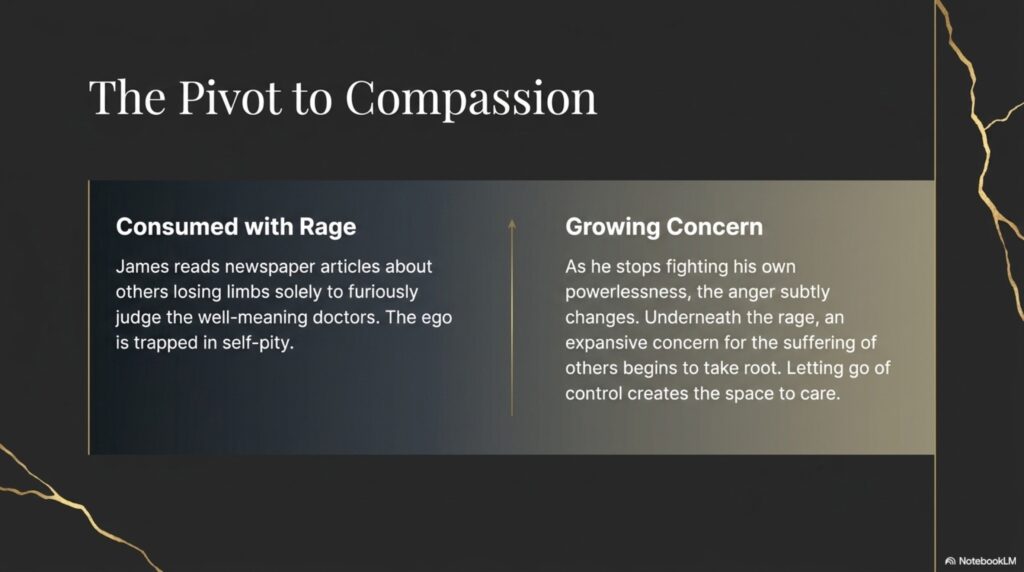
“In time, his anger began to change in subtle ways. He began one session by handing me an item torn from the local newspaper. It was an article about a motorcycle accident in which a young man had lost his leg. His doctors were quoted at length. I finished reading the article and looked up. ‘Those idiots don’t know the first thing about it,’ he said furiously. Over the next month he brought me more of these articles… His reactions were always the same, a harsh judgment of the well-meaning efforts of doctors and parents. His anger about these other young people began to occupy more and more of our session time. He was still enraged, but it seemed to me that underneath his anger a concern for others was growing.”
Dr. Remen goes on to describe how “James’” growing concern for others eventually led him to a fulfilling vocation of helping others to accept and overcome losses similar to his own.
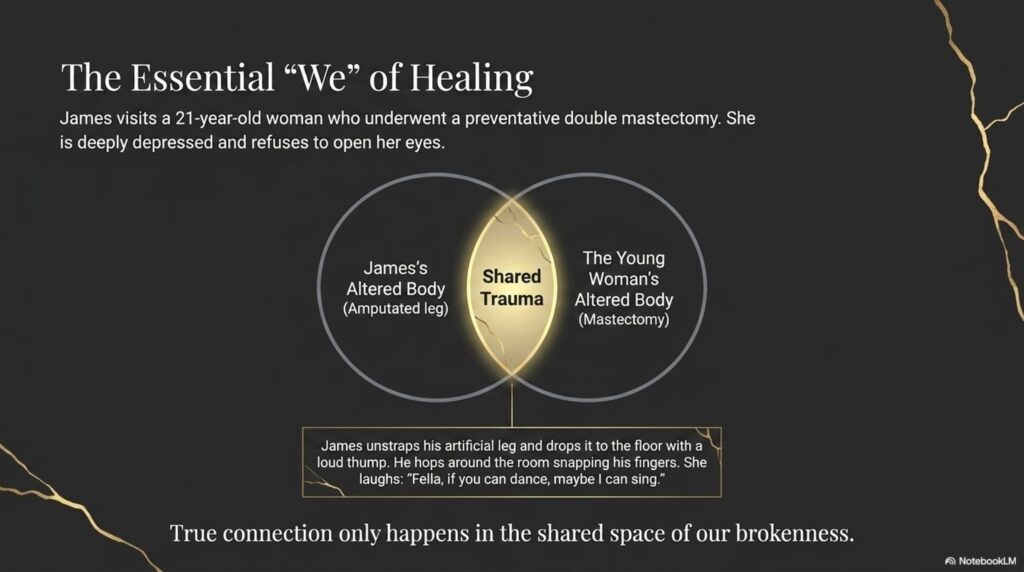
At one point “James” pulls off an incredible intervention. I want to share the story of this intervention with you because it beautifully illustrates how crucial we are to each other’s healing. In A.A. lingo, it gives us a picture of the essential “we” — the communal nature of the steps. In Jesus’ lingo, it gives us a picture of the essential “we” of the Kingdom of God.
Dr. Remen writes:
“My favorite of all ‘James” stories concerned a visit to a young woman who had a tragic family history: breast cancer had claimed the lives of her mother, her sister, and her cousin. Another sister was in chemotherapy. This last event had driven her into action. At twenty-one she took one of the only options open at the time — she had both her breasts removed surgically.
‘James’ visited her on a hot midsummer’s day, wearing shorts, his artificial leg in full view. Deeply depressed, she lay in bed with her eyes closed, refusing to look at him. He tried everything he knew to reach her, but without success. He said things to her that only another person with an altered body would dare to say. He made jokes. He even got angry. She did not respond.
All the while a radio was softly playing rock music. Frustrated, he finally stood, and in a last effort to get her attention, he unstrapped the harness of his artificial leg and let it drop to the floor with a loud thump. Startled, she opened her eyes and saw him for the first time. Encouraged, he began to hop around the room snapping his fingers in time to the music and laughing out loud. After a moment she burst out laughing too.
‘Fella,’ she said, ‘if you can dance, maybe I can sing.’
This young woman became his friend and began to visit people in the hospital with him… Eventually she became his wife…”
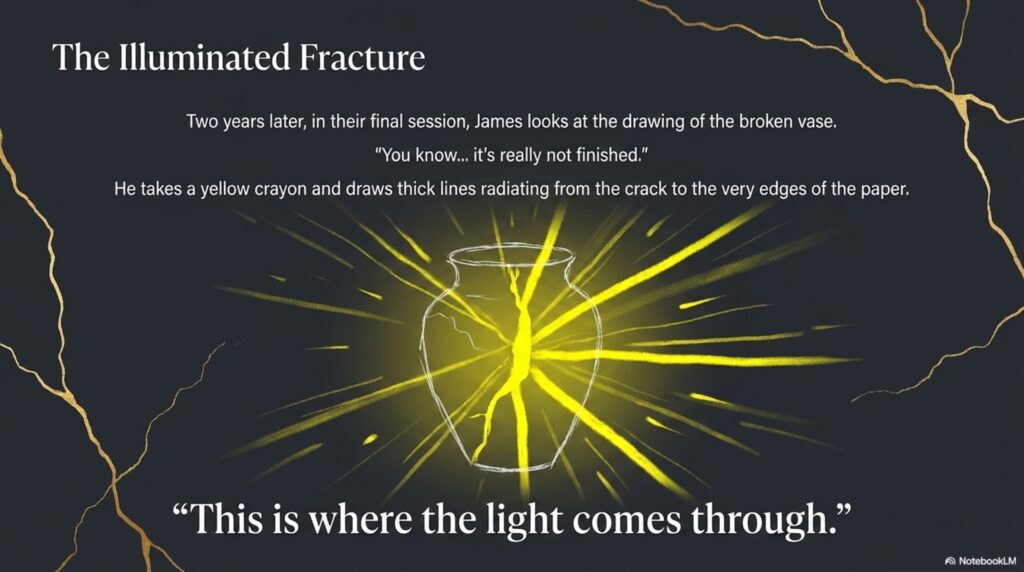
“But long before this,” Dr. Remen writes, “we ended our sessions together. In our final meeting, we were reviewing the way he had come, the sticking points and the turning points. I opened his chart and found the picture of the broken vase that he had drawn two years before. Unfolding it, I asked him if he remembered the drawing he had made of his body.”
He took it in his hands and looked at it for some time.
“‘You know,’ he said, ‘it’s really not finished.’”
Surprised, she extended her basket of crayons toward him. Taking a yellow crayon, he began to draw lines radiating from the crack in the vase to the very edges of the paper. Thick yellow lines. She watched, puzzled. He was smiling. Finally he put his finger on the crack, looked at her, and said softly:
“This is where the light comes through.”
This is where the light comes through.
Amen.
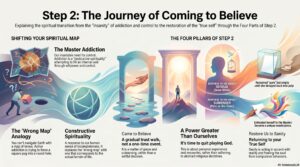
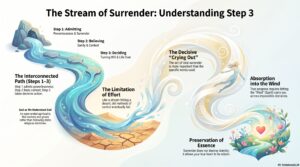
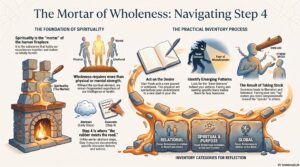
Ai generated infographic, based on the Sermon

Paul Wrightman pastors at the Community Church of the Monterey Peninsula, California:
-
Pastor Paul: Step 1 – The Power Of Powerlessness
Sermon June 14, 2026 “The Spirituality Of The Twelve Steps”
-
Pastor Paul: Step 2 – Came to Believe
Sermon June 21, 2026 “The Spirituality Of The Twelve Steps”
-
Pastor Paul: Step 3 – Choosing God
Sermon June 28, 2026 “The Spirituality Of The Twelve Steps”
-
Pastor Paul: Step 4 – Taking Stock
Sermon July 5, 2026 “The Spirituality Of The Twelve Steps”
-
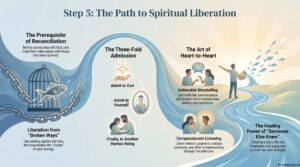
Pastor Paul: Step 5 – Heart-To-Heart
Sermon July 12, 2026 “The Spirituality Of The Twelve Steps”
-
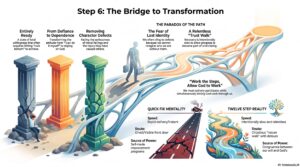
Pastor Paul: Step 6 – Becoming Ready
Sermon July 26, 2026 “The Spirituality Of The Twelve Steps”
-
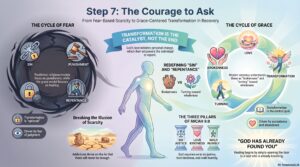
Pastor Paul: Step 7 – The Courage to Ask
Sermon August 2, 2026 “The Spirituality Of The Twelve Steps”
-
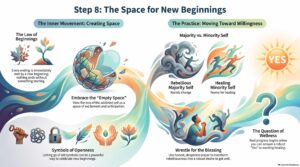
Pastor Paul: Step 8 — Making a List
Sermon August 9, 2026 “The Spirituality Of The Twelve Steps”
-
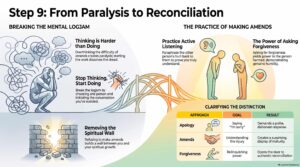
Pastor Paul: Step 9 – Embodied Reconciliation
Sermon August 16, 2026 “The Spirituality Of The Twelve Steps”
-
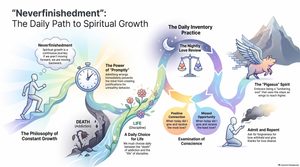
Pastor Paul: Step 10 – Neverfinishedment
Sermon August 23, 2026 “The Spirituality Of The Twelve Steps”
-
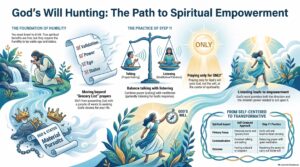
Pastor Paul: Step 11 – God’s Will Hunting
Sermon August 30, 2026 “The Spirituality Of The Twelve Steps”
-
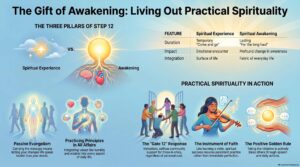
Pastor Paul: Step 12 – The Gift of Awakening
Sermon September 6, 2026 “The Spirituality Of The Twelve Steps”
-
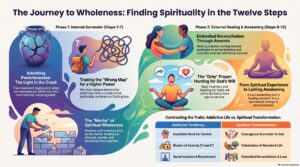
Ai’s take on Pastor Paul’s 12 Step Sermons
Sermon September 6, 2026 “The Spirituality Of The Twelve Steps”
Leave a Reply