Sermon by Pastor Paul Wrightman (June 21, 2026)
The Spirituality of the Twelve Steps:
Step 2 – Came to Believe
Jeremiah 19:11-13; Matthew 7:7-8; Mark 9:20-24
Tony Campolo writes:
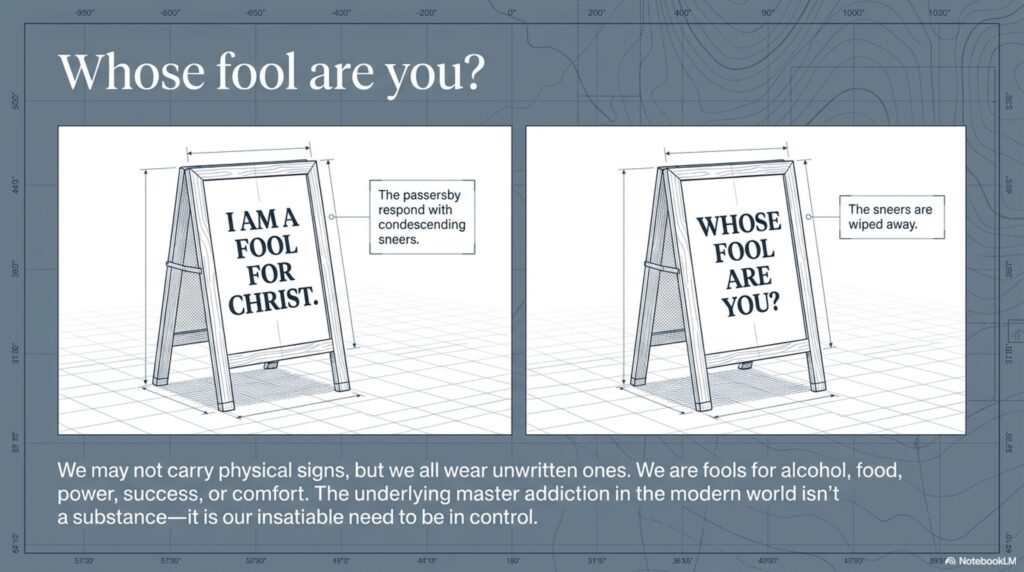
I heard about a man who paraded up and down the streets of Philadelphia carrying a sandwich-board sign over his shoulders. On one side it read, “I am a fool for Christ.” People approaching him had condescending sneers on their faces — but as they passed, you would see those sneers quickly wiped away as they looked back and read the other side: “Whose fool are you?”
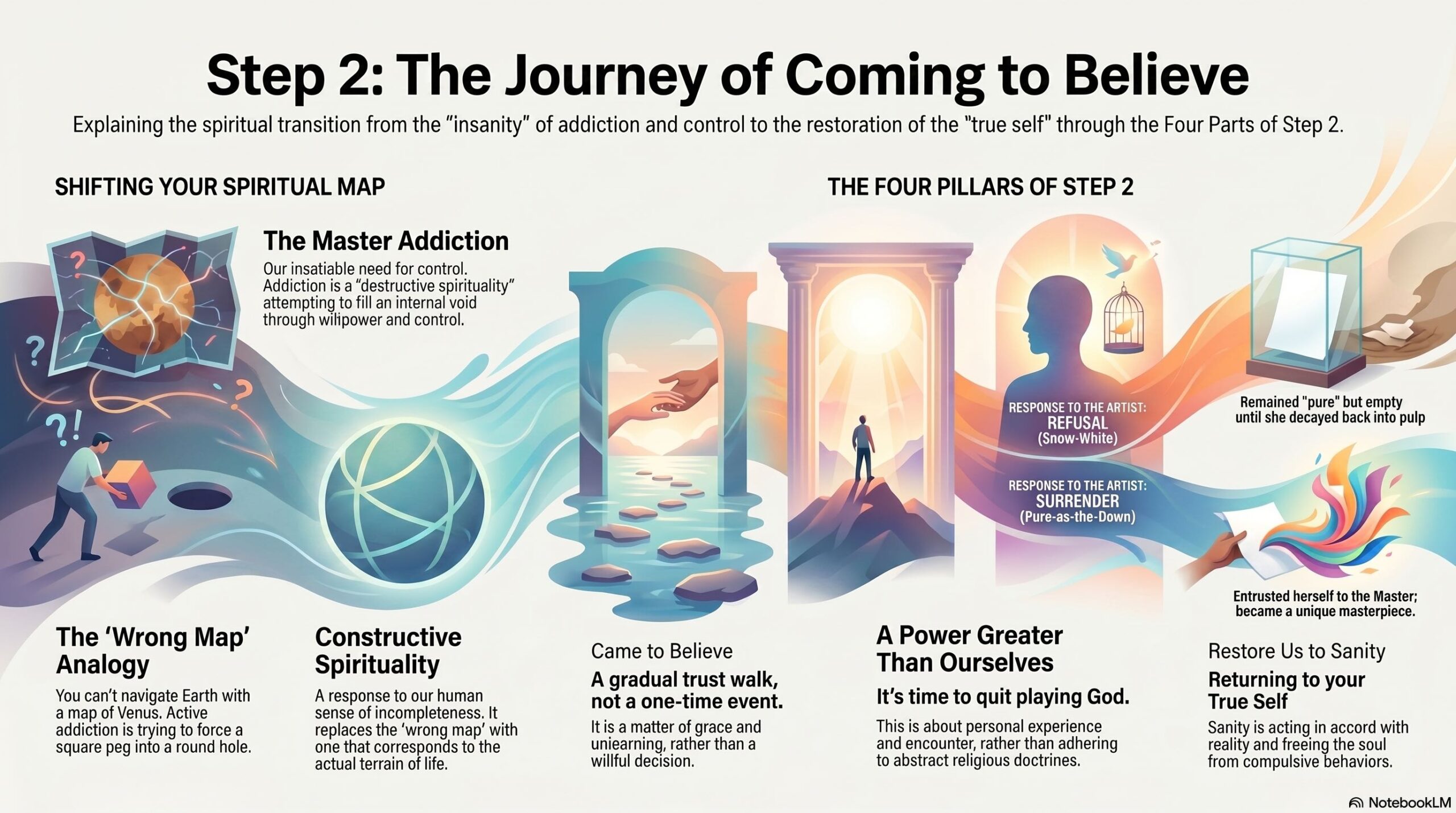
Last week, in exploring the first of the Twelve Steps, we saw how there is a growing consensus that all of us in First World countries could be considered to be addicted — if not to a particular substance, bad habit, or attitude, then to the underlying master addiction: our insatiable need to be in control. Although we may not be walking around carrying a sign saying “I am a fool for Christ,” many of us bear unwritten signs saying “I am a fool for alcohol, or food, or power, or success, or comfort.”
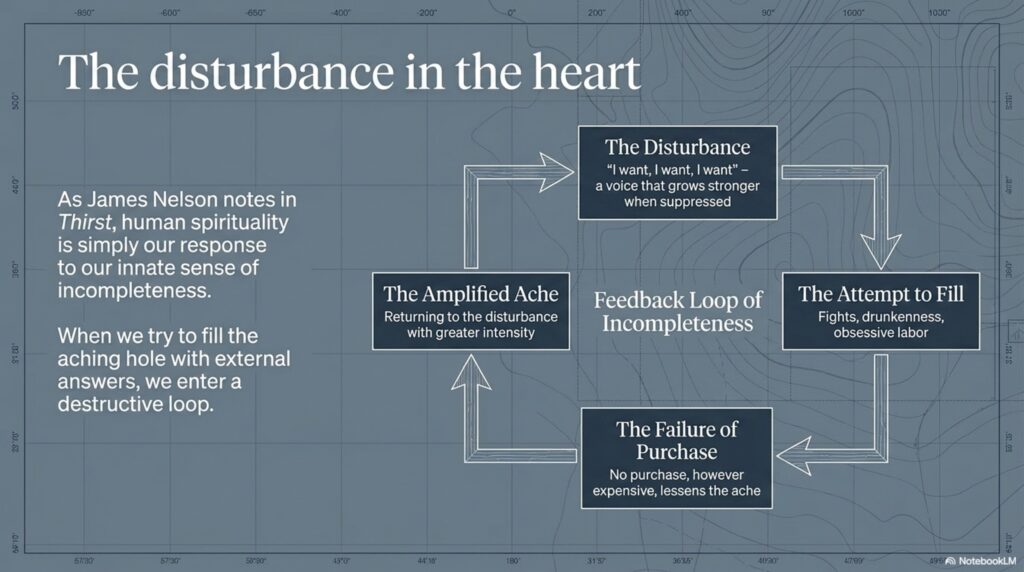
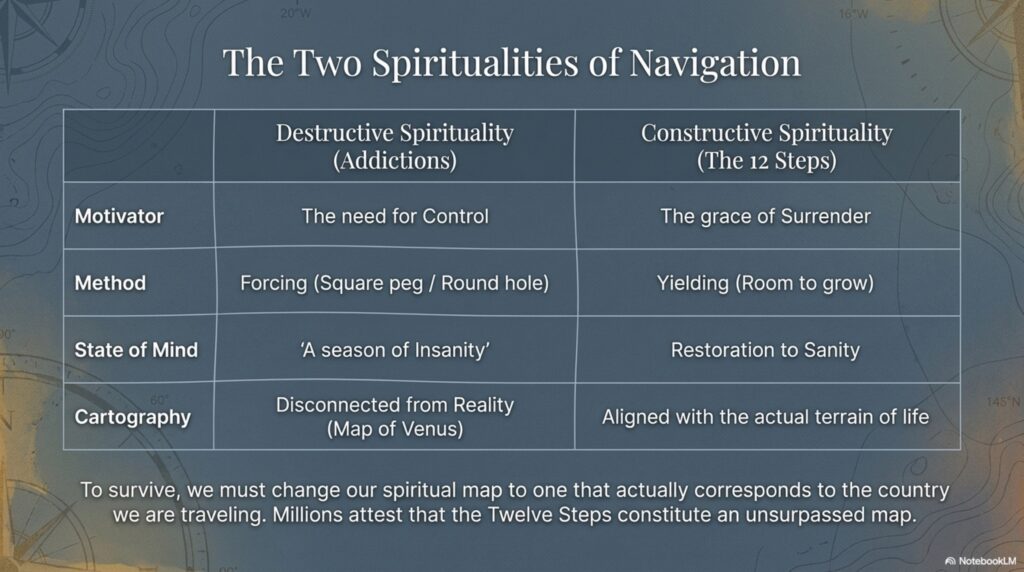
James Nelson, author of Thirst: A Theological Investigation of Addiction, makes the crucial point that there are both healing and injurious spiritualities. Addictions are examples of destructive spiritualities, whereas the Twelve Steps comprise a major example of a constructive spirituality. Nelson states that “our spirituality is our response to our human sense of incompleteness — whatever form that response might take.”
Saul Bellow captures this sense of incompleteness in his novel Henderson the Rain King, when he has Henderson describe himself as follows:
“Now I have already mentioned that there was a disturbance in my heart, a voice that spoke there and said, I want, I want, I want! It happened every afternoon, and when I tried to suppress it, it got even stronger. It said only one thing: I want, I want, I want. And I would ask, ‘What do you want?’ But this is all it would ever tell me. … Through fights and drunkenness and labor it went right on, in the country, in the city — no purchase, however expensive, would lessen it.”
Henderson, a highly successful businessman, tries to fill this great aching hole in his being through fights and booze and work. None of these provides lasting serenity, because each of them is a wrong answer to the unavoidable question of meaning which life poses.
Ernest Kurtz, one of the authors of The Spirituality of Imperfection, shares the following:
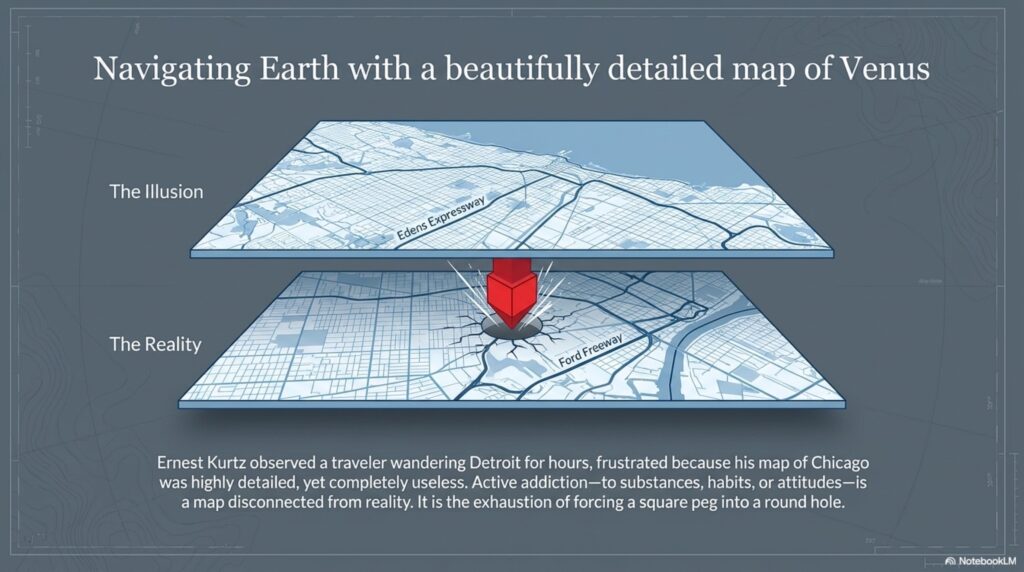
“Several years ago, I flew from Atlanta to Detroit, en route to a meeting in Northern Michigan. Renting a car, I laid out a book of maps on the passenger seat and proceeded to set out for the Northern Michigan Peninsula. The map of the metropolitan area was beautifully detailed, showing the airport to the west of the city, the large body of water to the city’s east, and Route 94, the interstate highway. But after almost an hour of wandering around looking at road signs that failed to match the map and obviously getting nowhere, the realization suddenly dawned: the Ford Freeway on which I was driving would never turn into the Edens Expressway shown on the map. The map of Detroit didn’t work because it was the wrong map: it was a map of Chicago.”
Kurtz goes on to quote the observation of an A.A. member: “The drinking alcoholic is trying to find his [or her] way around on earth with this beautifully detailed map of Venus.”
We could expand this point to say that anyone with any kind of active addiction, bad habit, or bad attitude is responding to life very much along the lines of trying to force a square peg into a round hole. It simply will not work. In order for our lives to work, we have to replace our destructive spirituality — of alcohol, food, work, control, you name it — with a constructive spirituality. We have to change our spiritual map to one which actually corresponds to the country in which we are traveling. Millions would attest to the fact that the Twelve Steps constitute an unsurpassed map with which to navigate the tricky terrain of life.
Sadly, many in the United States today are addicted to white supremacy and racism. They aren’t about to admit that their lives are unmanageable, because they’re so busy trying to manage the lives of others.
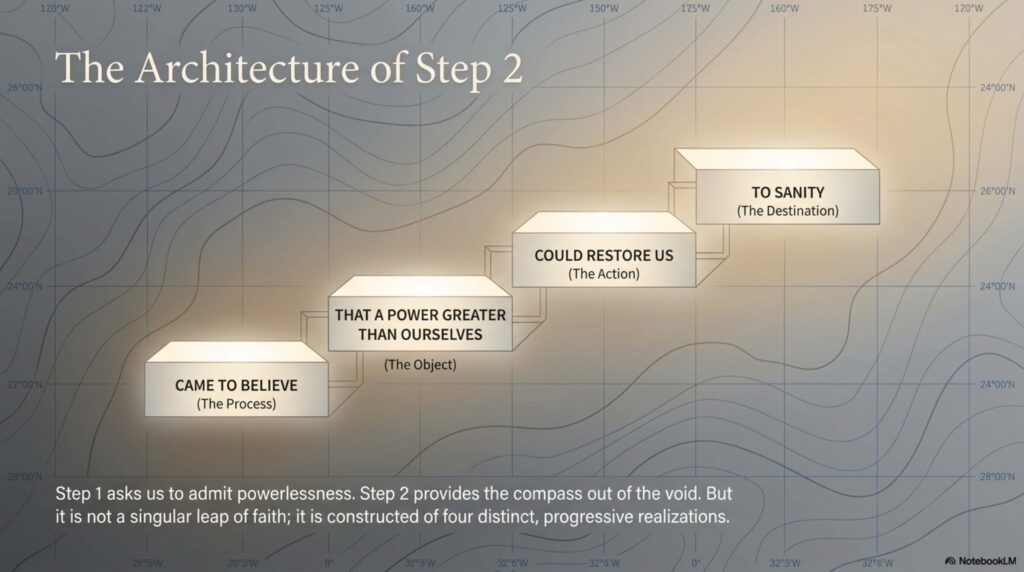
Last week we saw how our admission of powerlessness is the crucial first step on our road to recovery. This week we look at the second of the Twelve Steps, which states: “Came to believe that a Power greater than ourselves could restore us to sanity.”
There are four distinct yet interrelated parts to this second step:
- Came to believe
- that a Power greater than ourselves
- could restore us
- to sanity.
Let us look at each of these four parts.
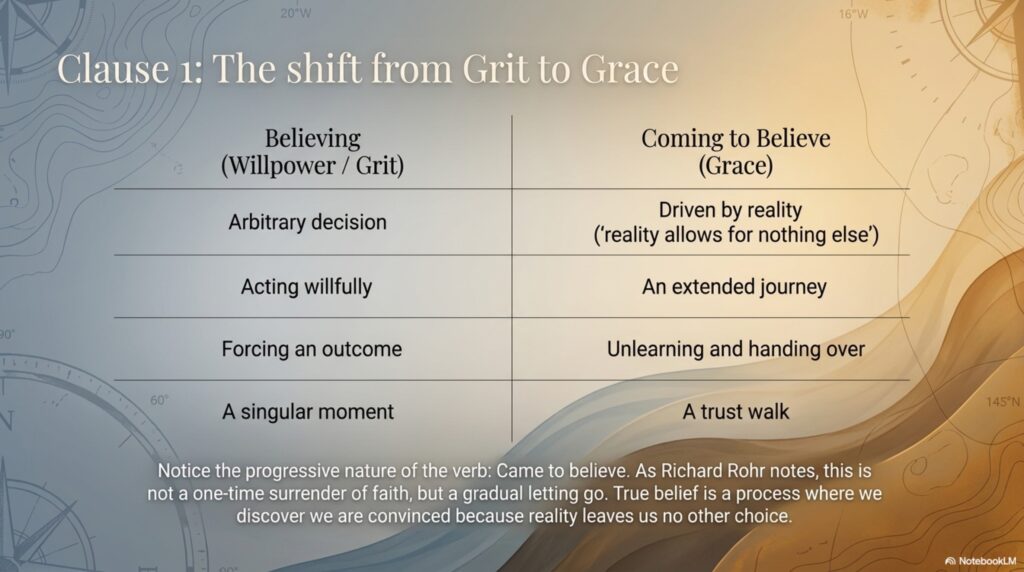
Came to believe. The progressive nature of the verb here is crucial. Came to believe.
Concerning the progressive nature of coming to believe, Richard Rohr writes:
“The surrender of faith does not happen in one moment but is an extended journey, a trust walk, a gradual letting go, unlearning, and handing over.”
Rabbi Rami Shapiro quotes a fellow Twelve-Stepper as saying:
“Believing is a matter of grit; coming to believe is a matter of grace. When we choose to believe one thing or another, we are acting willfully. But when we come to believe, we discover that we are convinced of something because reality allows for nothing else.”
True belief is not an arbitrary, once-and-for-all decision, but a process — a process which begins with our admission of powerlessness and which gradually leads us to connect with a Power greater than ourselves.
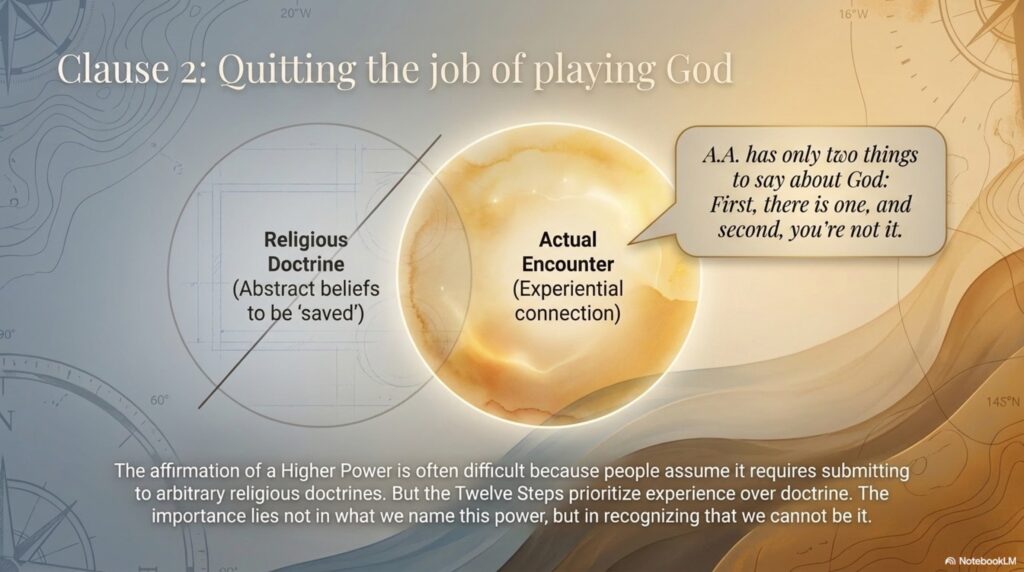
That a Power greater than ourselves. The affirmation of a Higher Power is often a difficult one for people to make, because they assume that it means going back to religion — going back to a set of religious doctrines that one has to believe in order to be “saved,” or whatever. As will become clearer next week, when we look at the Third Step and its clarifying phrase “God as we understand God,” the emphasis in the Twelve Steps is not on doctrine but on experience. It’s not about having to believe certain things about God, but about our actual encounter with God.
This mirrors the reality of the earliest Church, where the first Christians were pushed to proclaim “Jesus is Lord” not because of some abstract doctrine, but because they could not describe their experience of the risen Jesus in any other way.
The importance of Step 2 does not lie in what we choose to name our Higher Power, but in the fact that we come to believe that only a Power greater than ourselves can restore us to sanity. As the “Big Book” of Alcoholics Anonymous puts it, “First of all, we had to quit playing God.” Or, more colloquially: “As for ‘God,’ A.A. has only two things to say about the subject: First, there is one. And second, you’re not it.”
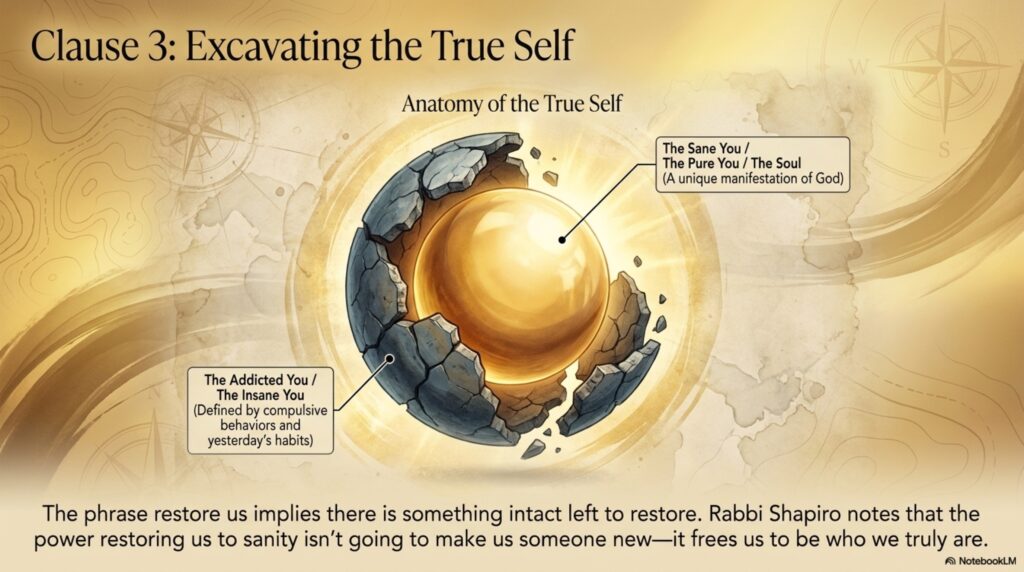
Could restore us. This affirmation assumes, of course, that there is something in us which not only needs to be restored, but that this something can be restored. What is this something?
Rabbi Shapiro calls it Soul, and writes:
“Behind the addicted you, behind the insane you, there is a greater you, a sane you, a pure you that … Westerners call Soul — a unique manifestation of God that is your true self.”
He continues:
“The power that can restore me to sanity isn’t going to make me other than I am, but rather free me to be who I truly am. This means that there is a me that is not addicted to food, a me that is not bound to repeat yesterday’s habits, a me that is free from the compulsive behaviors that have defined me in the past. This me is my Soul, my true self…”
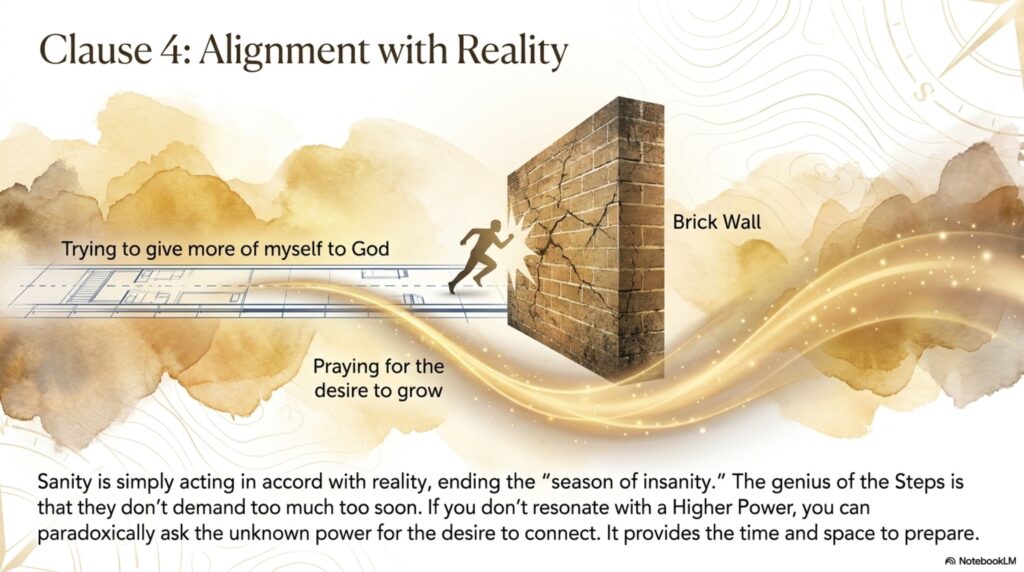
To sanity. The last part of this step plays off the assumption that sanity is acting in accord with reality, and that active addiction is a “season of insanity.”
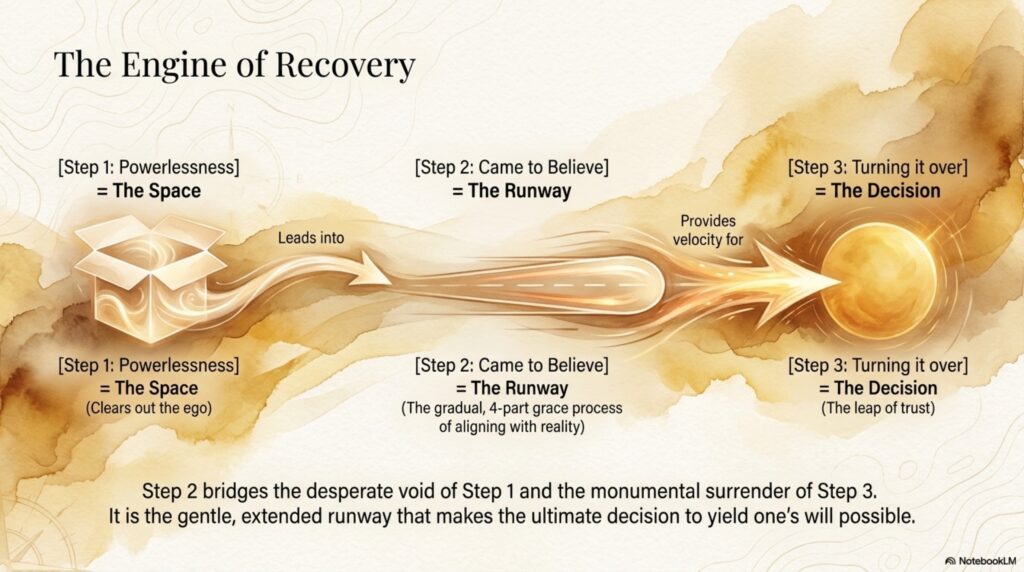
Part of the genius of the Twelve Steps is that they do not push us to do too much too soon. Several of the steps give us the time and space to prepare ourselves for the next step. For example, Step Two — “Came to believe that a Power greater than ourselves could restore us to sanity” — gives us the growing room to get ready for Step Three: “Made a decision to turn our will and our lives over to the care of God as we understood God.”
The preparatory nature of several of the steps reminds me of the wisdom I encountered in spiritual direction. When I was challenged to give more of myself to God and found myself running into a brick wall, I brought this up to my spiritual director. He said simply: “Pray for the desire to grow.”
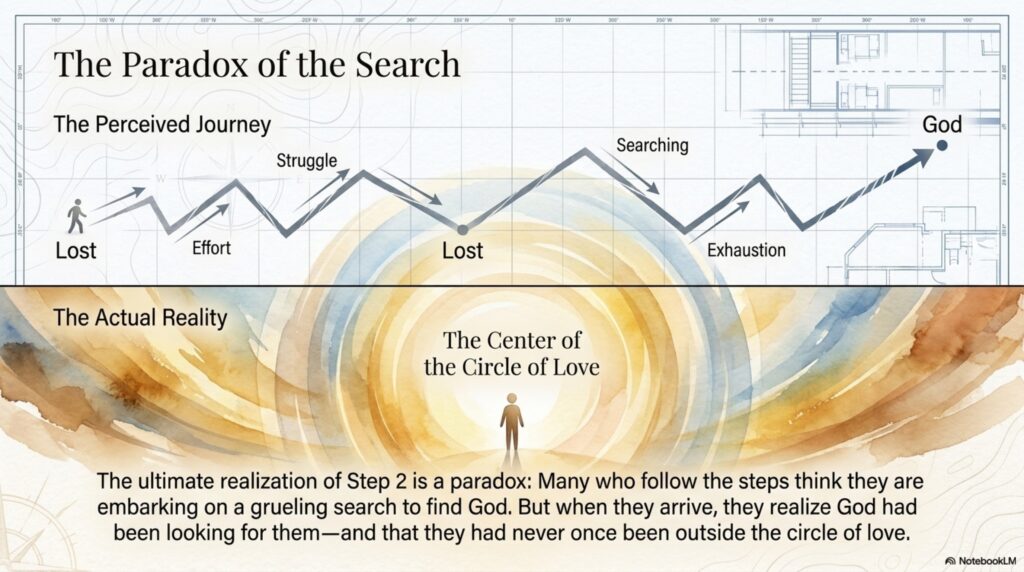
In the context of the Second Step, if we simply don’t resonate with the reality of a Higher Power, we can paradoxically ask this unknown Higher Power for the desire to connect. And speaking of paradox — numerous persons following the Steps have commented on the fact that whereas they thought they were looking for God, when they came to find the God they were looking for, they came to realize that all the while God had been looking for them. Or, better yet, they came to realize that they had never been outside the circle of God’s love.
I’d like to close this sermon by retelling a traditional wisdom story which I think captures something of the risk and the reward of coming to believe. This story is called The Artist.
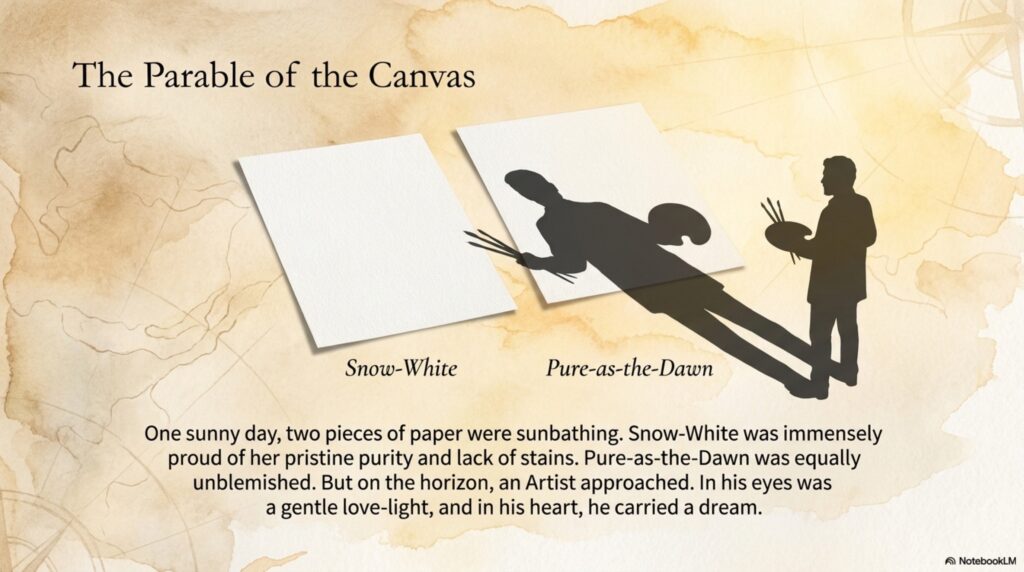
One bright, sunny day, two pieces of paper were sunbathing in the midday warmth, enjoying the pleasures of summertime.
One piece of paper was called Snow-White. She was pure white, and so very proud of her pristine purity. “Look at me,” she said to her companion. “Did you ever see such a beautifully white piece of paper?”
Her companion was called Pure-as-the-Dawn. She too was amazingly white and wonderfully free from the slightest stain. The two pieces of paper outshone each other in the midday sunlight.
In the distance, a figure appeared on the horizon. He caught their attention. As they watched, he approached ever closer. “Who can that be?” asked Snow-White. “What is he carrying in his arms?” wondered Pure-as-the-Dawn.
The figure came closer and closer, until he was only a few yards away from the two paper-friends. In his arms, he carried a palette and paintbrushes. In his eyes, there was a curious, dream-like light — a love-light, but gentle. And in his heart, he carried a dream.
“What do you think he wants?” Snow-White asked Pure-as-the-Dawn. “You don’t think he is going to paint on us, do you?”
Pure-as-the-Dawn flinched as the words sank in. “I think that is exactly what he wants to do,” she murmured.
“There’s no way that I will allow him to paint on me,” railed Snow-White. “No painter is going to spoil my purity.”
“But what if he is a master-painter?” Pure-as-the-Dawn reflected. “He might create a masterpiece on our pure white emptiness. He might make us into masterpieces.”
“But then again,” said Snow-White, “he might make a complete mess of us. No. I’m not going to take any risks like that. I’m going to stay pure until the day I die.”
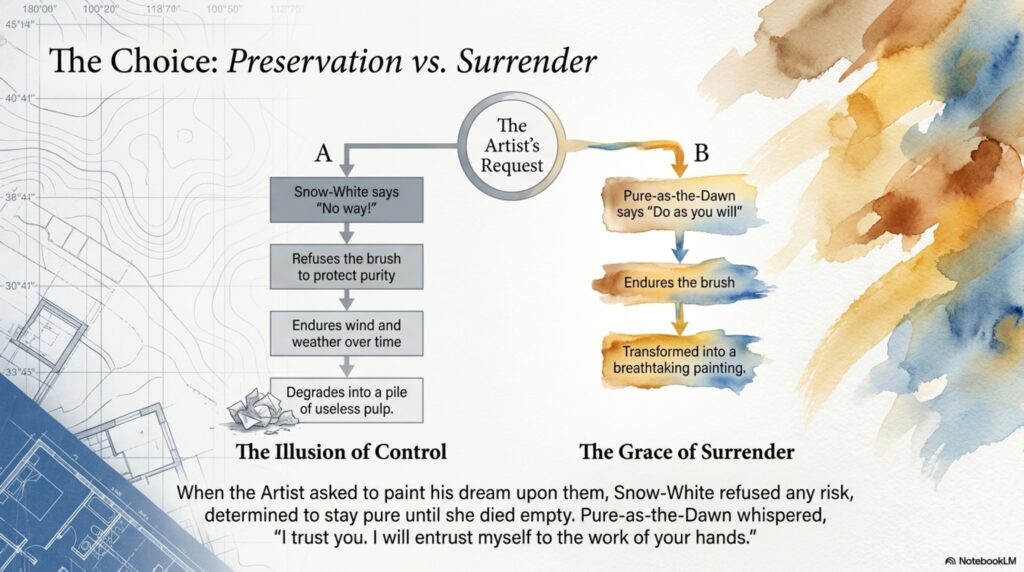
And so it came to be that the Artist approached both pieces of paper and asked their permission to paint his dream upon their pure whiteness.
Snow-White said, “No way!” And she remained pure white, and empty, until the day that the wind and the weather finally turned her back into pulp.
Pure-as-the-Dawn said, “Do as you will with me. I trust you. I will entrust myself to the work of your hands.”
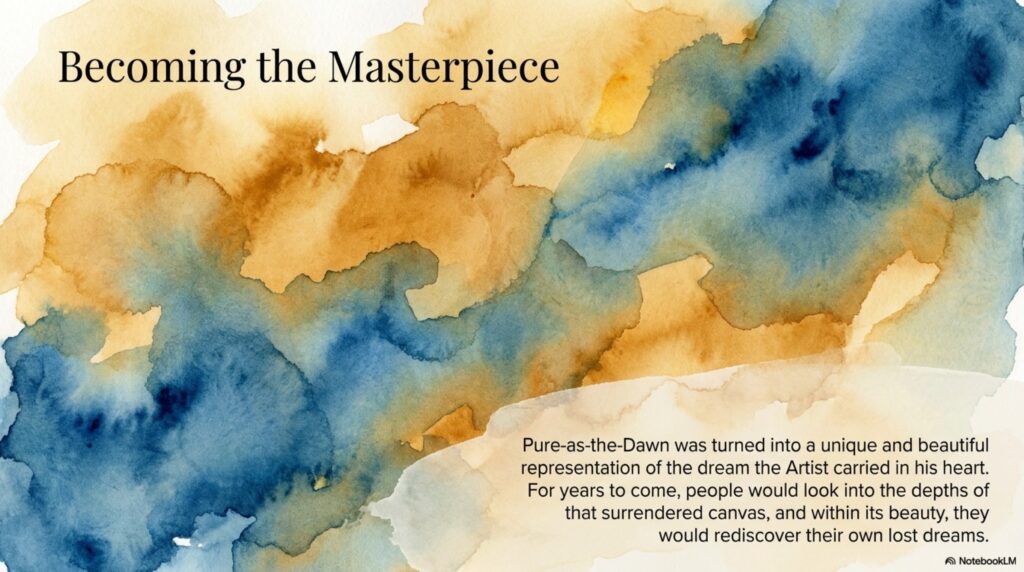
And the Artist turned her into a masterpiece — a unique and beautiful representation of the dream that he was carrying in his heart — so that in all the years to come, many, many people would look at the Artist’s picture, and in its depths and beauty, they would rediscover their own lost dreams.
Amen.
Ai generated infographic, based on the Sermon
Paul Wrightman pastors at the Community Church of the Monterey Peninsula, California:
-
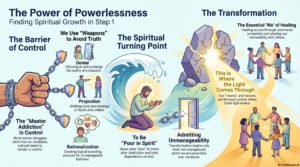
Pastor Paul: Step 1 – The Power Of Powerlessness
Sermon June 14, 2026 “The Spirituality Of The Twelve Steps”
-
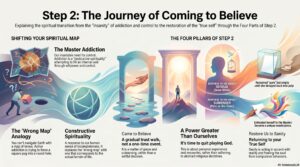
Pastor Paul: Step 2 – Came to Believe
Sermon June 21, 2026 “The Spirituality Of The Twelve Steps”
-
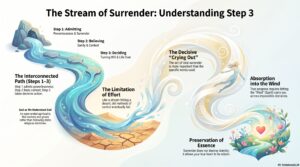
Pastor Paul: Step 3 – Choosing God
Sermon June 28, 2026 “The Spirituality Of The Twelve Steps”
-
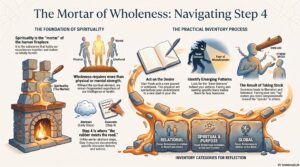
Pastor Paul: Step 4 – Taking Stock
Sermon July 5, 2026 “The Spirituality Of The Twelve Steps”
-
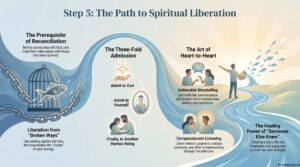
Pastor Paul: Step 5 – Heart-To-Heart
Sermon July 12, 2026 “The Spirituality Of The Twelve Steps”
-
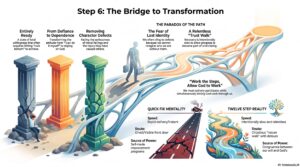
Pastor Paul: Step 6 – Becoming Ready
Sermon July 26, 2026 “The Spirituality Of The Twelve Steps”
-
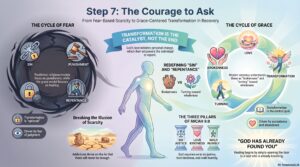
Pastor Paul: Step 7 – The Courage to Ask
Sermon August 2, 2026 “The Spirituality Of The Twelve Steps”
-
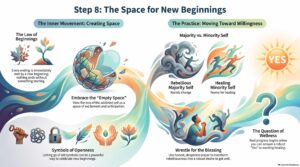
Pastor Paul: Step 8 — Making a List
Sermon August 9, 2026 “The Spirituality Of The Twelve Steps”
-
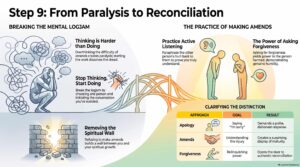
Pastor Paul: Step 9 – Embodied Reconciliation
Sermon August 16, 2026 “The Spirituality Of The Twelve Steps”
-
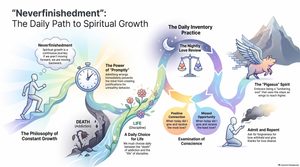
Pastor Paul: Step 10 – Neverfinishedment
Sermon August 23, 2026 “The Spirituality Of The Twelve Steps”
-
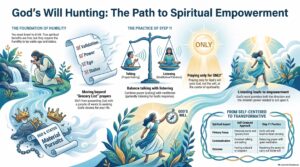
Pastor Paul: Step 11 – God’s Will Hunting
Sermon August 30, 2026 “The Spirituality Of The Twelve Steps”
-
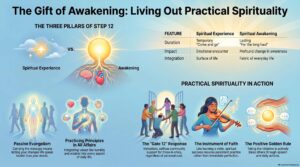
Pastor Paul: Step 12 – The Gift of Awakening
Sermon September 6, 2026 “The Spirituality Of The Twelve Steps”
-
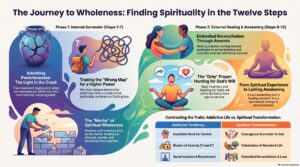
Ai’s take on Pastor Paul’s 12 Step Sermons
Sermon September 6, 2026 “The Spirituality Of The Twelve Steps”
Leave a Reply