Sermon by Pastor Paul Wrightman (June 28, 2026)
The Spirituality of the Twelve Steps:
Step 3 – Choosing God
Deuteronomy 6:4-5; Luke 15:1-7
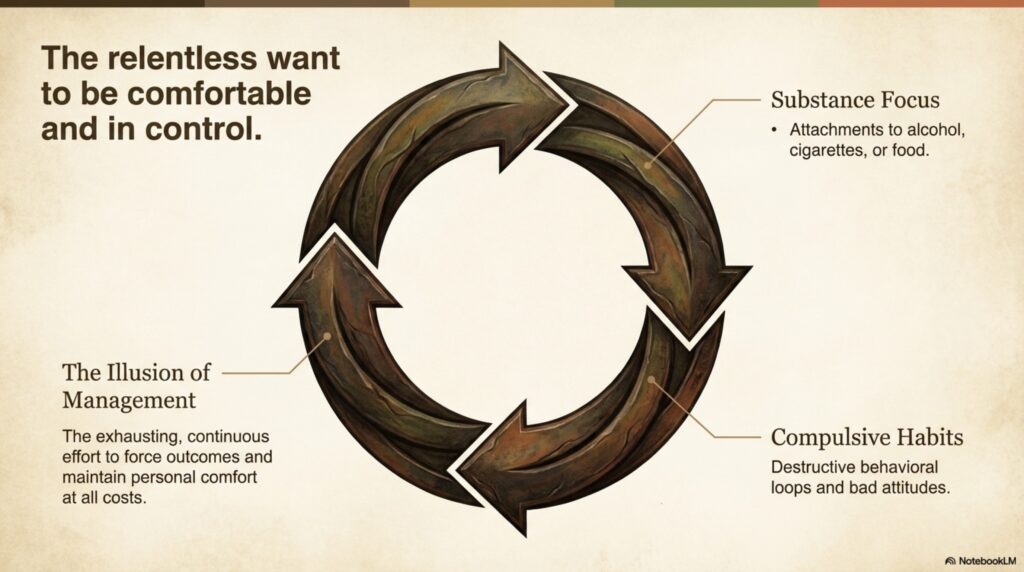
We continue our sermon series on the spirituality of the Twelve Steps. We are looking at the Steps as a pattern that all of us can use to help us overcome our addictive tendencies, whether our own addictive tendency be attached to a substance such as alcohol, cigarettes, or food, or connected to a compulsively bad habit, or bad attitude, like the relentless want to be comfortable or in control.
By looking at the Twelve Steps in the context of the teachings of Jesus, and other major biblical teachings, not only are we able to see striking similarities between them, we are also placing ourselves in a position to see how they mutually reinforce and empower one another.
One of the conspicuous things about the Steps is how they are progressive and overlapping. This means that each step builds on the progress made in previous steps before taking us into new territory.
This is very much the case with the step that we will be considering this morning, the Third Step, which states:
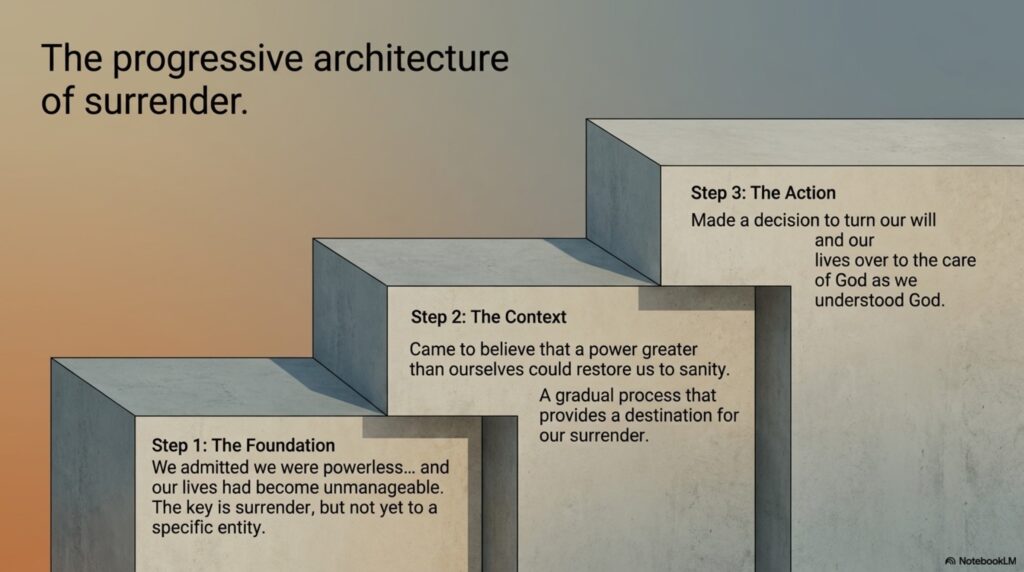
Made a decision to turn our will and our lives over to the care of God as we understood God.
Since each step builds on the steps preceding it, now would be a good time to review. The First Step, the foundation for all the other steps, as we have slightly reworded it, declares:
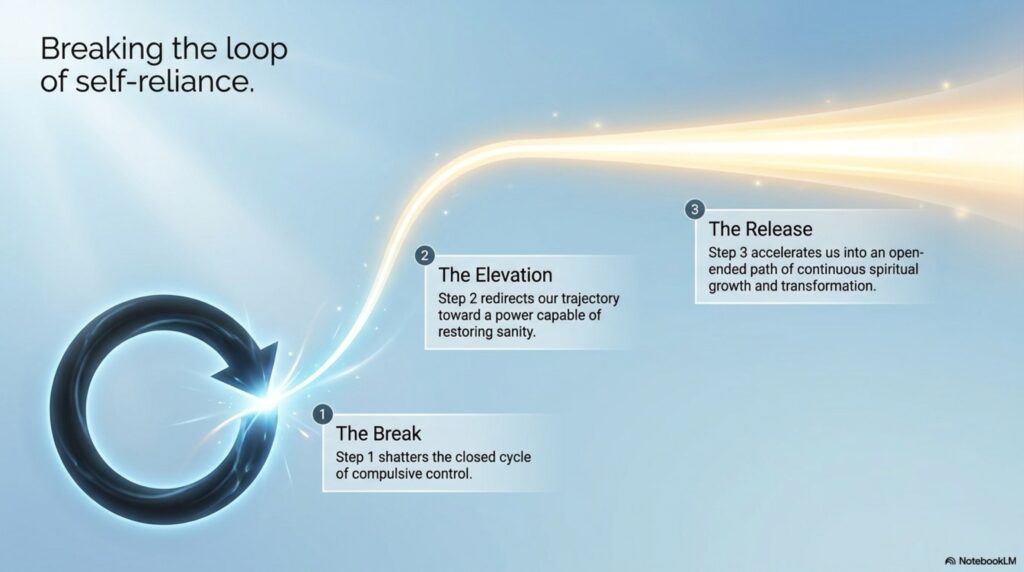
We admitted we were powerless over ourselves and that our lives had become unmanageable.
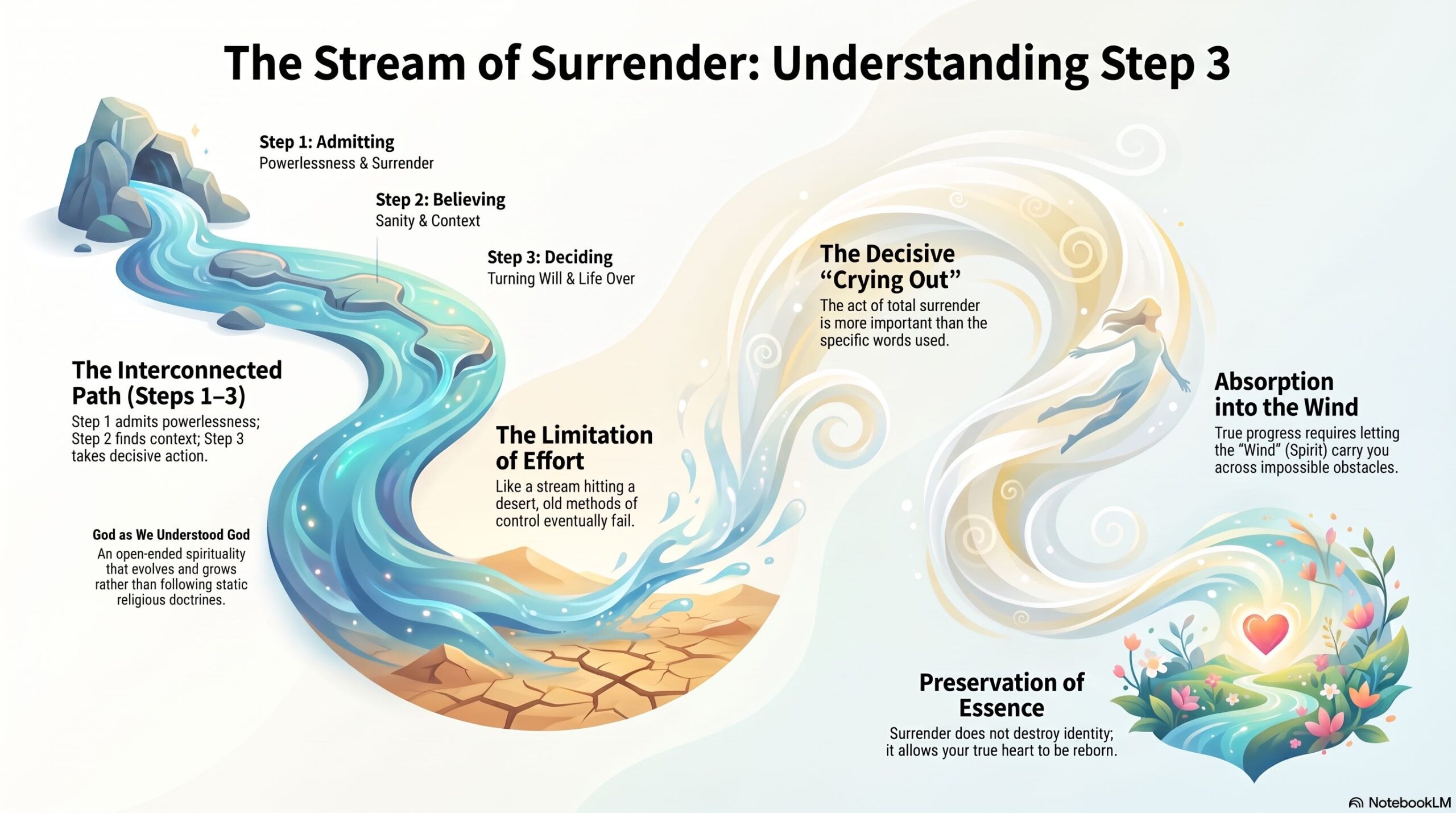
Looking at the first three steps in terms of their interconnectedness, we see that the key to Step One is surrender. But our surrender is not to anyone or anything. Step Two gives us the necessary context for our surrender. Our surrender is only to a power greater than ourselves, which in Step Three is further clarified as God. God is recognized as the only power who has the ability to give our lives manageability and sanity.
As we saw last week, Step Two — Came to believe that a power greater than ourselves could restore us to sanity — is a progressive step. Coming to believe does not happen all at once, but is a gradual process. This process leads us to Step Three: Made a decision to turn our will and our lives over to the care of God as we understood God.
To summarize the first three steps:
- We admit our powerlessness.
- We come to believe.
- We make a decision.
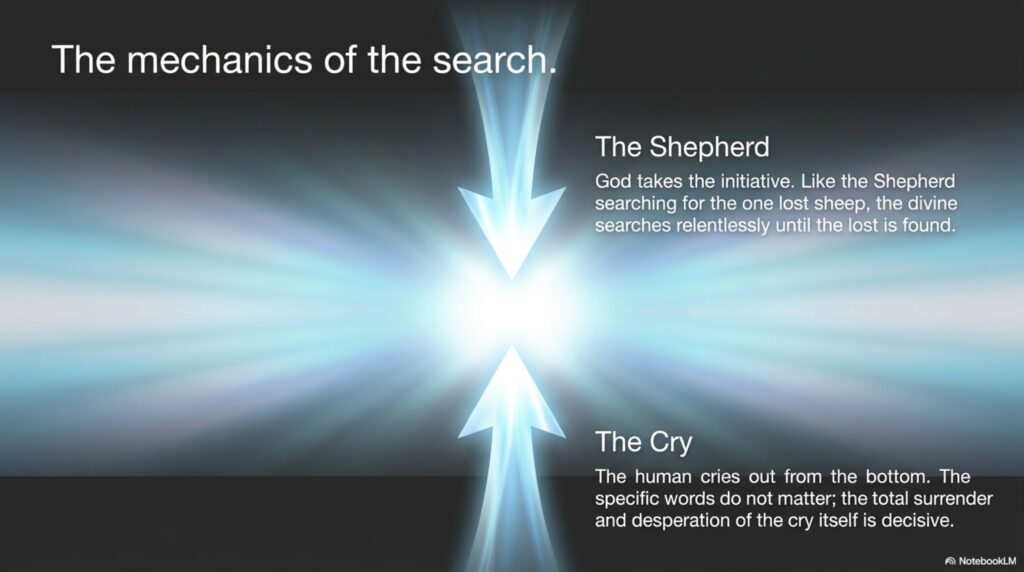
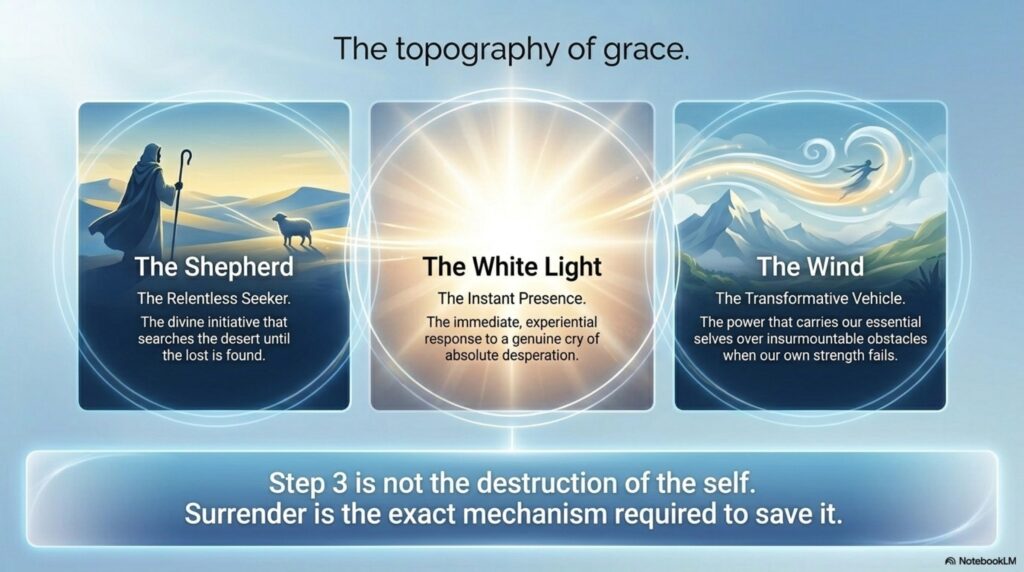
I find it helpful, in looking at the first three steps, to remind myself that it is not just me giving myself to God, but that God has already taken the initiative in looking for me. In our second scripture reading for today, the story of the shepherd looking for his one lost sheep, we are told that the shepherd searches for that sheep until he finds it. God is the shepherd. We are the sheep. It is comforting — and empowering — to know that God will never give up on us, but will search for us until we are found.
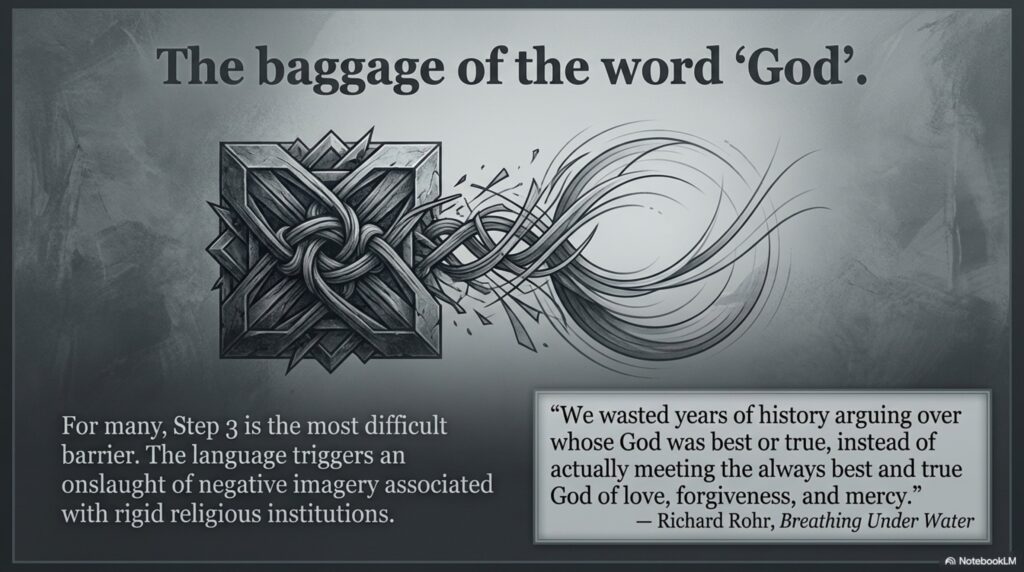
For many, Step Three is the most difficult of all the steps to make, because the word “God” triggers an onslaught of negative images associated with the word “religion.” This is precisely why the founders of Alcoholics Anonymous, Bob Smith and Bill Wilson, chose to describe God in terms of one’s personal, unique understanding of God, and not in terms of the doctrines about God expressed in Christianity or any other religious tradition.
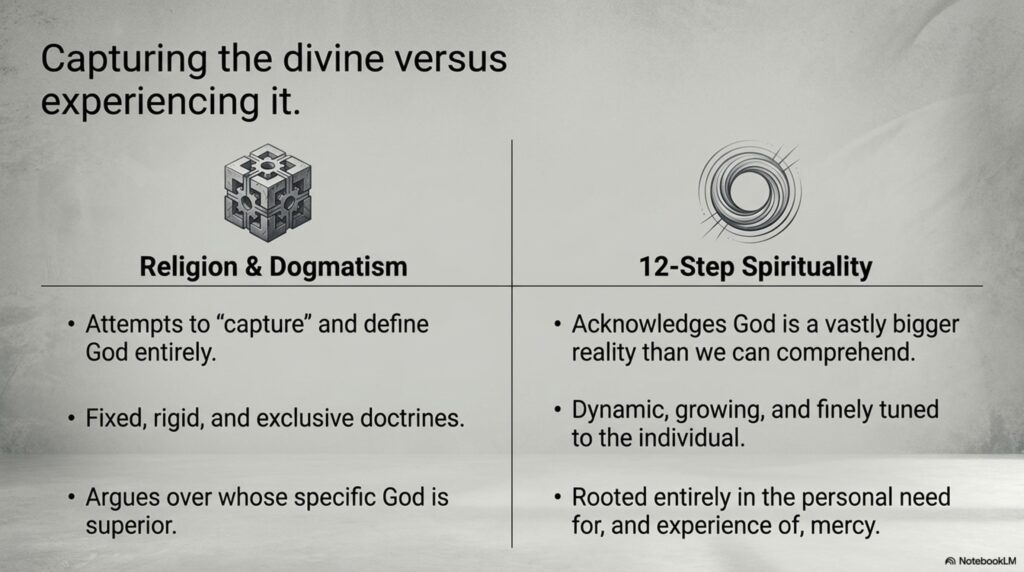
Unlike religion, which tends to think that it has “captured” God, the Twelve Steps embody an open-ended spirituality which acknowledges that God is a vastly bigger reality than we will ever be able to comprehend fully. The spirituality of the Twelve Steps recognizes that there are going to be as many different, finely-tuned understandings of God as there are people.
Since the Steps as a whole take us on a journey of spiritual growth, they advocate an attitude toward God which is dynamic. In other words, our understanding of God is something which changes and, hopefully, grows.
Many of us who are long-time believers feel that we can skip Steps Two and Three because we “already know God.” Richard Rohr, Franciscan priest and theologian, claims that most people in most religions know plenty about God, but have little or no experience with God. He writes in his book Breathing Under Water:
We wasted years of history arguing over whose God was best or true, instead of actually meeting the always best and true God of love, forgiveness, and mercy.
He continues:
A.A. was smart enough to avoid this unnecessary obstacle by simply saying God as we understood Him, trusting that anyone in need of mercy as much as addicts are would surely need and meet a merciful God.
I have to state that in the troubled times we are going through as a nation right now, I have a serious reservation about the wording of Step 3, namely, the part about God as we understand God. The Twelve Steps were authored in a far less conflictual time, when it was not yet acceptable for individuals and groups to claim the status of truth for what was no more than opinion.
Claiming the status of truth for the mere opinion of one’s self or one’s group can have devastating consequences when it comes to Step Three. The honored words of Step Three, God as we understand God, have been taken out of the original context and vision of A.A., when truth was truth and falsehood was not paraded around as truth.
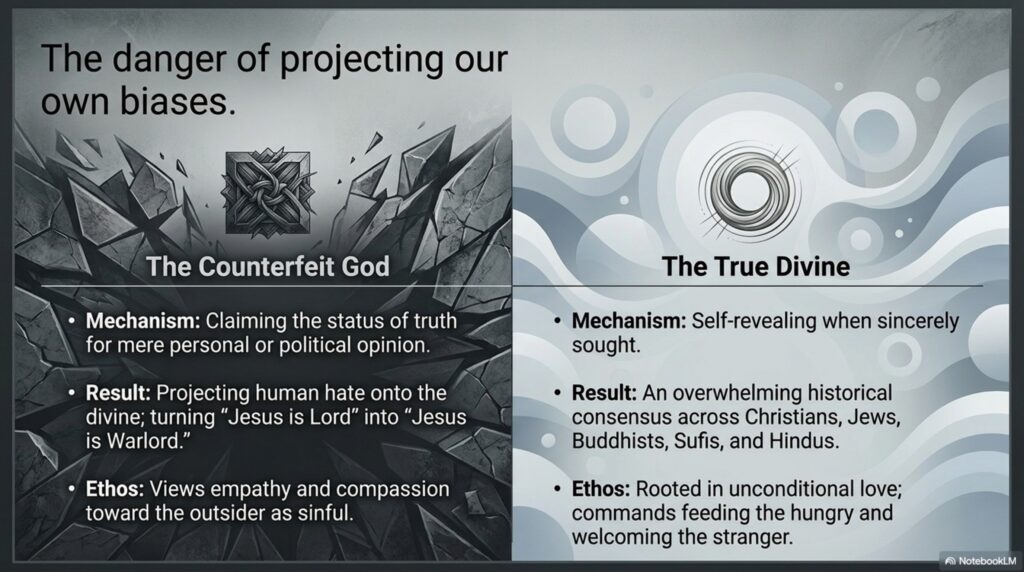
Thus, various groups and individuals — of whatever political party, Democrat, Republican, Libertarian, Independent — espousing white supremacy in the United States today understand God in a way that merely reflects their own racism. These so-called “Christian” hate groups have taken the earliest creed of the church, “Jesus is Lord,” and literally turned it into “Jesus is Warlord.” And this “Warlord” Jesus proclaims that empathy and compassion shown toward anyone who is not white is sinful.
Thus, the teaching of the historical Jesus about feeding the hungry and welcoming the stranger, and the racial and ethnic diversity and inclusivity of the early church, are turned upside down and inside out — turned into their exact opposites and proclaimed to be the only true Christianity by these hate groups. The members of these hate groups are projecting their own hate onto God and then worshiping this “God” of their own creation.
The true God, when prayed to sincerely, is self-revealing, and the self which is revealed — at least according to the descriptions of the overwhelming majority of Christians, Jews, Buddhists, Sufis, and the followers of Krishna in Hinduism — is not a God of vicious hate, but a God of unconditional love.
Many of us in this congregation, who affirm the teachings of the historical Jesus, and the teachings of the historical church, would do well to follow the example of Bill Wilson, co-founder of A.A. Here is Bill W’s story of his own initial encounter with God:
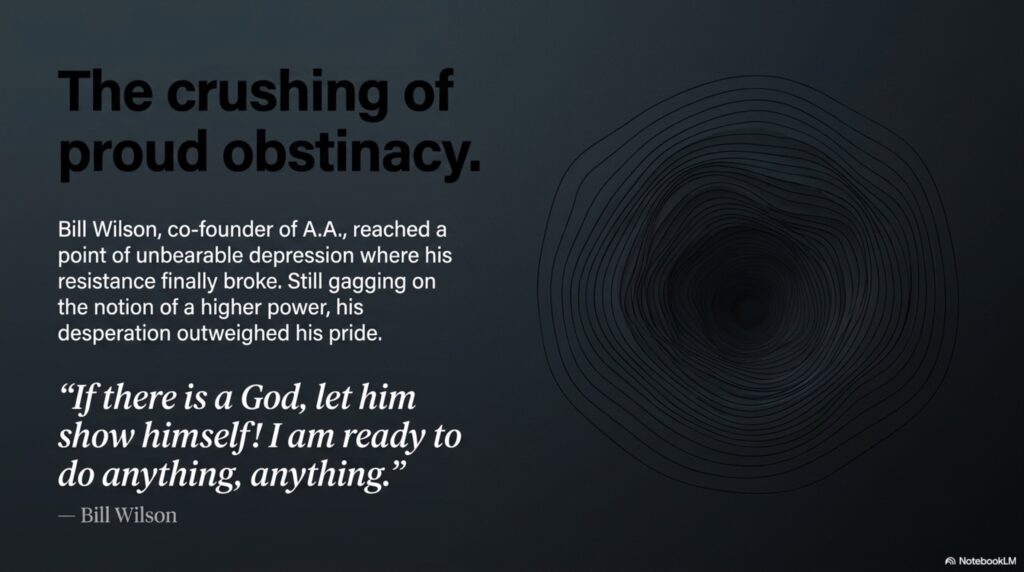
My depression deepened unbearably, and finally it seemed to me as though I were at the bottom of the pit. I still gagged badly on the notion of a power greater than myself, but finally, just for the moment, the last vestige of my proud obstinacy was crushed. All at once I found myself crying out: “If there is a God, let Him show Himself! I am ready to do anything, anything.”
Bill Wilson continues:
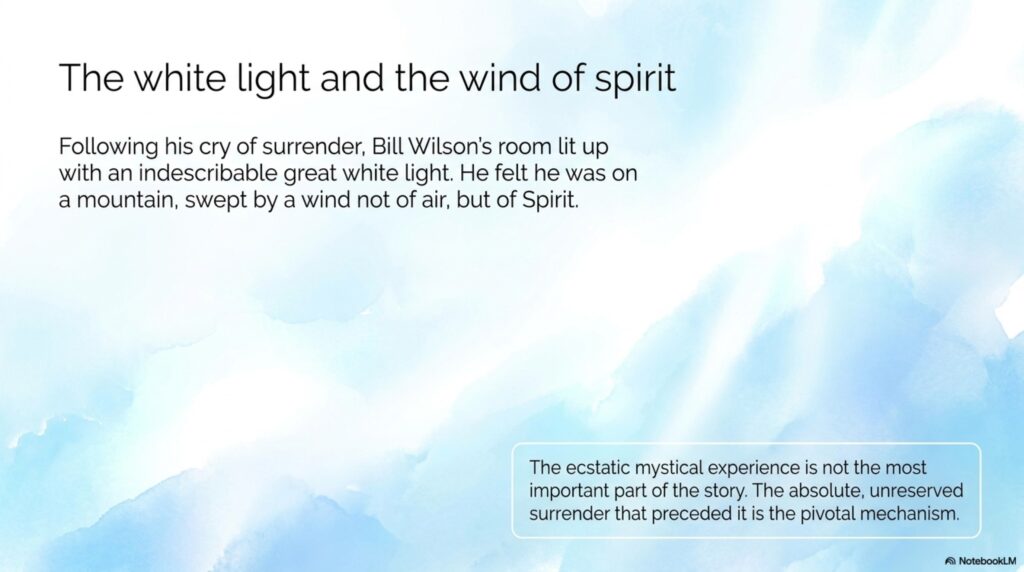
Suddenly the room lit up with a great white light. I was caught up into an ecstasy which there are no words to describe. It seemed to me, in the mind’s eye, that I was on a mountain and that a wind — not of air, but of spirit — was blowing. And then it burst upon me that I was a free man. Slowly the ecstasy subsided. I lay on the bed, but now for a time I was in another world, a new world of consciousness. All about me and through me there was a wonderful feeling of presence…
Note how Bill W talks about crying out to this power greater than himself, crying out to God. As Rabbi Rami Shapiro observes:
The Third Step is not about the words that we use when we cry out, it is the crying out itself that is decisive. The crying out in desperation, as Bill Wilson does, that we simply can’t make it on our own; the total surrender that he makes in shouting out that he is willing to do anything, anything, if only God will become real for him.
We may not receive the intense mystical experience that Bill Wilson got when we finally make the decision to turn our will and our life over to the care of God. But then again we just might. And don’t be surprised if you are overwhelmed with an overpowering sense of God’s presence: many people are; they just don’t talk about it.
The mystical experience, however, is not the most important part of Bill Wilson’s story, or our story. His — and our — total surrender is what is pivotal.
I would like to close this week’s sermon, as I did last week’s, by retelling a traditional story. I personally love this story because it answers my longstanding question, my longstanding concern, about losing my own identity if I give myself to God.
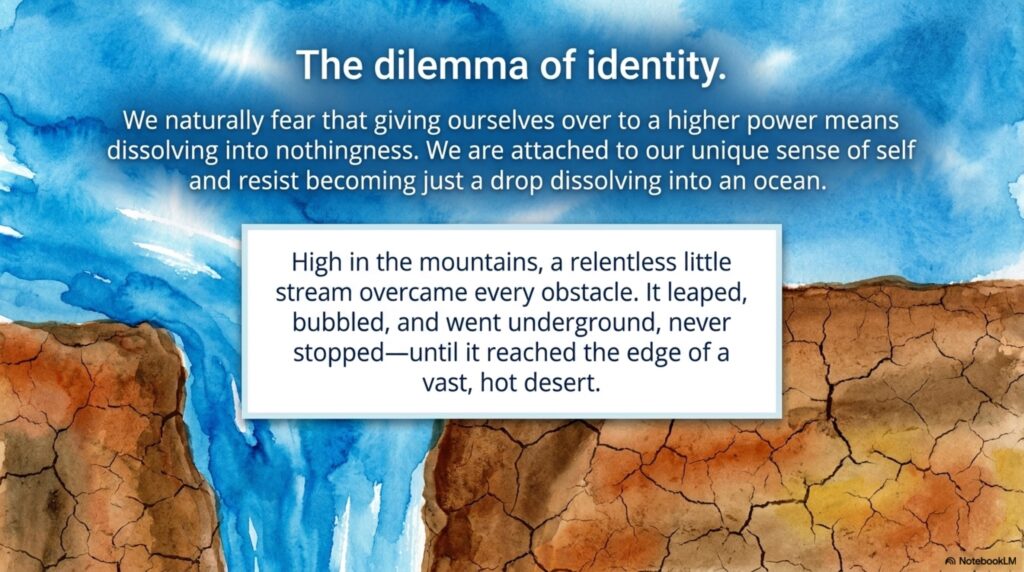
I suppose one could say that I’m addicted to my sense of self, but I’m just following the Judaeo-Christian tradition in affirming that each person is created to be a unique reflection of the image of God, and that our I-Thou relationship with God continues after death. Here I have to part ways with certain forms of Hinduism and Buddhism which maintain that each of us is like a drop of water that will dissolve into the ocean of Nirvana or enlightenment.
As we dive into our story, please understand the word “wind” to simultaneously stand for “breath,” “spirit,” and “Holy Spirit,” as it does in the Bible. This traditional story is called “The Stream.”
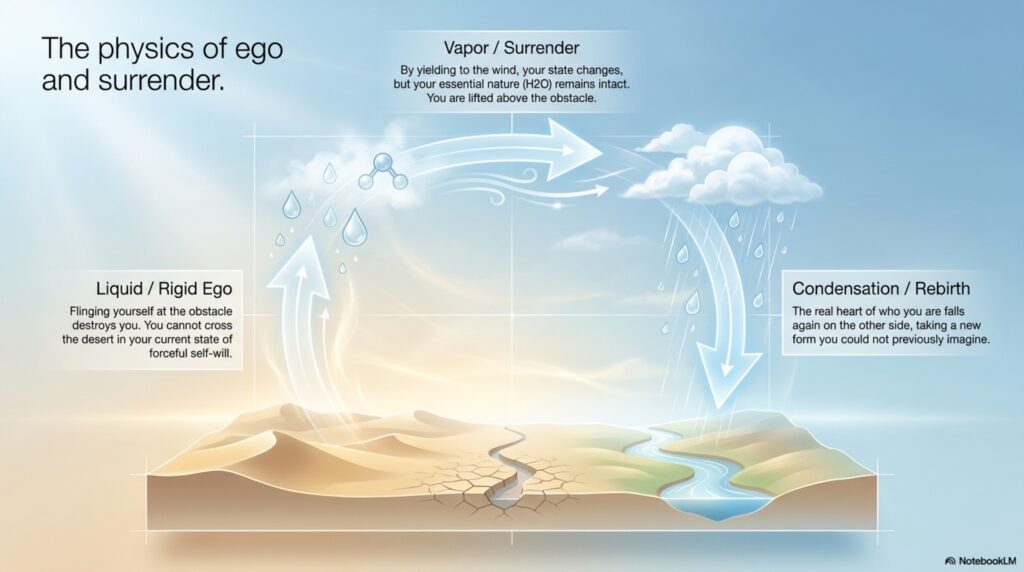
High in the far-off mountains, a little stream sprang from its hidden source. It flowed down the mountainside, through all kinds of different terrain, sometimes leaping and bubbling, sometimes drifting lazily, or going underground, but it was never stopped by any obstacle that may have got in its way.
One day, it reached the edge of a vast desert. “Just one more obstacle to overcome,” it thought to itself. “Nothing has ever stopped me flowing, and I will surely overcome this obstacle too.”
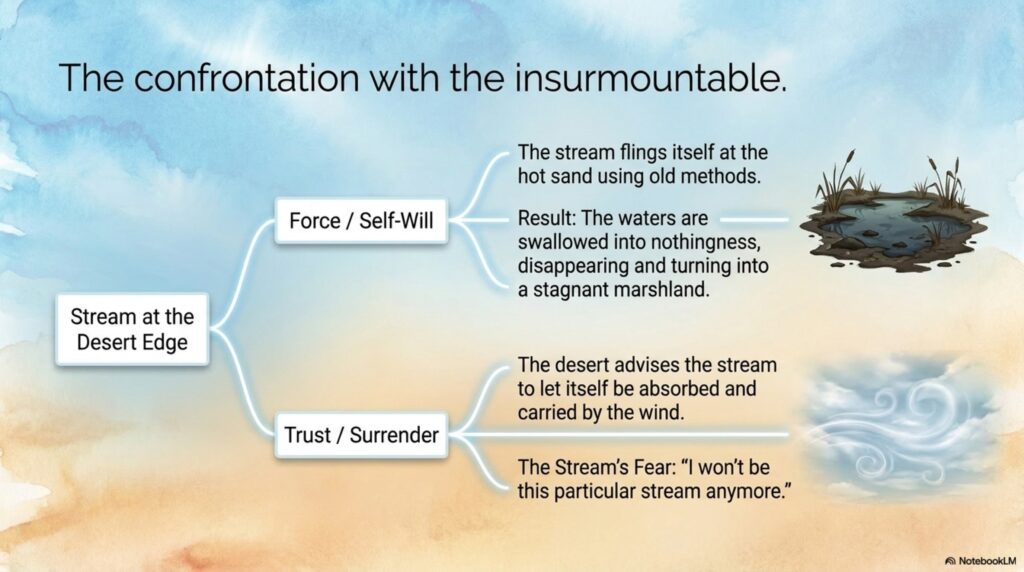
And so the stream flung itself at the desert. But each time it did so, its waters simply disappeared, trickling away into nothingness, swallowed up by the dry, hot sand. But the stream was not to be deterred. If its destiny was to cross the desert, then it would surely find a way. “If the wind can cross the desert, so can the stream,” it thought to itself, and the desert sands seemed to echo back these words: “The winds cross the desert, and so can the stream.”
And so began a conversation between the stream and the desert sand. “I know I must cross the desert,” the stream told the sand, “but every time I try you swallow me up. No matter how hard I fling myself at you, I don’t get any further.”
The desert replied, “You won’t be able to cross me using the old methods that worked for you further up the mountain. It is no use hurling yourself at me like that. You will never cross the sand like this. You will simply disappear, or turn into marshland. No, you must trust the wind to carry you across the desert. You must let yourself be carried.”
“How can the wind carry me across the desert?” the stream asked in disbelief.
“You must let yourself be absorbed into the wind, and then the wind will carry you,” the desert replied.
But the stream didn’t like this idea. After all, it was a stream, with a nature and identity of its own. It didn’t at all want to lose itself by being absorbed into the wind.
The desert sensed the stream’s fears, and tried to offer reassurance. “That’s what the wind does,” it told the stream. “Trust me, and trust the wind. If you let yourself be absorbed by the wind, it will carry you across the desert and let you fall again on the other side, to be a stream again.”
The stream wasn’t convinced. “But I won’t be the same stream that I am now. I won’t be this particular stream.”
The desert understood the dilemma, but the desert also understood the mystery. “You certainly won’t be the same stream you are now if you fling yourself into the sand and turn into a marsh. But let the wind carry you across the desert, and the real heart of you, the essence of everything you truly are, will be born again on the other side, to flow a new course, to be a river that you can’t even imagine from where you are standing now.”
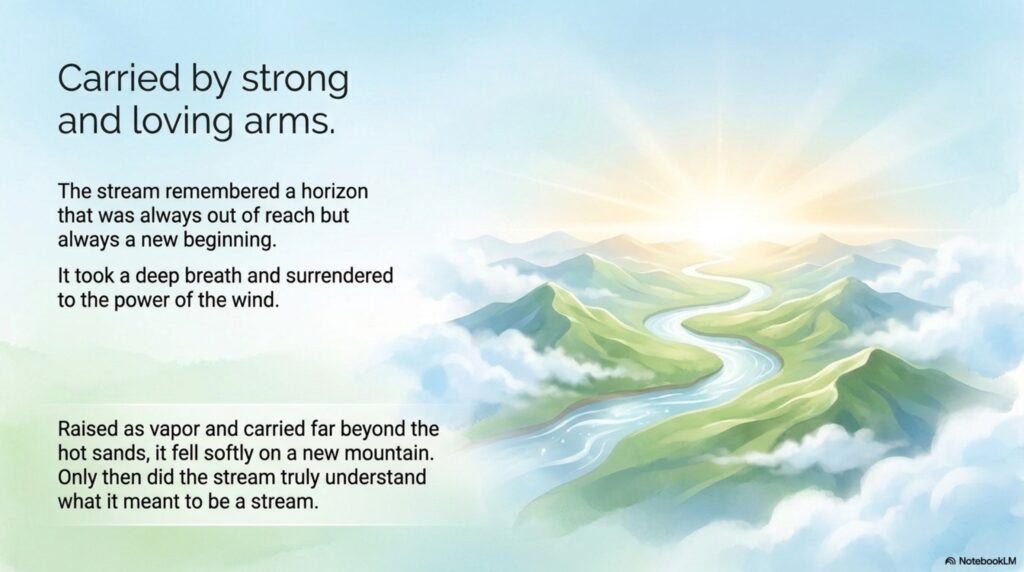
The stream thought for a while, and something deep in its heart had a memory of a wind that could be trusted, and a horizon that was always out of reach, but was always a new beginning. So the stream took a deep breath, and surrendered to the power of the wind.
The wind raised up the vapor of the little stream and carried it in strong and loving arms far beyond the horizon, high above the hot desert sand, and let it fall again softly at the top of a new mountain, far away.
And the stream began to understand who it really was, and what it meant to be a stream.
And so it shall be for all of us when we make a decision to turn our will and our lives over to the care of God.
Amen.
Ai generated infographic, based on the Sermon
Paul Wrightman pastors at the Community Church of the Monterey Peninsula, California:
-
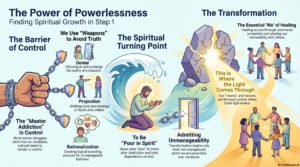
Pastor Paul: Step 1 – The Power Of Powerlessness
Sermon June 14, 2026 “The Spirituality Of The Twelve Steps”
-
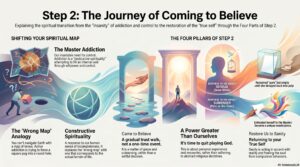
Pastor Paul: Step 2 – Came to Believe
Sermon June 21, 2026 “The Spirituality Of The Twelve Steps”
-
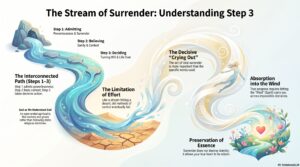
Pastor Paul: Step 3 – Choosing God
Sermon June 28, 2026 “The Spirituality Of The Twelve Steps”
-
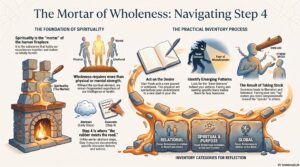
Pastor Paul: Step 4 – Taking Stock
Sermon July 5, 2026 “The Spirituality Of The Twelve Steps”
-
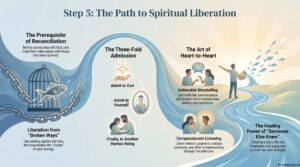
Pastor Paul: Step 5 – Heart-To-Heart
Sermon July 12, 2026 “The Spirituality Of The Twelve Steps”
-
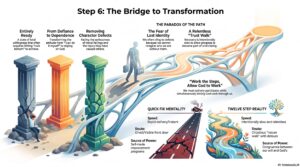
Pastor Paul: Step 6 – Becoming Ready
Sermon July 26, 2026 “The Spirituality Of The Twelve Steps”
-
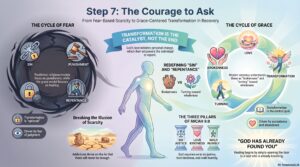
Pastor Paul: Step 7 – The Courage to Ask
Sermon August 2, 2026 “The Spirituality Of The Twelve Steps”
-
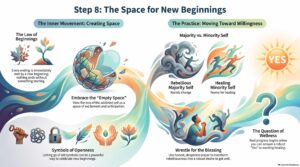
Pastor Paul: Step 8 — Making a List
Sermon August 9, 2026 “The Spirituality Of The Twelve Steps”
-
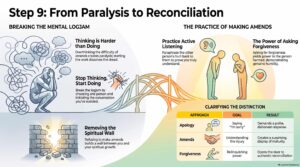
Pastor Paul: Step 9 – Embodied Reconciliation
Sermon August 16, 2026 “The Spirituality Of The Twelve Steps”
-
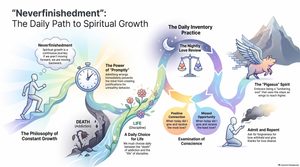
Pastor Paul: Step 10 – Neverfinishedment
Sermon August 23, 2026 “The Spirituality Of The Twelve Steps”
-
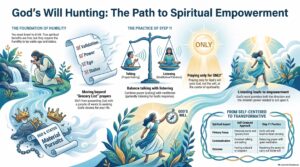
Pastor Paul: Step 11 – God’s Will Hunting
Sermon August 30, 2026 “The Spirituality Of The Twelve Steps”
-
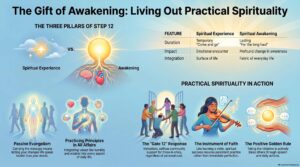
Pastor Paul: Step 12 – The Gift of Awakening
Sermon September 6, 2026 “The Spirituality Of The Twelve Steps”
-
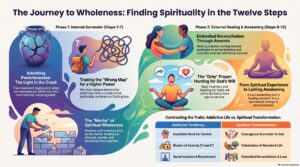
Ai’s take on Pastor Paul’s 12 Step Sermons
Sermon September 6, 2026 “The Spirituality Of The Twelve Steps”
Leave a Reply