Sermon by Pastor Paul Wrightman (September 6, 2026)
The Spirituality of the Twelve Steps:
The Gift of Awakening
Matthew 5:14-16; Matthew 7:24-27
I’d like to begin by sharing with you a wonderful and inspiring true story from the collection Chicken Soup for the Recovering Soul.
I find this story wonderful because it substantiates the effectiveness of the Twelve Step approach. I find this story inspiring because it calls us church people to become more like the AA people in this story:
Sometime in the early 1990s I was treating a woman in an intensive outpatient chemical dependency group. Let’s call her “Grace.”
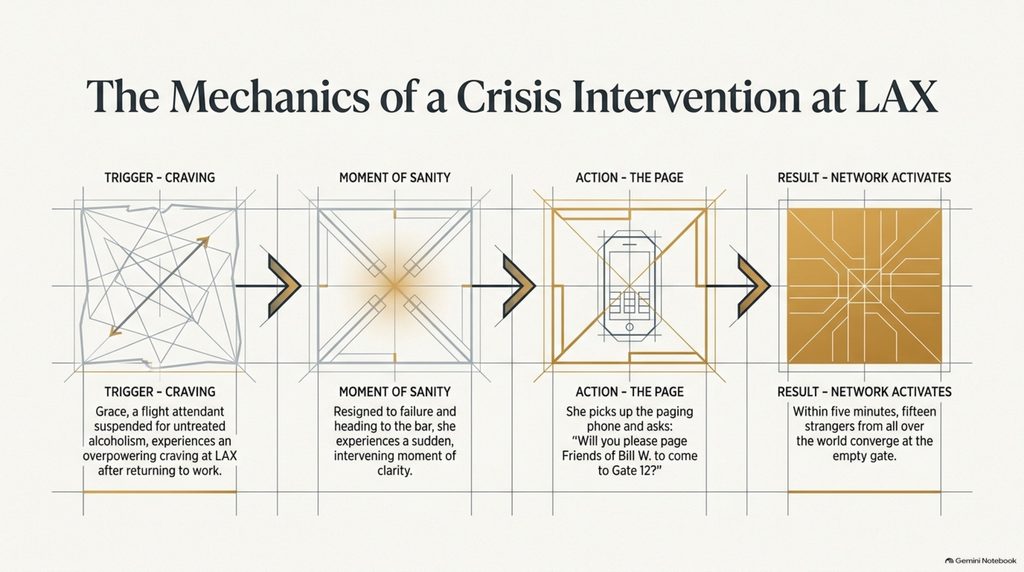
Grace was a flight attendant and had been suspended from her job with a major airline due to her untreated alcoholism.
She had been stealing the little miniature liquor bottles, drinking in airport bars in uniform, and so on. Her employer, realizing she needed treatment, sent her to us. After the eight-week program, I suggested to her it might be a good idea to solidify her foundation in recovery before returning to work, as she would be working in a high-risk environment (serving alcohol, being out of town alone, etc.).
Grace did, however, return to work shortly after completing outpatient treatment.
One day while she was departing from a plane at the end of a long day, a major craving for alcohol overpowered her.
There she was, in the Los Angeles International Airport, pulling her roller-bag behind her when this massive craving to drink came over her.
She tried to just “think through it,” or “just forget about it,” but it was way too powerful.
It was so powerful, in fact, that she was resigned to the fact that she would just go drink.
Oh, the heck with it, I’ll just get another job . . . or maybe no one will find out anyway.
But deep down inside Grace did not want to drink. She truly had wanted to stay sober, but she was in trouble.
On her way to the bar in the airport, Grace had a moment of sanity.
She stopped, picked up the airport paging phone and said, “Will you please page Friends of Bill W.,” she paused, quickly looking around for an empty gate, “to come to Gate 12?”
Within minutes, over the paging system in the L.A. International Airport came, “Will Friends of Bill W. please come to Gate 12. Will Friends of Bill W. please come to Gate 12.”
Most people in recovery know that asking if you are a Friend of Bill W. is an anonymous way to identify yourself as a member of AA.
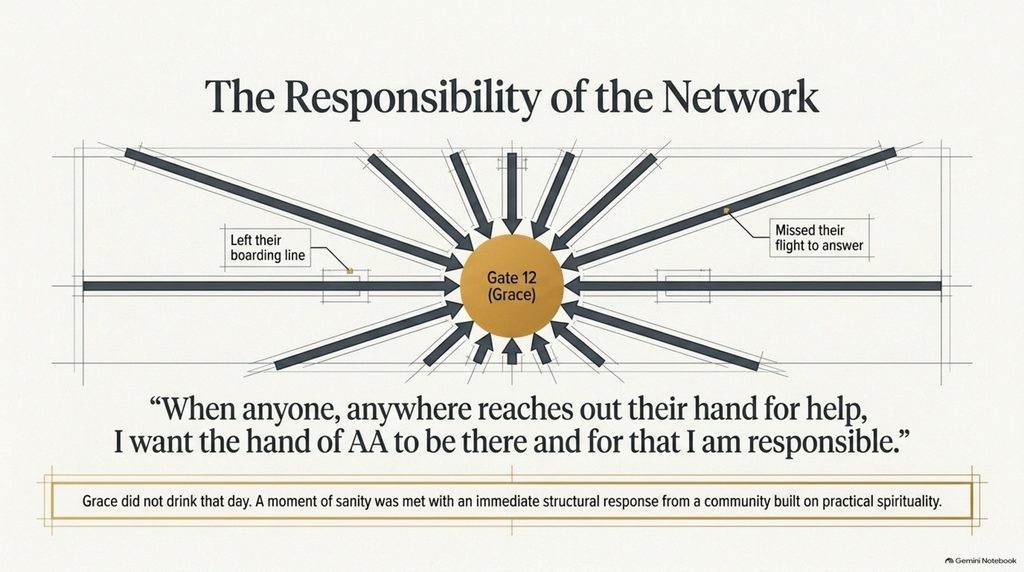
In less than five minutes there were about fifteen people at that gate from all over the world.
That brought tears of amazement, relief and joy to Grace.
They had a little meeting there in that empty gate, total strangers prior to that moment.
Grace discovered that two of those people had gotten out of their boarding lines and missed their flights to answer that call for help.
They had remembered what they had seen on many walls of meeting rooms: “When anyone, anywhere reaches out their hand for help, I want the hand of AA to be there and for that I am responsible.”
Grace did not drink that day.
I would venture to guess that none of the people who came to Gate 12 drank that day either.
Instead Grace had a moment of sanity, realized she could not do it on her own, took the action of asking for help and received it immediately.
One of my own personal challenges in presenting this sermon series on the spirituality of the Twelve Steps has been the relentlessness of having to cover a different step each week.
I’ve had to boil down twenty-five years of practice into a mere twelve weeks. At times I’ve gotten rather dizzy and disoriented from this condensing of time. A step that took me many months to work through in my own life has been allotted a mere week in terms of sermon preparation.
So I want to emphasize that this brief sermon series has been intended to be a review for those already practicing the steps, and an introduction for those who are considering taking on the steps as a spiritual practice, or discipline.
In preparing these sermons I have become convinced that all of us at Community Church would benefit from the practice of Twelve Step spirituality. Also as a result of preparing these sermons, I have become convinced that practicing the steps is the best and most effective program of practical spirituality that is available to us.
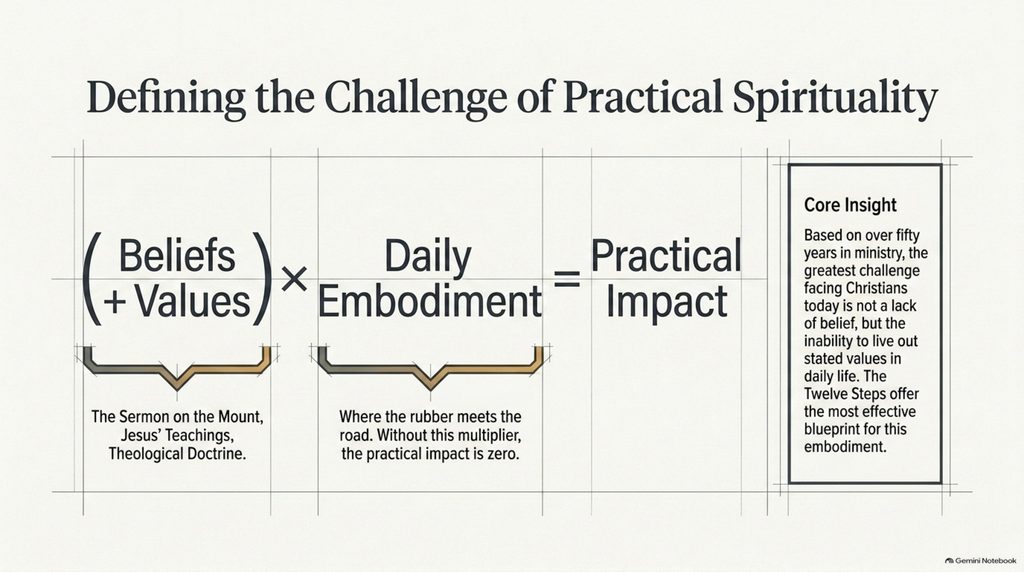
By “practical spirituality” I mean how we actually live out — embody in our daily living — the beliefs and the values that we say are important to us, such as Jesus’ teachings in the Sermon on the Mount.
Based on over fifty years in ministry, I would have to say that the greatest challenge facing Christians as a whole today is how to live out in our daily lives what we say we value and believe. Practical spirituality is where the rubber meets the road.
In the spirit of inclusivity I will slightly reword the Twelfth Step to read:
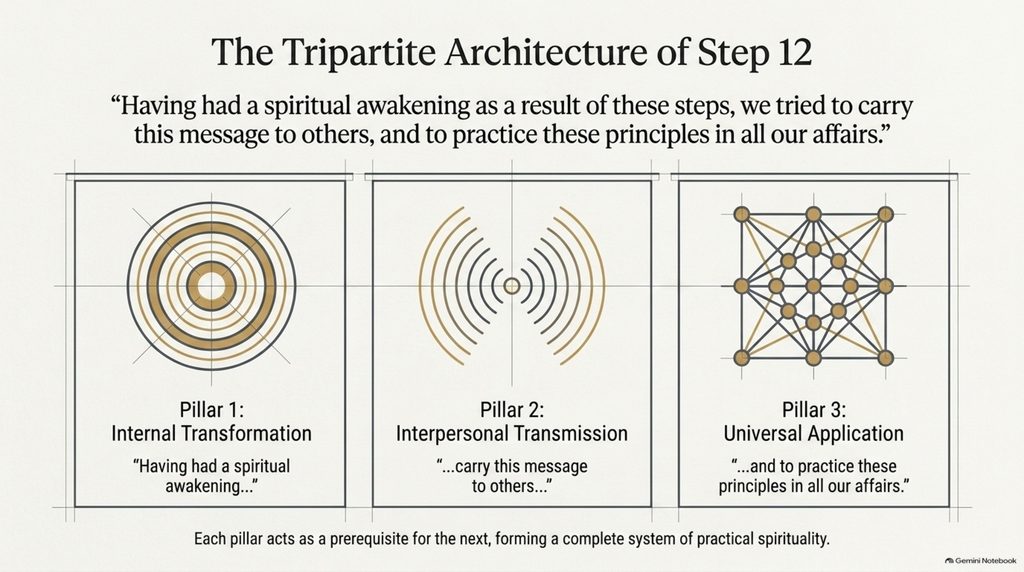
Having had a spiritual awakening as a result of these steps, we tried to carry this message to others, and to practice these principles in all our affairs.
The major metaphor I would like to use in today’s sermon comes from Ajahn Brahm, a Buddhist priest and abbot.
Recalling his experience as a priest in Thailand, Brahm shares this experience of an elderly man from a remote mountain village visiting his adult children in the vast city of Bangkok for the first time:
One day, while being shown around the city, the old man heard a sound that stung his ears.
He had never heard such an awful noise in his quiet mountain village and he insisted on finding its cause.
Following the grating sound back to its source, he came to a room in the back of a house where a small boy was practicing on a violin.
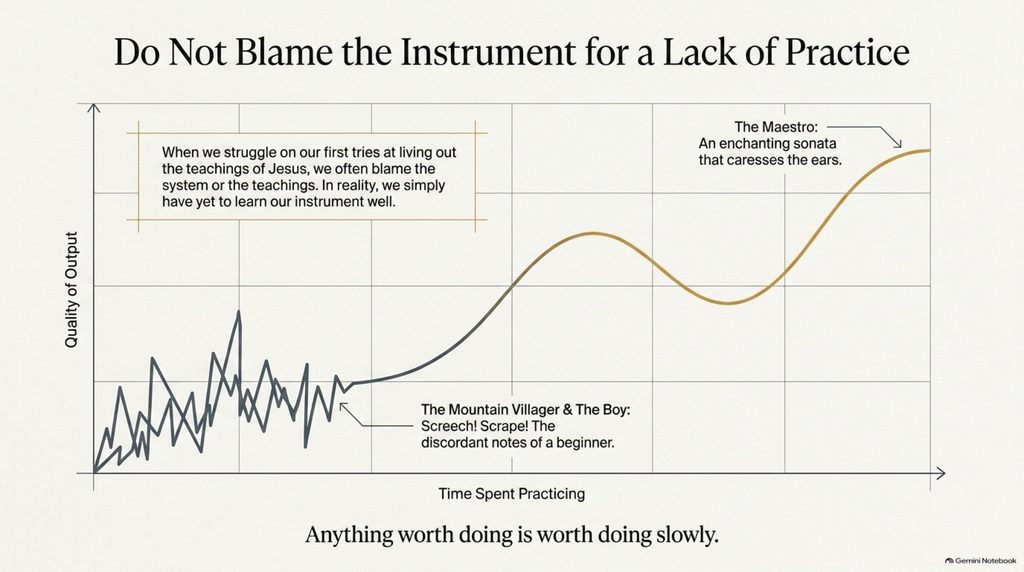
Screech! Scrape! Came the discordant notes from the groaning instrument.
When he was told by his son that that was called a “violin,” he decided that he never wanted to hear such a horrible thing again.
The next day, in a different part of the city, the old man heard a sound that seemed to caress his aged ears.
He had never heard such an enchanting melody in his mountain valley, so he demanded to find its cause.
Following the delightful sound back to its source he came to a room in the front of a house where an [elderly] lady, a maestro, was performing a sonata on a violin.
At once, the old man realized his mistake.
The terrible sound that he had heard the previous day was not the fault of the violin, nor even of the boy.
It was just that the young man had yet to learn his instrument well.
Many of us, on our first, second, or third tries at practicing the steps, find the path too difficult and give up.
Someone looking at us from the outside could very well blame the steps themselves for our lack of success, when, in reality, we simply have yet to learn our instrument well.
Similarly, some Christians, on our first, second, or third tries at living out the teachings of Jesus, find the path too difficult and give up.
Someone looking at us from the outside could very well blame the teachings of Jesus for our lack of success, when, in reality, we simply have yet to learn our instrument well.
This reminds me of the AA saying “anything worth doing is worth doing slowly.”
Returning to our consideration of the steps, the Twelfth Step has three distinct parts, each of which we will look at in turn.
The first part states: having had a spiritual awakening as a result of these steps . . .
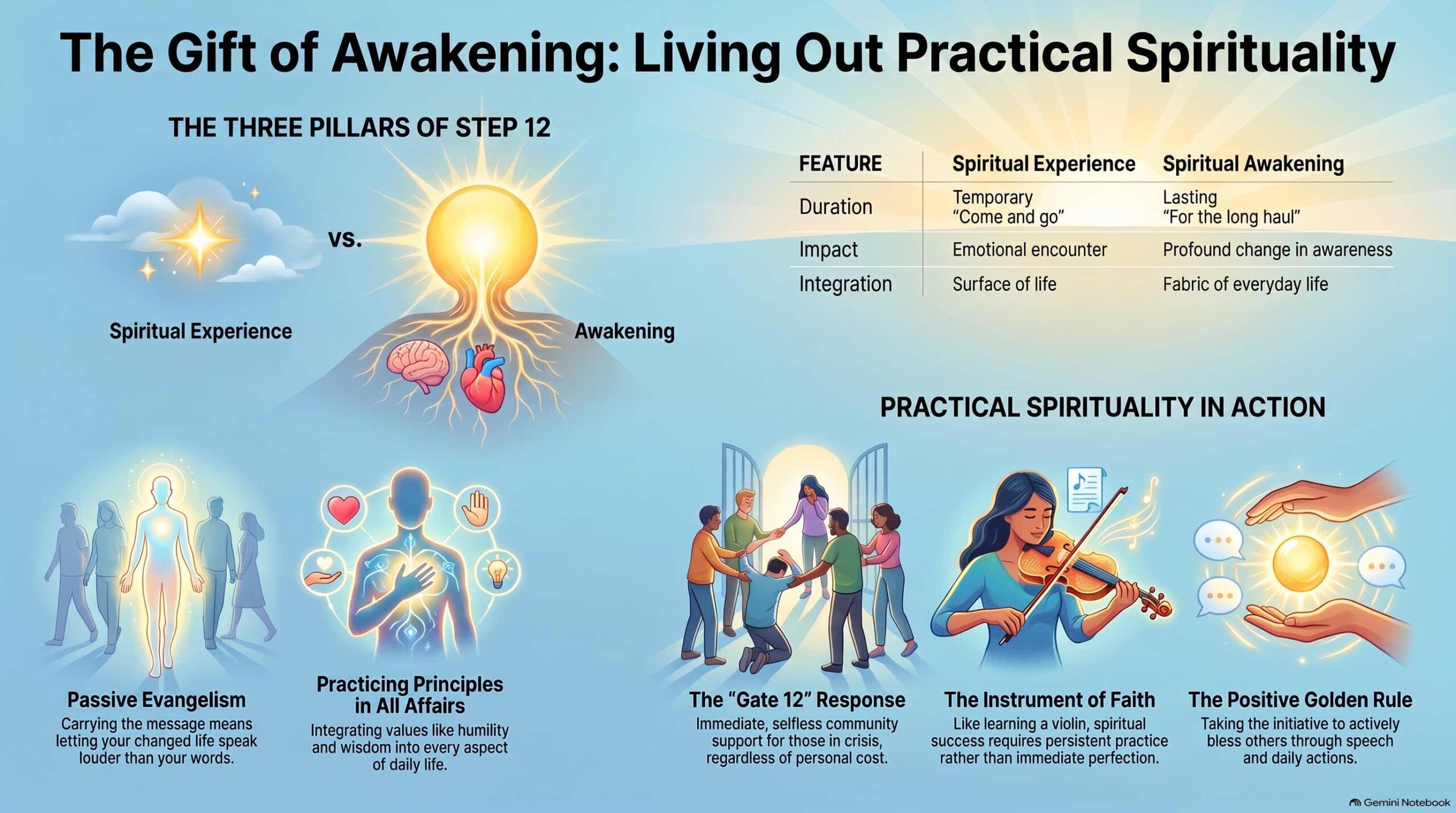
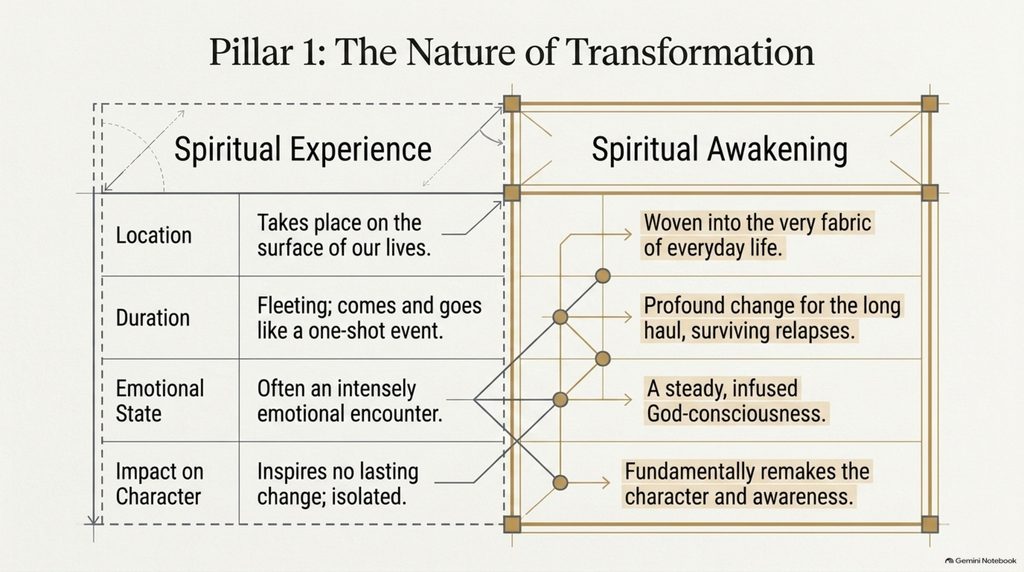
Bill Wilson, the cofounder of Alcoholics Anonymous, in an appendix to what is known as the “Big Book” of AA, follows the psychologist William James in distinguishing between “a spiritual experience” and “a spiritual awakening.”
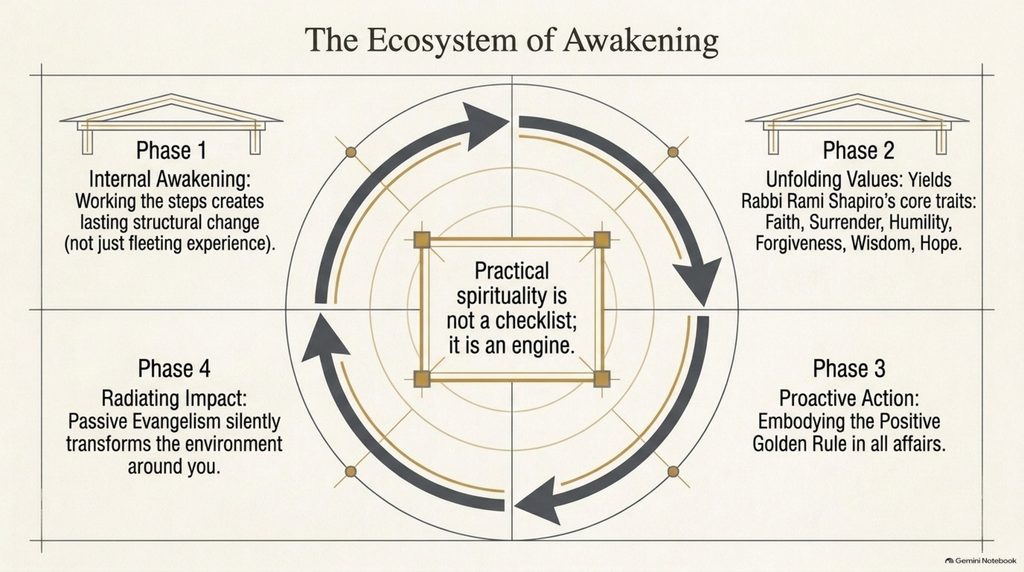
Spiritual experiences, for all their ability to make us feel good, take place on the surface of our lives. They come and go, inspiring no lasting change.
Many of us have had a spiritual experience — often an intensely emotional encounter with God — when we sincerely worked Step Two: came to believe that a Power greater than ourselves could restore us to sanity.
An isolated spiritual experience, however — no matter how powerful — is not enough to change our lives and remake our character. It takes a spiritual awakening to do that.
What the original practitioners of the steps found — and what many of us have found — is that after a long process of working the steps, perhaps with several relapses along the way, their entire consciousness became so infused with God-consciousness that they could only describe themselves as having undergone a spiritual awakening, a change in awareness that is profound and for the long haul.
This awareness does not come and go like a one-shot experience, but is now a part of the very fabric of their everyday lives.
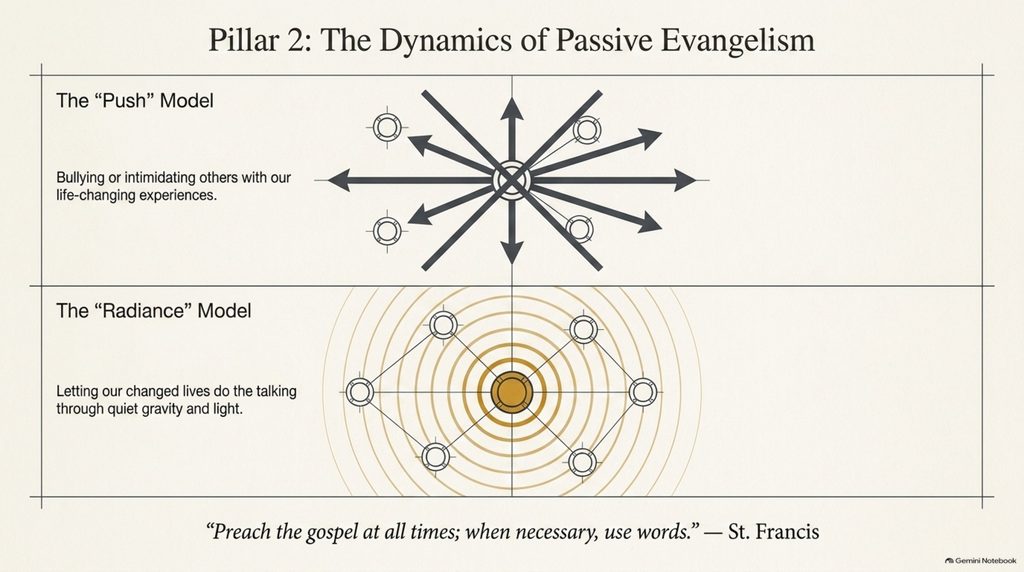
The second part of Step Twelve, carrying this message to others, is often considered under the name “passive evangelism.”
The emphasis here is on the word passive, which in this context means that we do not bully or intimidate others with our wonderful, life-changing experience with the steps, but simply let our changed lives do the talking.
It’s like the advice of St. Francis to his followers: “preach the gospel at all times; when necessary, use words.”
The third part of Step Twelve challenges us to allow the practice of the steps to influence every aspect of our behavior.
Rabbi Rami Shapiro names the values unfolding as we practice the steps as faith, surrender, humility, forgiveness, wisdom, and hope.
Rabbi Jesus summarizes the entire content of the Law and the Prophets in two great commandments: the first is “love the Lord your God with all your heart, and with all your mind, and with all your strength, and with all your soul.” The second, of equal importance, is “love your neighbor as yourself.”
Jesus then goes on to summarize these two great commandments in one profound teaching which we know as the “Golden Rule”: “do unto others as you would have them do unto you.”
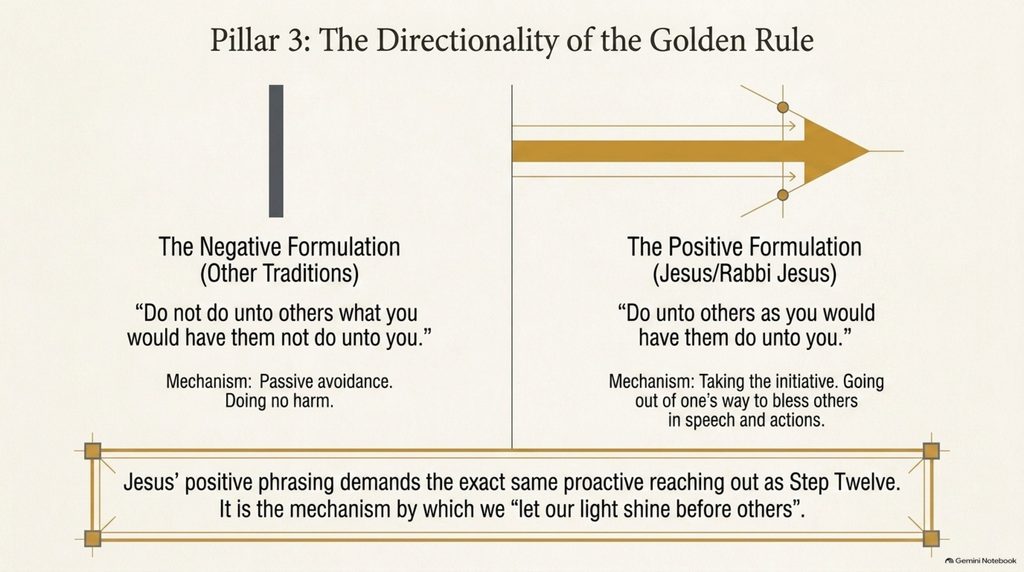
There is a negative way of stating the Golden Rule in all the other major faith traditions — “do not do unto others what you would have them not do unto you.”
Jesus is the only spiritual leader to phrase the Golden Rule in a positive way. Basically, he’s saying: “Take the initiative, go out of your way to bless others in your speech and in your actions.”
The Golden Rule in the positive form given to us by Jesus demands reaching out in the same way that Step Twelve does: carrying this message to others and practicing these principles in all our affairs.
Jesus, in our first scripture reading today, challenges us to “let your light shine before others, so that they may see your good works and give glory to our Father in heaven.”
Probably the most direct way to create this light is to practice the Golden Rule every day in every way possible.
Just think of the transforming light that we would create if we lived out the Golden Rule in all our relationships — at home, at work, in our leisure, in our politics, and in every aspect of our life here at Community Church.
I have a vision of our church becoming even more of a supportive community than it already is.
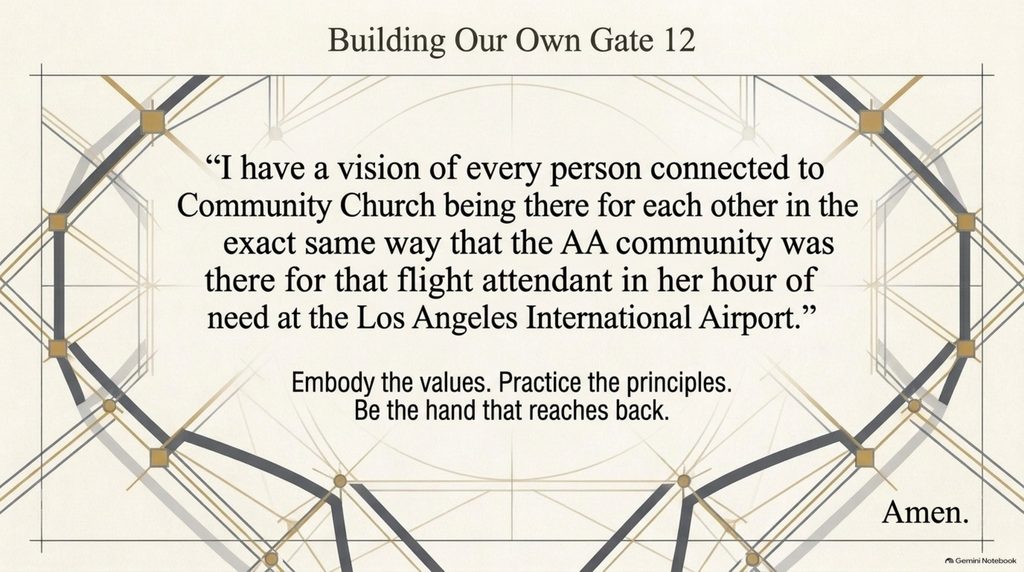
I have a vision of every person connected to Community Church being there for each other in the same way that the AA community was there for that flight attendant in her hour of need at the Los Angeles International Airport.
Amen.
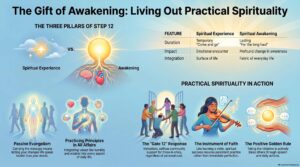
Ai generated infographic, based on the Sermon
Paul Wrightman pastors at the Community Church of the Monterey Peninsula, California:
-
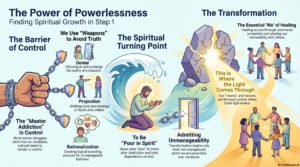
Pastor Paul: Step 1 – The Power Of Powerlessness
Sermon June 14, 2026 “The Spirituality Of The Twelve Steps”
-
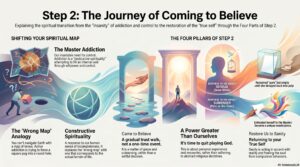
Pastor Paul: Step 2 – Came to Believe
Sermon June 21, 2026 “The Spirituality Of The Twelve Steps”
-
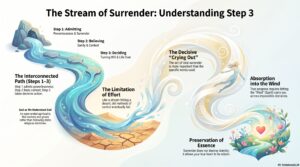
Pastor Paul: Step 3 – Choosing God
Sermon June 28, 2026 “The Spirituality Of The Twelve Steps”
-
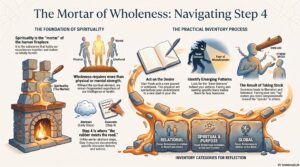
Pastor Paul: Step 4 – Taking Stock
Sermon July 5, 2026 “The Spirituality Of The Twelve Steps”
-
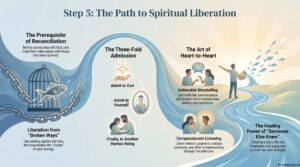
Pastor Paul: Step 5 – Heart-To-Heart
Sermon July 12, 2026 “The Spirituality Of The Twelve Steps”
-
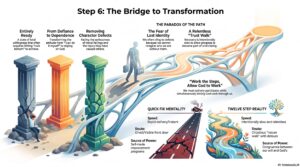
Pastor Paul: Step 6 – Becoming Ready
Sermon July 26, 2026 “The Spirituality Of The Twelve Steps”
-
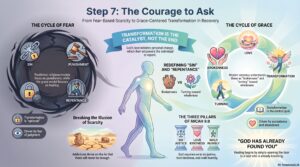
Pastor Paul: Step 7 – The Courage to Ask
Sermon August 2, 2026 “The Spirituality Of The Twelve Steps”
-
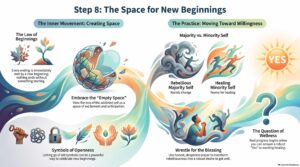
Pastor Paul: Step 8 — Making a List
Sermon August 9, 2026 “The Spirituality Of The Twelve Steps”
-
Pastor Paul: Step 9 – Embodied Reconciliation
Sermon August 16, 2026 “The Spirituality Of The Twelve Steps”
-
Pastor Paul: Step 10 – Neverfinishedment
Sermon August 23, 2026 “The Spirituality Of The Twelve Steps”
-
Pastor Paul: Step 11 – God’s Will Hunting
Sermon August 30, 2026 “The Spirituality Of The Twelve Steps”
-
Pastor Paul: Step 12 – The Gift of Awakening
Sermon September 6, 2026 “The Spirituality Of The Twelve Steps”
-
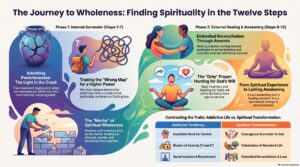
Ai’s take on Pastor Paul’s 12 Step Sermons
Sermon September 6, 2026 “The Spirituality Of The Twelve Steps”
Leave a Reply