Sermon by Pastor Paul Wrightman (August 2, 2026)
The Spirituality of the Twelve Steps:
Step 7 — The Courage to Ask
Matthew 6:12; John 8:3–11; Revelation 3:20; Micah 6:8
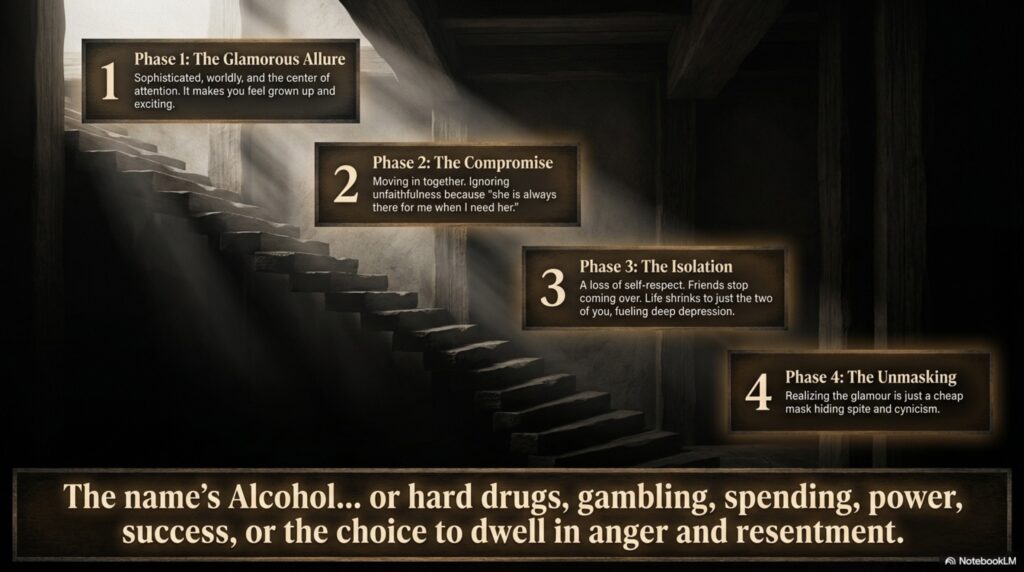
I first met her in high school. She was older than I was and exciting. She’d been around. My parents warned me to have nothing to do with her. They claimed that no good could come from our relationship. But I kept meeting her on the sly. She was so sophisticated and worldly. It made me feel grown up just being with her.
It was fun to take her to a party in those days. She was almost always the center of attention.
We began seeing more of each other after I started college. When I got a place of my own, she was a frequent guest. It wasn’t long until she moved in with me. It may have been common law, but it was heartbreaking for my parents. I kept reminding myself I wasn’t a kid anymore. Besides, it was legal.
We lived together right through college and into my early days in business. I seldom went anywhere without her, but I wasn’t blind. I knew she was unfaithful to me. What’s worse, I didn’t care. As long as she was there for me when I needed her (and she always was), it didn’t matter.
The longer we lived together, the more attached I became to her. But it wasn’t mutual. She began to delight in making me look foolish in front of my friends. But I still couldn’t give her up. It became a love/hate relationship.
I figured out that her glamour was nothing more than a cheap mask behind which to hide her spite and cynicism. I could no longer see her beauty after I came to know her true character. But old habits are hard to break. We had invested many years in each other.
Even though my relationship with her made me lose a little respect for myself, she had become the center of my life. We didn’t go anywhere anymore. We didn’t do anything. We didn’t have friends over. It was just the two of us.
I became deeply depressed and knew that she was largely responsible for my misery. I finally told her that I was leaving for good. It took a lot of guts, but I left.
I still see her around. She’s still as beautiful as when we first met. I miss her now and then. I’m not boasting when I say she’d take me back in a minute. But by the grace of God, I will never take up with her again.
If you see her, just give her my regards. I don’t hate her. I just loved her too much. Chances are you know her family.
The name’s Alcohol.
Or, we might add, the name’s hard drugs. Or prescription drugs, or gambling, or spending, or power, or success, or amassing knowledge, or sex, or food, or control… or whatever.
This sermon illustration by Anonymous nicely captures the dynamics of addiction. Many of us have been there, done that — if not with alcohol, then with another substance, a damaging need, or a destructive habit, such as choosing to dwell in the house of anger or resentment.
We have been working our way through the Twelve Steps for six weeks now. We have been climbing the ladder of Twelve Step spirituality. Today we find ourselves on the rung of Step Seven:
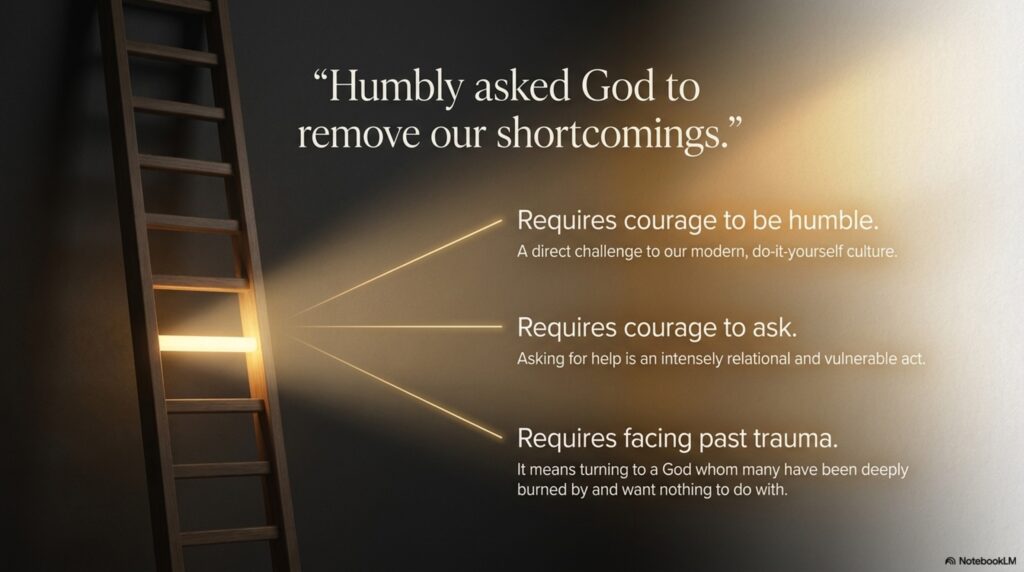
Humbly asked God to remove our shortcomings.
It takes courage to ask. It takes courage to be humble. Especially in our do-it-yourself culture, it takes courage to ask for help.
To make matters even more difficult, the Seventh Step specifies that the one of whom we are doing the asking is God — the very being whom many of us have been burned by, and want nothing more to do with.
Asking is an intensely relational act, and the last thing that a large number of people want to do is to get back into a relationship with someone they can’t quite trust — or, heaven forbid, to take the risk of establishing a new relationship with a being who is neither known nor trusted.
OK — so you’ve finally whipped up enough courage to turn to God and do the asking. But is the God you’re turning to and preparing to ask worthy of that task?
I repeat: is the God you’re turning to worthy of that task?
This may seem like an impertinent question, but when we consider the vast number of refugees from religion created by the many forms of rigid and negative evangelicalism and Christian nationalism in this country, this is not an impertinent but a necessary question.
Translated into traditional religious language, Step Seven is all about conversion — turning to God for a new start and a new life.
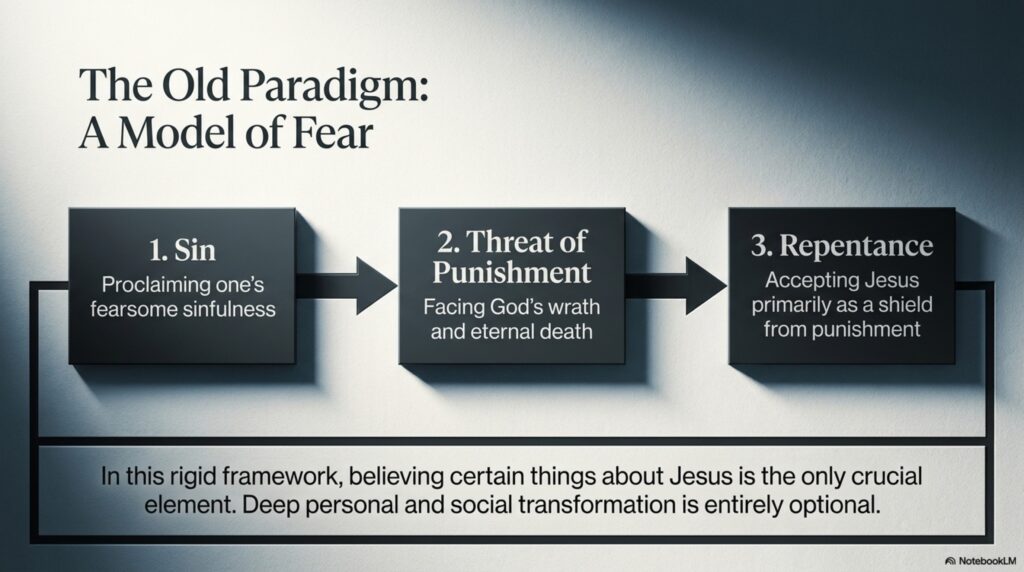
But the conversion process as presented by many Christian nationalists and evangelicals is a very scary thing. It involves proclaiming one’s fearsome sinfulness to God, acknowledging that one deserves to be punished by God, then making a formal act of repentance by accepting Jesus as Lord and Savior — a Lord and Savior who forgives our sins and saves us, shields us, from God’s punishment.
We can summarize this approach to God as follows:
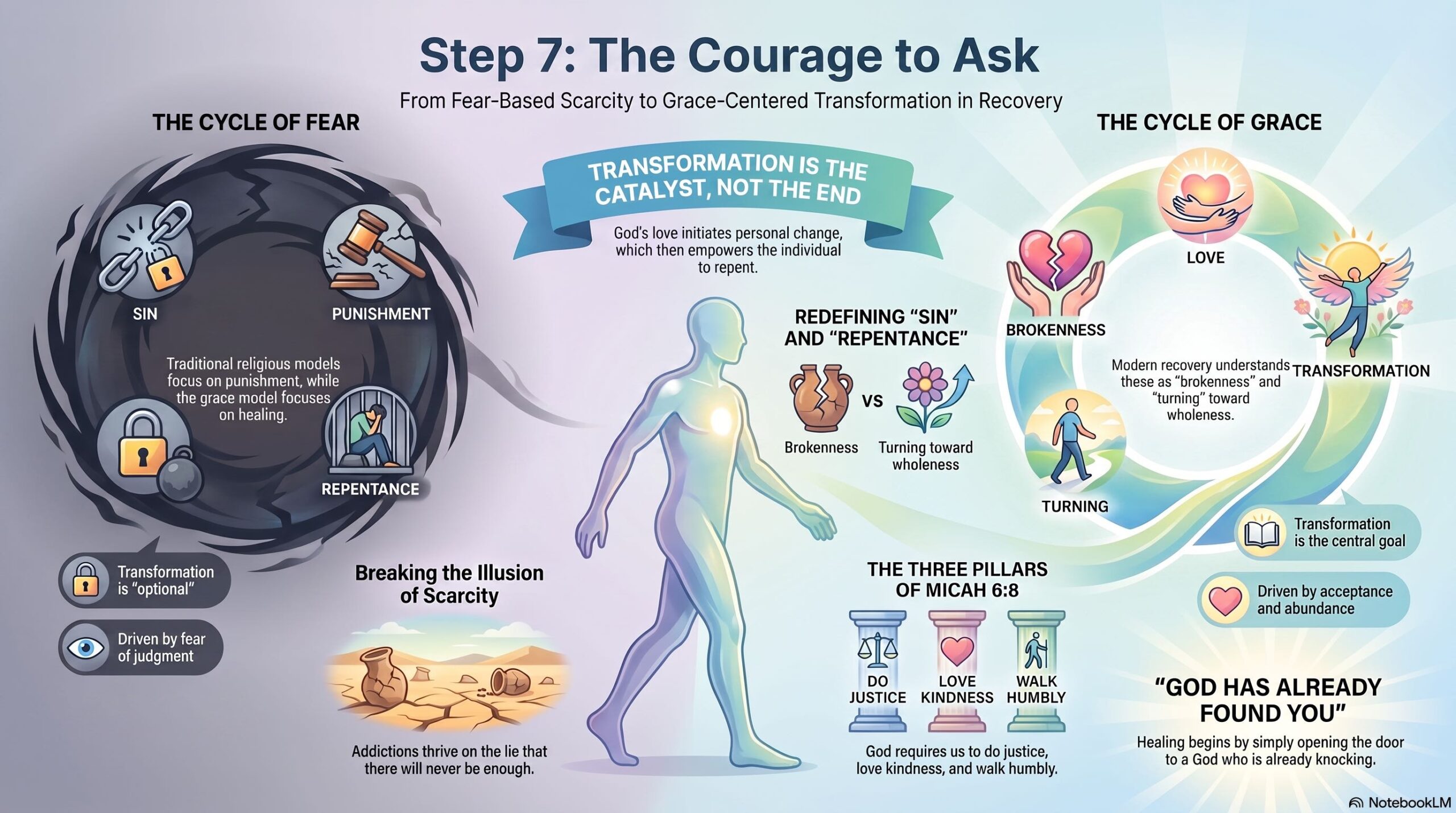
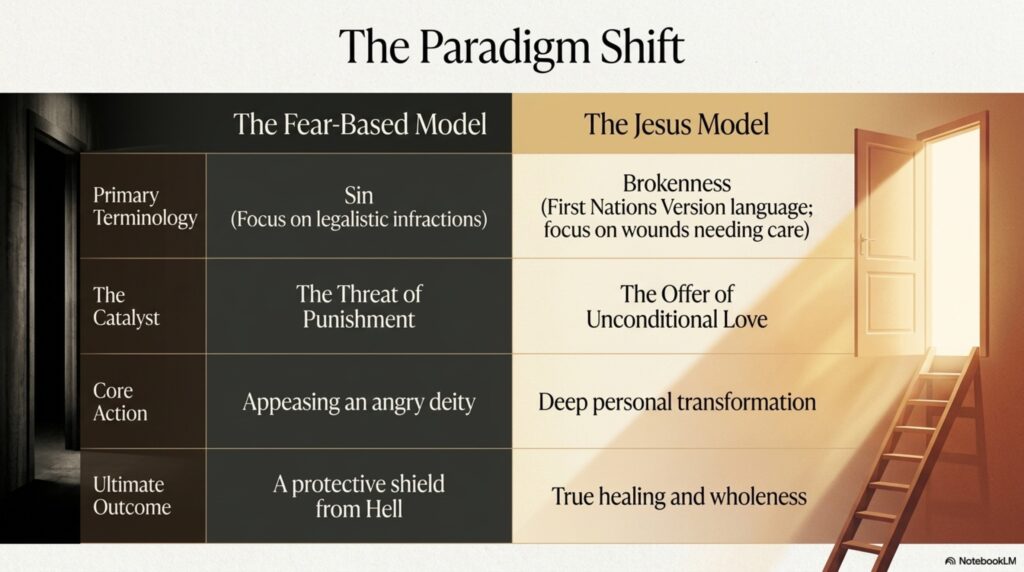
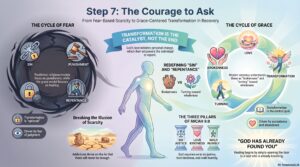
Sin → Punishment → Repentance: sin leads to the threat of punishment which, in turn, leads to repentance.
According to this model, after one has repented, personal and social transformation sometimes happens, sometimes not. In this model, believing certain things about Jesus is what is crucial. According to this model, transformation — both personal and social — is optional.
I remember being presented with this pattern as a teenager. Certain proof texts were offered, all from St. Paul. I was told that “all have sinned, and fall short of the glory of God” (Romans 3:23), and that God’s just punishment for sin is death. Death was further elaborated to mean eternal death, featuring eternal punishment in the fires of hell.
The only antidote for this sad state of affairs was to believe certain things about Jesus — like how he died for my sins, and how God accepted his death in place of mine.
Lacking a better alternative at the time, I went ahead and accepted Jesus as my Lord and Savior, all the while wondering what I could possibly have done to make God so mad at me, and how my relatively minor, finite sins at the time could warrant a punishment that was infinite.
At this point, however, I feel compelled to add that in spite of the bad theology through which I entered into a personal relationship with God through Jesus, the God and the Jesus I met were real — and much more kind and loving than they were portrayed at the time of my turning to God on the second day of a youth retreat my sophomore year of high school.
The relationship with God that began there has remained real and constant and very much alive through the rest of my life.
Let us now take a look at Jesus as portrayed in the Gospels themselves.
When we look for the model of — sin leads to threat of punishment which, in turn, leads to repentance — in the teachings and actions of Jesus himself, we can’t find it. It simply isn’t there.
What we do find is the significantly different model of sin leading to God’s offer of unconditional love, which leads to personal transformation, which, in turn, leads to repentance.
Since the words “sin” and “repentance” not only no longer communicate very well, but are actually barriers to communication for a great many people, I will use — like the First Nations Version of Scripture uses — the words “brokenness” and “turning” in their place, making our new model:
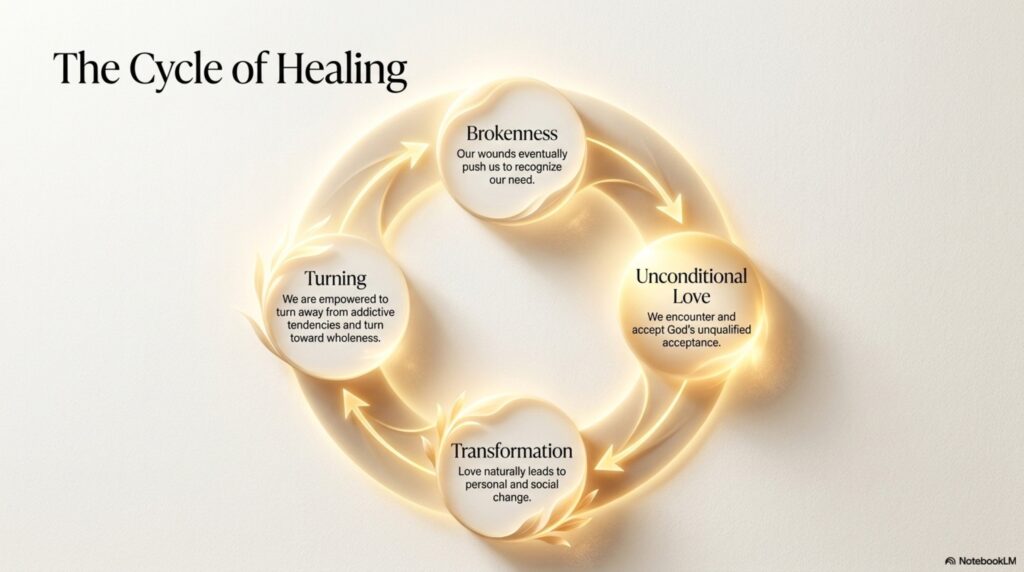
Our brokenness eventually pushes us to recognize and to accept God’s unconditional love, which leads, in turn, to personal transformation and our turning to God.
In other words: our brokenness leads us to God’s unconditional love; God’s unconditional love leads us to personal and social transformation; personal and social transformation lead us to turn away from our brokenness — including our addictions and addictive tendencies — and to turn to God for healing and wholeness.
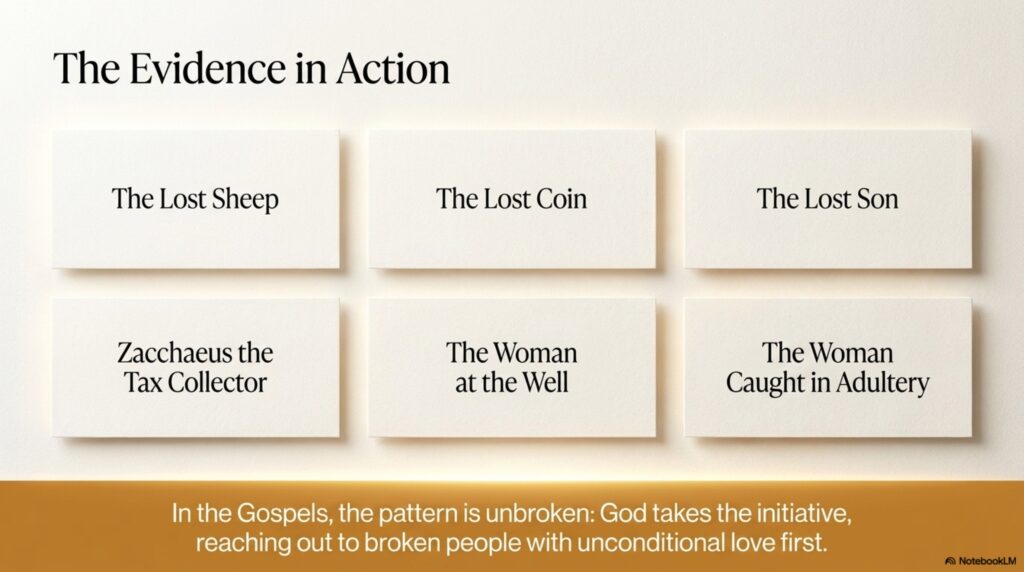
What evidence do we have for this model in Scripture? Nothing less than the entire trajectory of Jesus’ ministry (!) — including the crucial parables of the lost sheep, lost coin, and lost son, the parable of the Pharisee and the tax collector, and the stories of Zacchaeus, the woman at the well, and today’s story of the woman caught in adultery.
In all these parables and events, God is portrayed as taking the initiative, reaching out to broken people with unconditional love, which inspires them to turn to God, who, in turn, empowers them to choose healing and wholeness.
There is a vital social, or societal, dimension to Twelve Step spirituality which is often overlooked.
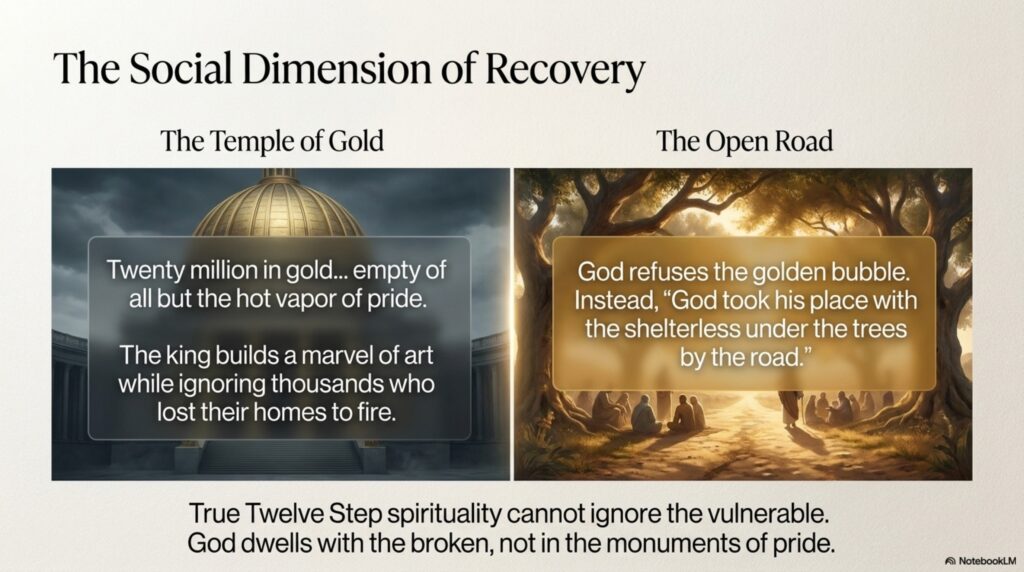
Consider the following parable by Rabindranath Tagore, the first person from India to receive the Nobel Prize for Literature. He titles his parable “The Temple of Gold.”
“Sire,” announced the servant to the king, “the saint Narottam never deigns to step into your royal temple. He is singing God’s praise under the trees by the open road. The temple is empty of all worshippers. They flock around him like bees round the fragrant white lotus, leaving the golden jar of honey unheeded.”
The king, vexed at heart, went to the spot where Narottam sat on the grass. He asked him, “Father, why leave my temple of the golden dome and sit on the dust outside to preach God’s love?”
“Because God is not there in your temple,” said Narottam.
The king frowned and said, “Do you know twenty millions of gold have been spent on that marvel of art, and the temple was duly consecrated to God with costly rites?”
“Yes, I know,” answered Narottam. “It was the dread year when thousands of your people lost their homes in fire and stood at your door for help in vain.
“And God said, ‘The poor creature who can give no shelter to his brothers would aspire to build my house!’ Thus [God] took his place with the shelterless under the trees by the road. And that golden bubble is empty of all but [the] hot vapor of pride.”
The king cried [at Narottam] in anger, “Leave my land!”
Calmly said the saint, “Yes, banish me where you have banished my God.”
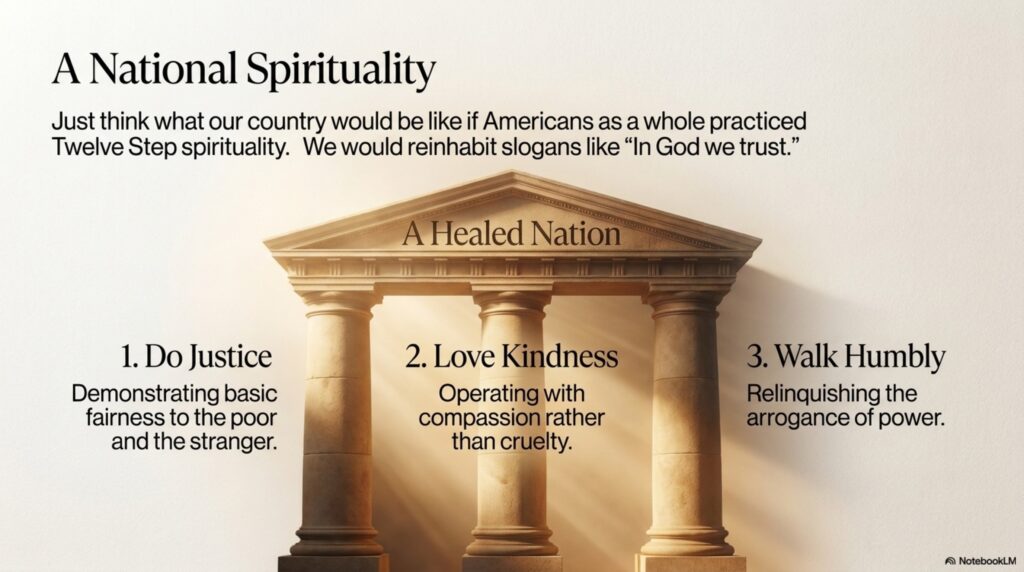
Just think what our country would be like if the people in power practiced the Twelve Steps. Just think what our country would be like if Americans as a whole practiced Twelve Step spirituality.
God would reinhabit our national slogans “In God we trust” and “One nation under God.”
A whole lot of practicing the Steps centers on morality — the way we choose to live our lives based on standards of right and wrong, good and evil, which are shared by the highest and deepest insights of all the world’s great faith traditions.
A moving summary of God’s standard of morality according to the Judeo-Christian tradition is to be found in the Book of the prophet Micah in the Hebrew Scriptures.
God’s standard, of course, is the standard by which we shall all be measured, from the greatest of us to the least.
Before quoting Micah, we need to clarify the fact that when the prophets preach about social justice, they are not talking about socialism, but about those in power demonstrating basic fairness to the poor and the stranger.
Micah 6:8 reads:
God has told you, O mortal, what is good; and what does the Lord require of you but to do justice, and to love kindness, and to walk humbly with your God? (Micah 6:8)
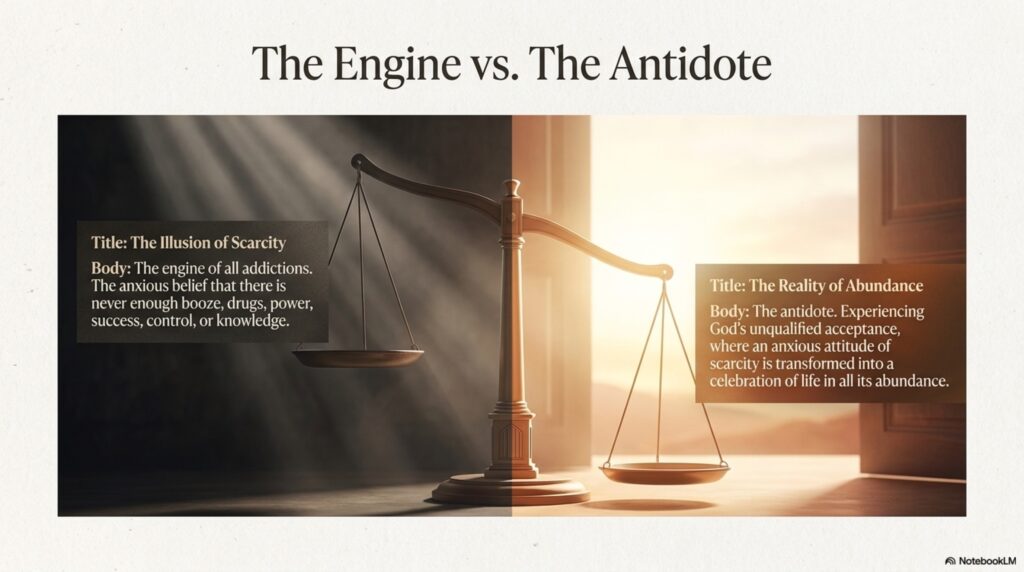
If you think about it, all addictions and addictive tendencies run on the illusion of scarcity — there can never be enough booze or books, drugs, sex, power, success, control, knowledge, whatever.
In the Gospels we have example after example of desperate, broken persons coming to Jesus and experiencing in him nothing less than God’s unqualified acceptance and unconditional love.
Surprised by God’s goodness as revealed in Jesus, people suddenly find themselves becoming a new creation, discovering that their anxious attitude of scarcity has been turned into a celebration of life in all its abundance.
Returning to our original question concerning God in Step Seven: is the God whom we are asking to remove our shortcomings trustworthy?
When we look at God as revealed to us by Jesus, the answer to this question is a great big “Yes”!
The next question would be “How do we find this God?”
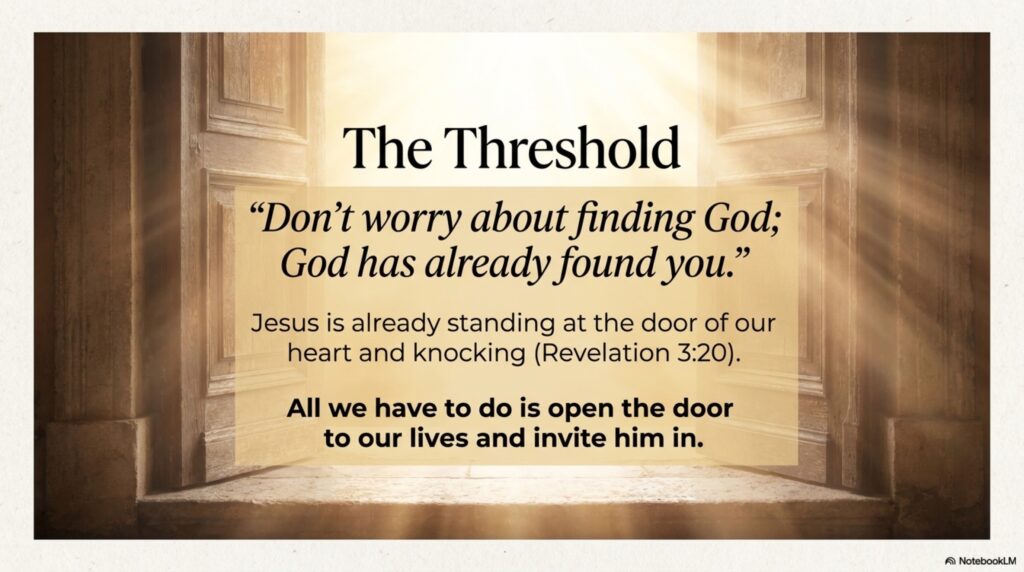
I suspect Jesus would answer: “Don’t worry about finding God; God has already found you.”
To echo our beautiful Scripture reading today from the Book of Revelation, Jesus is already standing at the door of our heart and knocking (Revelation 3:20).
All we have to do is open the door to our lives and invite him in.
Amen.
Ai generated infographic, based on the Sermon


Paul Wrightman pastors at the Community Church of the Monterey Peninsula, California:
-
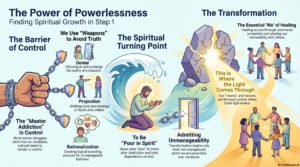
Pastor Paul: Step 1 – The Power Of Powerlessness
Sermon June 14, 2026 “The Spirituality Of The Twelve Steps”
-
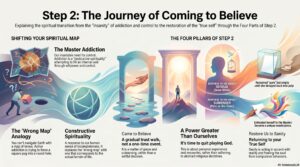
Pastor Paul: Step 2 – Came to Believe
Sermon June 21, 2026 “The Spirituality Of The Twelve Steps”
-
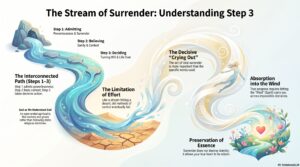
Pastor Paul: Step 3 – Choosing God
Sermon June 28, 2026 “The Spirituality Of The Twelve Steps”
-
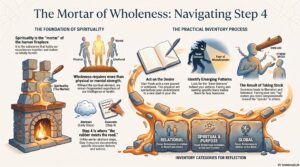
Pastor Paul: Step 4 – Taking Stock
Sermon July 5, 2026 “The Spirituality Of The Twelve Steps”
-
Pastor Paul: Step 5 – Heart-To-Heart
Sermon July 12, 2026 “The Spirituality Of The Twelve Steps”
-
Pastor Paul: Step 6 – Becoming Ready
Sermon July 26, 2026 “The Spirituality Of The Twelve Steps”
-
Pastor Paul: Step 7 – The Courage to Ask
Sermon August 2, 2026 “The Spirituality Of The Twelve Steps”
-

Pastor Paul: Step 8 — Making a List
Sermon August 9, 2026 “The Spirituality Of The Twelve Steps”
-
Pastor Paul: Step 9 – Embodied Reconciliation
Sermon August 16, 2026 “The Spirituality Of The Twelve Steps”
-
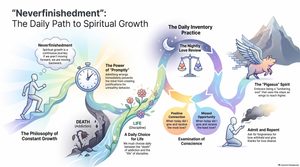
Pastor Paul: Step 10 – Neverfinishedment
Sermon August 23, 2026 “The Spirituality Of The Twelve Steps”
-
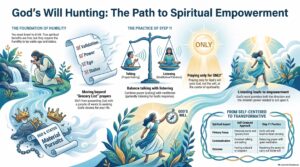
Pastor Paul: Step 11 – God’s Will Hunting
Sermon August 30, 2026 “The Spirituality Of The Twelve Steps”
-
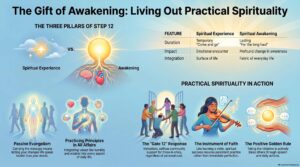
Pastor Paul: Step 12 – The Gift of Awakening
Sermon September 6, 2026 “The Spirituality Of The Twelve Steps”
-
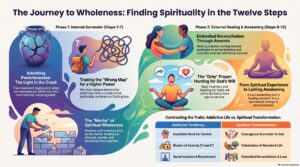
Ai’s take on Pastor Paul’s 12 Step Sermons
Sermon September 6, 2026 “The Spirituality Of The Twelve Steps”
Leave a Reply